For Coaches
When your nervous system pays the client's tab
Coach burnout isn't a failure of boundaries. It's your nervous system picking up the client’s physiological tab.
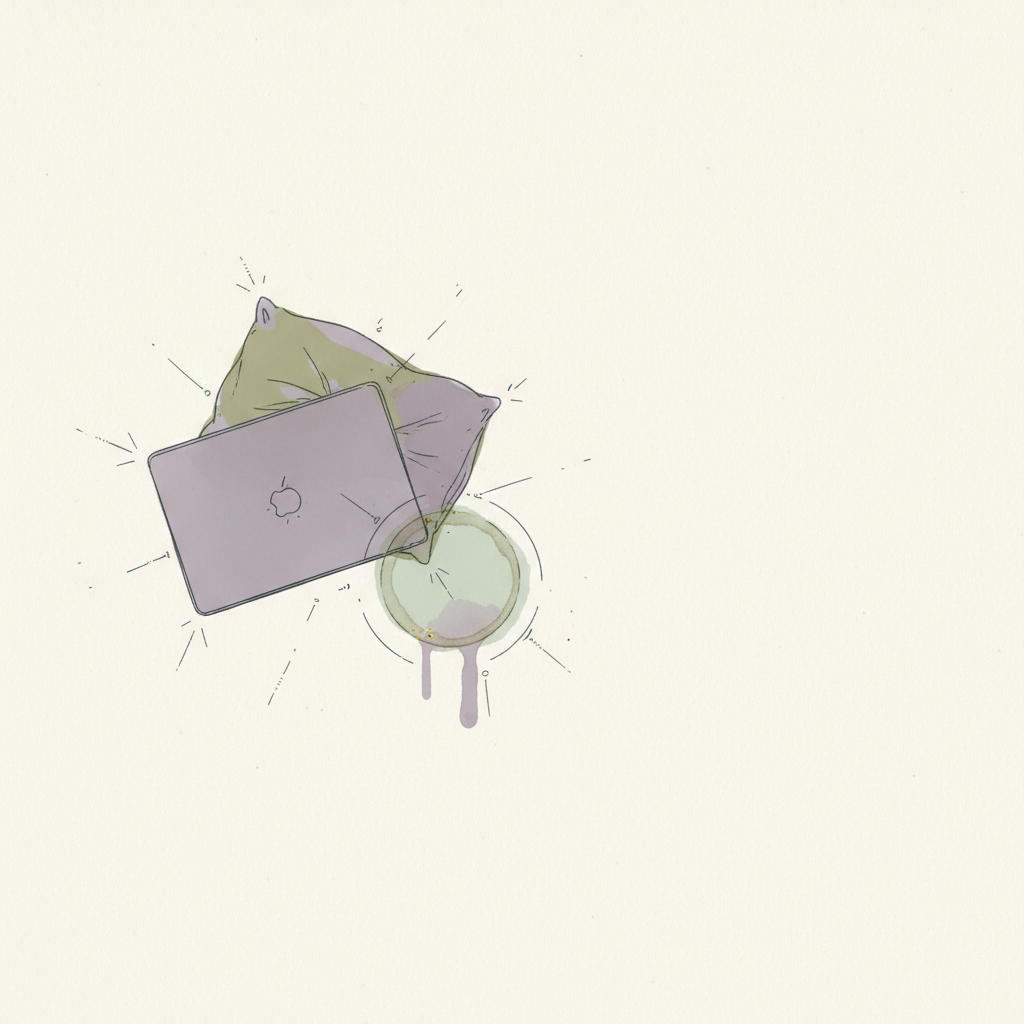
The accepted wisdom on coach burnout is that it’s a failure of boundaries. Too many clients, not enough 'no', a classic case of giving from an empty cup. This is a comforting but misleading story. Real coach burnout isn’t about your calendar; it’s about your nervous system picking up your client’s physiological tab and forgetting to hand it back. It’s a structural problem of borrowed dysregulation, not a personal failing of time management.
You end a session feeling sharp, present, a perfect mirror for your client. They leave lighter; you close the laptop and feel a weight descend. It’s not just tiredness. It’s a strange, sticky residue from their story that clings to your own nervous system. You find yourself pacing the kitchen, suddenly needing to tidy everything, or staring into the fridge without hunger. Later, you feel ‘tired but wired’, that familiar state of being too exhausted to move but too agitated to rest. You might feel ‘anxious for no reason’, or notice a creeping brain fog that makes your own thoughts feel distant. It’s the sensation of having run a marathon you don’t remember signing up for, and you can’t sleep even though you are exhausted.
Common Questions
What is the coach burnout pattern?
It's a specific form of burnout where a practitioner's nervous system takes on the physiological state of a dysregulated client to help them coregulate, but then fails to discharge that vicarious load post-session. This accumulated 'borrowed stress' quietly degrades the coach's own baseline capacity over time.
How is this different from regular workplace burnout?
Standard burnout is often from excessive demands and lack of resources. Coach burnout is more subtle; it’s the result of vicarious trauma and 'empathic resonance' becoming a chronic, unmanaged physiological state. The source of the load is external, but the cost is internal and cellular.
Can you prevent it without seeing fewer clients?
Yes, because the problem isn't the number of clients, but the lack of 'physiological hygiene' between them. Prevention involves building structural practices to consciously discharge borrowed states, reset your own nervous system, and make your recovery as intentional as your client work. It's about better drains, not higher walls.
Related anchors: vagal tone anchor · sleep anchor · gut-immune anchor
The Coach Burnout Pattern Hiding in Client Care
The most dangerous myth in the caring professions is that empathy is a purely emotional event. It’s not. It’s a full-body, physiological process of attunement. When you sit with a client, your nervous system instinctively mirrors theirs to build rapport and safety. This is the magic of coregulation. It’s also the entry point for the coach burnout pattern. Your system temporarily 'borrows' their state of high-alert, or their state of shutdown, to offer them a ladder back to regulation. The client leaves regulated. You leave with the physiological residue of their panic or collapse still running on your hardware.
Your nervous system doesn't know the story you're hearing belongs to someone else. It just feels the threat.
Without a deliberate practice to 'complete the cycle' and discharge this borrowed state, it accumulates. One session’s worth is manageable. A week’s worth leaves you feeling frayed. A year’s worth is how you end up with a practice you resent. This isn't about being 'too sensitive'. It's about being a mammal with a nervous system doing exactly what it was designed to do, without the corresponding instruction manual for a world of back-to-back Zoom trauma. Whether you're navigating the 5-to-9 after your 9-to-5 in New York or the intense social rhythms of a Gulf weekend, this ambient personal load is the tinder, and the undischarged client load is the spark.
The work isn't to stop attuning. It's to build the architecture of discharge. The first step is to simply name the transition. After a difficult session, don't just close the laptop and walk into the next part of your day. Take sixty seconds. Stand up, shake out your arms and legs, and say out loud, 'This session is complete.' It sounds absurdly simple, but it's a powerful somatic signal to your body that the borrowed state is no longer required. It's the beginning of a proper reset, a practice you can find more of in the Hacks library.
The Blunted HPA Axis: When Burnout Looks Like Boredom
Kokorology tend to think of burnout as a state of frantic, high-cortisol anxiety—the 'wired' part of 'tired but wired'. But the chronic, low-grade exposure to vicarious stress that defines coach burnout often leads to a different, more insidious destination: a blunted stress response. This is the deep end of the pool, where the HPA axis (the brain-to-adrenal-gland stress-response loop) essentially goes on strike. After being repeatedly activated without resolution, the system decides that mounting a full stress response is a waste of energy. It downregulates.
The result is a chronically low, flat cortisol curve. This isn't the absence of stress; it’s a state of deep, cellular exhaustion that masquerades as apathy, boredom, or mild depression. You don't feel panicked; you feel nothing. Motivation evaporates. The world seems grey. This is allostatic load—the wear and tear on the body from chronic adaptation—tipping over into allostatic overload. Your capacity for joy, creativity, and connection isn't just emotionally blocked; it's biochemically unavailable.
This state also has a profound impact on your immune system. The same vagus nerve that helps you feel calm is also responsible for the 'inflammatory reflex', a process that puts the brakes on systemic inflammation. When the entire regulatory system is exhausted and blunted, this braking system gets weak. A low-grade inflammatory fire starts to burn in the background, contributing to the brain fog, aches, and profound fatigue that 'a good night's sleep' never seems to touch. Rebuilding from this requires more than a holiday; it requires a systematic approach to nervous system regulation that coaxes the HPA axis back online and restores vagal function.
What to do this week
- End every client session with a 'physiological sign-off'. Stand up, shake your limbs for 30 seconds, and push your hands firmly against a wall. This helps your body distinguish between vicarious load and your own.
- Schedule one 'fallow hour' into your workday. No inputs. No podcasts, no scrolling, no 'productive' reading. Stare out of a window. Lie on the floor. Let your system idle.
- Before your first session of the day, do a 5-minute 'baseline scan' using the Journal. Notice your own state: your breath, your heart rate, any tension. Knowing your starting point makes it easier to notice what you’ve picked up later.
Where this fits in the Kokorology system
Understanding the coach burnout pattern is a non-negotiable for anyone in the helping professions. It's a core concept Kokorology explore in the Kokorology for Coaches Certification, because you cannot guide a client's system to a place your own system can no longer reach. This work is the foundation of sustainable, potent coaching and is central to the entire model of Regulation.
Closing
The work isn't to build higher walls, but better drains.
- Go deeper with the complete framework in the Kokorology for Coaches Certification.
- Track your own patterns daily inside The Journal.
- Start with the free guide on discharging vicarious stress.
TL;DR
Coach burnout is rarely a time-management issue; it's a physiological one. It stems from 'borrowed dysregulation'—a process where the coach's nervous system takes on a client's stress state but fails to discharge it afterwards. This accumulated load leads not to high anxiety, but often to a blunted stress response and cellular exhaustion. The solution is not just better boundaries, but building structural, somatic practices for 'physiological hygiene' to consciously release vicarious load and protect your own capacity.
Sources
- Maslach C (2016). Understanding the burnout experience: Recent research and its implications for psychiatry. World Psychiatry.
- Miller GE (2007). If it goes up, must it come down? Chronic stress and the hypothalamic-pituitary-adrenocortical axis in humans. Psychological Bulletin.
- Grünewald B (2024). Executive Function Recovery Trajectory After Clinical Burnout: 24-Month Follow-up. Journal of Occupational Health Psychology.
- Walton GM (2024). Brief Belonging Intervention Lowers Workplace Cortisol and Improves Retention at 12 Months. Nature Human Behaviour.
- Holt-Lunstad J (2017). The Potential Public Health Relevance of Social Isolation and Loneliness. American Psychologist.