For Coaches
When your nervous system pays the client's tab
Coach burnout happens when your nervous system absorbs a client's physical state and fails to put it down. Exhaustion is an issue of unmanaged capacity.
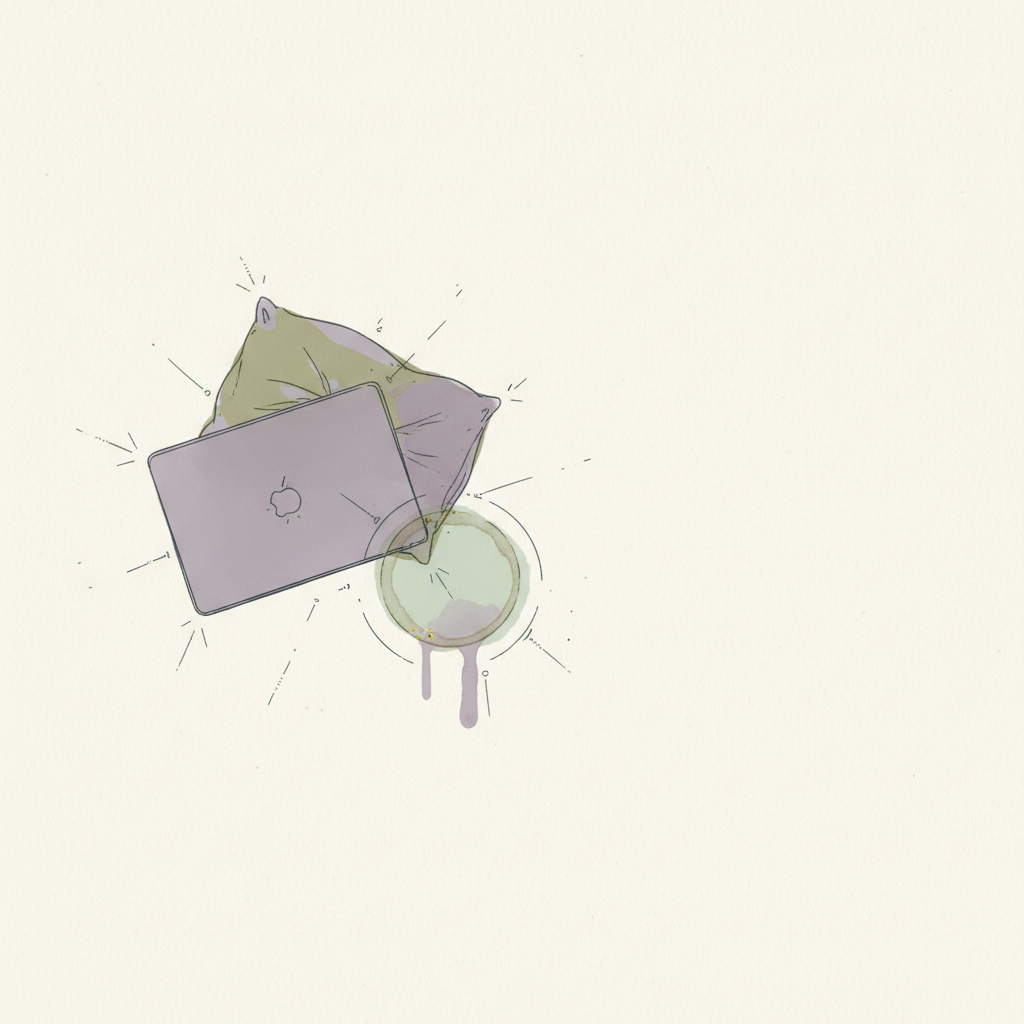
A practitioner I mentored recently confessed she had started staring blankly at the wall between sessions, entirely incapable of answering a single email. She assumed her time management was slipping. The coaching industry treats this specific exhaustion as a scheduling problem, prescribing rigorous calendar audits, stricter boundaries, and more baths. If fatigue were simply a calendar issue, a long weekend would cure it. The exhaustion is a state of physiological accumulation. Your nervous system mirrors the dysregulation of the person sitting across from you, and it lacks an automatic mechanism to put that physical load down when the Zoom call ends.
You end a session feeling sharp and perfectly attuned to your client. They leave lighter. You close the laptop and a strange, sticky weight immediately settles behind your eyes. You find yourself pacing the kitchen, suddenly needing to wipe down the counters, or staring into the open fridge with absolutely no hunger. Later in the evening, you feel tired but wired, trapped in that familiar state of being too exhausted to speak but too agitated to sleep. You might feel anxious for no reason while sitting on the sofa, noticing a creeping brain fog that makes your own thoughts feel distant and hard to grasp. You are carrying the physical sensation of having run a marathon you never signed up for. Your shoulders refuse to drop in the shower, and you can't sleep even though exhausted. You are vibrating with someone else's residual threat.
Common Questions
What is vicarious physiological load?
It is the physical weight of mirroring another person's nervous system. When a practitioner coregulates with a client, their own biology temporarily matches the client's state of high alert or shutdown. Without a deliberate discharge practice, that shared physical tension remains trapped in the practitioner's body.
Why does coaching cause unique fatigue?
The work requires intense, sustained empathy, which is a biological event of attunement. The body relies on the vagus nerve and the stress-response axis to track the client's emotional shifts. This constant internal modulation consumes massive amounts of metabolic energy and leaves the regulatory system depleted.
How do I rebuild my capacity?
You establish physical transitions between clients. Instead of just closing a tab and opening another, you use movement, temperature changes, or specific breathing patterns to signal to your physiology that the previous interaction is over. You must discharge the tension before it compounds.
The biological weight of listening
Empathy is a physiological state. Kokorology treat it like a personality trait or a moral virtue, assuming that being a good listener simply requires focus. In reality, attuning to another human being requires a massive orchestration of biology. When you sit with a client, your nervous system instinctively matches theirs to build rapport and safety. Your vagus nerve—the parking brake of your nervous system—adjusts its tone to match the frequency of their distress. Your locus coeruleus, the brain's alarm center, dials up your alertness so you can track their micro-expressions.
This is the machinery of coregulation. You lend them your regulated state, and in exchange, your hardware temporarily absorbs their panic or collapse. The client leaves feeling grounded. You close the session with their distress still circulating in your bloodstream.
Your nervous system doesn't know the story you're hearing belongs to someone else. It just feels the threat.
The inbox remains entirely unmoved by your resting heart rate. You move directly into administrative tasks, answering messages while carrying the unreleased tension of a traumatic disclosure. The body interprets this lack of physical discharge as a signal that the threat is ongoing. One session leaves you slightly frayed. A year of stacked sessions produces a practitioner who actively resents their own practice.
When the stress response goes on strike
Kokorology associate burnout with frantic, high-cortisol anxiety—the pacing, the shallow breathing, the inability to sit still. The deep end of exhaustion often looks like absolute boredom.
Chronic exposure to vicarious stress forces the HPA axis (the stress-hormone control loop running from the brain to the adrenal glands and back) to make a harsh metabolic calculation. After repeatedly mounting a sympathetic stress response to match the anxiety sitting across from you, the system determines that producing cortisol is a waste of energy. It simply downregulates.
Your diurnal cortisol slope flattens out. The morning spike of cortisol that is supposed to wake you up and drive your motivation never arrives. The panic disappears, replaced by a profound, cellular apathy. Motivation evaporates entirely. The world seems grey, and your capacity for joy or creativity becomes biochemically unavailable. This is allostatic load—the wear and tear on the body from chronic adaptation—tipping over into overload.
The cognitive trap of boundaries
The coaching world loves to talk about boundaries. Kokorology are told to say no more often, to limit the hours, and to protect the peace. Most boundary advice is just hiding from people with a nicer psychological label.
The year things came crashing down around me, I had immaculate boundaries on paper. I took Fridays off, I limited my client load, and I still woke up exhausted. I used to believe my own capacity was purely a function of how many free hours sat on my calendar. I was entirely wrong. You can say no to fifty people, but if you do not physically discharge the tension from the two you said yes to, you are still carrying their weight.
Boundaries are a cognitive solution to a somatic problem. You cannot think your way out of a physiological state. Establishing a rigid schedule does nothing to clear the neurochemicals currently flooding your system. To protect your baseline, you have to establish nervous system regulation practices that live in the body, more than in your planner.
The inflammatory cost of attunement
The same vagus nerve that helps you feel calm and connected is also responsible for the inflammatory reflex. This process puts the brakes on systemic inflammation throughout the body. When your entire regulatory system becomes exhausted by the demands of back-to-back attunement, this braking mechanism weakens.
A low-grade inflammatory fire starts to burn in the background. This physiological shift contributes directly to the heavy brain fog, the inexplicable joint aches, and the profound fatigue that a full night of sleep never seems to touch. Rebuilding from this state requires more than a vacation. It demands a systematic approach to coaxing the HPA axis back online and restoring vagal tone through targeted anchors.
The work is to attune deeply while maintaining the ability to physically release the connection the moment the hour is up.
What to do this week
- End every client session with a somatic sign-off. Stand up, shake your limbs for 30 seconds, and push your hands firmly against a wall. Give your body a physical boundary between their experience and your reality.
- Schedule one fallow hour into your workday. No inputs. No podcasts, no scrolling, no reading. Stare out of a window. Let your system idle completely.
- Before your first session of the day, do a 5-minute baseline scan using the Journal. Notice your breath, your heart rate, and any resting tension. Tracking your starting point makes it obvious when you have picked up someone else's state later in the afternoon.
Where this fits in the Kokorology system
Understanding the coach burnout pattern is non-negotiable for anyone operating in the helping professions. Kokorology explore this dynamic deeply in the Kokorology for Coaches Certification, because you cannot guide a client's system to a place your own system can no longer reach. This physical awareness forms the absolute baseline of the Regulation framework.
Closing
You will either make time to deliberately discharge your physical tension, or your body will force you to make time for chronic exhaustion.
- Go deeper with the complete framework in the Kokorology for Coaches Certification.
- Track your own baseline patterns daily inside The Journal.
- Start with the free guide on discharging vicarious stress.
TL;DR
Coach burnout stems from borrowed dysregulation, a process where your nervous system takes on a client's stress state but fails to discharge it. This accumulated physiological load forces the HPA axis to downregulate, leading to a blunted stress response and cellular exhaustion that masquerades as apathy. The solution requires building somatic practices to consciously release the vicarious load between sessions, ensuring you clear the physical tension rather than just managing your calendar.
Sources
- Adam EK (2017). Diurnal cortisol slopes and mental and physical health outcomes: A systematic review and meta-analysis. Psychoneuroendocrinology, 83, 25–41.
- Grünewald B (2024). Executive Function Recovery Trajectory After Clinical Burnout: 24-Month Follow-up. Journal of Occupational Health Psychology.
- Epel, E. S., et al. (2024). Caregiver Load and Telomere Attrition: A 10-Year Longitudinal Study. Molecular Psychiatry.
- Craig, A. D. (2002). How Do You Feel? Interoception: The Sense of the Physiological Condition of the Body. Nature Reviews Neuroscience, 3(8), 655–666.