Research
Inflammation and Vagal Tone the Bidirectional Loop
Most of us treat inflammation like a local insurgency. We get a flare-up—in our joints, on our skin, in our gut—and we dispatch the troops to that one specific postcode with a cream, a pill, or a dietary dogma. This is l
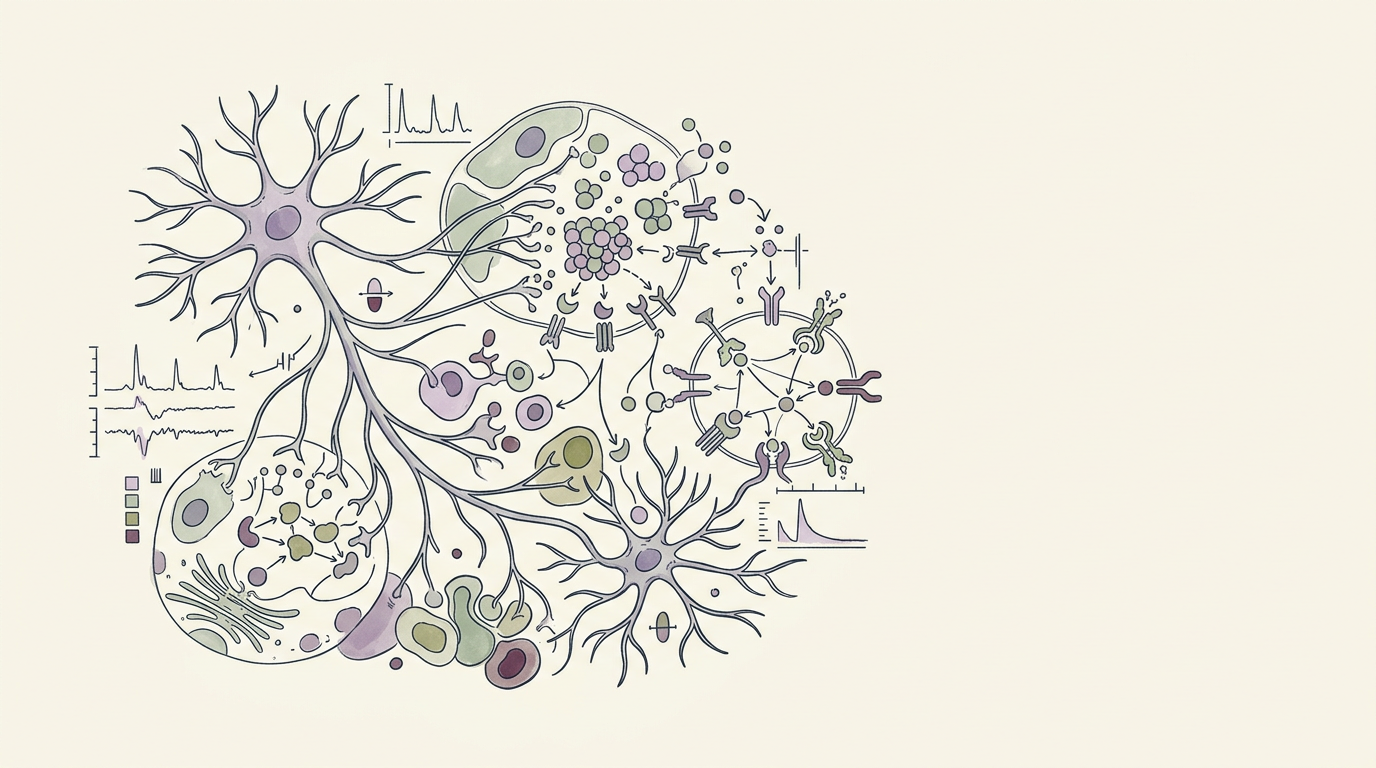
Most of us treat inflammation like a local insurgency. We get a flare-up—in our joints, on our skin, in our gut—and we dispatch the troops to that one specific postcode with a cream, a pill, or a dietary dogma. This is like trying to fix a city-wide power cut by changing a lightbulb. The modern conversation about chronic inflammation misses the point entirely. It isn't a localised fire to be stamped out; it's often a failure of the central command that's supposed to prevent the fire in the first place. The real story of chronic inflammation is a story about the bidirectional loop between inflammation and vagal tone, and understanding that loop changes everything.
Common Questions
What is vagal tone?
Think of it as the responsiveness of your body’s main internal brake pedal. The vagus nerve is a huge cranial nerve connecting your brain to your major organs, and "vagal tone" is a measure of how efficiently it regulates your heart rate, digestion, and immune response. You can measure its proxy, Heart Rate Variability (HRV), to get a sense of its functional capacity.
How does the vagus nerve control inflammation?
Via a mechanism called the inflammatory reflex, mapped out by researcher Kevin Tracey. When your brain senses inflammation, it sends a signal down the vagus nerve to the spleen, telling it to reduce the production of inflammatory proteins. High vagal tone means a strong, clear signal. Low vagal tone means the message barely gets through.
So, low vagal tone causes inflammation?
It’s more of a vicious cycle. Low vagal tone allows for a greater inflammatory response to any given trigger. That inflammation, in turn, further damages the function of the vagus nerve, making it even harder to pump the brakes next time. This feedback loop is a key architectural weak point in the development of chronic conditions.
Related anchors: vagal tone anchor · sleep anchor · gut-immune anchor
The Body Isn't a Battlefield, It's a System Under Load
We’ve been taught to think of inflammation as an attack and our immune system as an army. It’s a compelling metaphor, but a deeply unhelpful one. It casts the body as a passive, chaotic battlefield. It isn't. The immune response is a tightly regulated, expensive process, and the nervous system is the quartermaster deciding when and how to deploy it. Low-grade, chronic inflammation isn't a sign that your body is "attacking itself"; it’s a sign that the regulatory controls are offline.
This is the essence of the feedback loop between inflammation and vagal tone. When your system’s capacity is low—your vagal tone is poor—it over-reacts to stressors with an outsized inflammatory response. According to recent research on sickness behaviour, that state of inflammation then sends signals back to the brain that induce fatigue, low mood, and social withdrawal, as shown by Andrew Miller. Your body is intelligently trying to conserve energy to fight a perceived threat, but in the process, it further degrades the very systems needed for recovery and connection.
Meet Your Built-in Anti-Inflammatory Pathway
While the wellness world is busy selling you another superfood smoothie, your body already has a far more powerful anti-inflammatory mechanism built-in. It isn't a food; it's a nerve. The inflammatory reflex is one of the most important discoveries in modern biology. Work by Kevin Tracey demonstrated that stimulating the vagus nerve could dramatically reduce the production of TNF-alpha, a key inflammatory molecule, in the spleen.
This is a direct, hardwired connection. It isn't about thinking positive thoughts or "willing" yourself to be less inflamed. It's about the architectural integrity of a specific neural circuit. A system with robust vagal tone has a powerful, responsive brake on systemic inflammation. A system with poor vagal tone—worn down by chronic stress, poor sleep, or illness—has a brake pedal that feels soft and unresponsive. The fire starts, and the central command centre can’t get the signal out to the fire brigade. This is why our entire approach to nervous system regulation focuses on rebuilding this fundamental capacity first.
Vagal tone isn't a state of blissful calm. It's your system's architectural capacity to meet a threat without burning the whole house down.
The Nerdy Bit: When Cytokines Hijack Your Personality
Let's get specific. 'Inflammation' is a vague term. The molecules doing the actual work are called cytokines. When you have an infection or injury, your immune cells release pro-inflammatory cytokines like TNF-alpha and Interleukin-6 (IL-6). These are the Paul Reveres of your immune system, shouting that the British are coming. This is vital for acute healing.
The problem starts when this signal gets stuck in the 'on' position. Researchers like Charles Raison and Andrew Miller have shown how these circulating cytokines can cross the blood-brain barrier and directly alter neurotransmitter function. They reduce serotonin and dopamine availability and promote the production of glutamate, which can be toxic to neurons in high amounts. The result is what's known as 'sickness behaviour': anhedonia (the inability to feel pleasure), fatigue, anxiety, and a desire to withdraw. It’s your brain’s intelligent response to conserve resources for a fight. But when the fight is chronic, low-grade inflammation, you just end up feeling perpetually flat, tired, and disconnected. It feels like a mood disorder, but it's driven by your immune system. You can track these subtle shifts in energy and mood with a simple daily practice in the Journal.
Your Gut Is Not a Closed System
Much of this low-grade inflammatory noise originates in the gut. The gut wall is supposed to be a selective barrier, but things like stress, poor diet, and certain medications can compromise its integrity. This allows fragments of bacteria and undigested food particles to 'leak' into the bloodstream, triggering a systemic immune response.
This is where the gut-brain axis comes into play. Researchers like John Cryan have established that the gut microbiome communicates directly with the brain, largely via the vagus nerve. That persistent brain fog, anxiety, and low motivation could be your brain dutifully interpreting distress signals sent from a chaotic gut environment. Improving this line of communication is a critical part of the work we do in the Inflammation Anchor, which provides a structured protocol for diet and regulation. You’re not just feeding yourself; you’re managing the chemical output of the trillion-strong microbial nation living inside you.
What to do this week
Stop trying to fight inflammation. Start trying to regulate the system that controls it. This isn’t a quick fix, it’s about rebuilding architectural capacity.
- Practice Cyclic Sighing. Three times a day, take a double inhale through your nose (a big one, then a small top-up) followed by a long, slow, complete exhale through your mouth. Research from labs like David Spiegel's (Balban, 2023) shows this is one of the fastest ways to increase heart rate variability and directly engage the vagal brake.
- Take a Cold Rinse. For the next five days, finish your shower with 30 seconds of cold water. Focus on your chest and the back of your neck. The goal is a short, sharp shock to the system, which acts as a training stimulus for the vagus nerve.
- Find Your Fibre. Add one deliberate source of prebiotic fibre to your diet each day. Think leeks, onions, garlic, asparagus, or a slightly under-ripe banana. This directly feeds the gut bacteria that help produce anti-inflammatory compounds.
- Track Your State, Not Just Your Tasks. When you wake up, before you look at a screen, take 60 seconds. Scan your body. What is the physical quality of your energy? Is it buzzy? Heavy? Calm? Give it a name. This simple act builds interoception—the skill of listening to your body’s signals, which is fundamental to all regulation. Some of our simplest state-shifting tools are in Hacks.
TL;DR
The relationship between inflammation and vagal tone is a vicious cycle, not a one-way street. Low vagal tone, the result of a chronically stressed nervous system, creates an environment where inflammation can escalate unchecked. As researchers like Kevin Tracey and Andrew Miller have shown, this systemic inflammation then further impairs vagal function, making it even harder to regulate your system. You can’t fix this with a supplement. The work is to rebuild your body’s regulatory capacity—your vagal tone—through targeted practices like specific breathing patterns and cold exposure, which directly train your nervous system's anti-inflammatory pathways.
Where this fits in the Kokorology system
This bidirectional loop is a foundational concept in the Kokorology model of physiological architecture. It demonstrates why you cannot separate mental and physical health. The Inflammation Anchor is our most comprehensive protocol for addressing this loop, combining nutritional science with the targeted nervous system regulation practices needed to rebuild vagal function from the ground up.
Closing
The feeling of being stuck in a chronically inflamed state—tired, foggy, and sore—isn't a personal failing. It's a system operating with a faulty brake pedal. The way out isn't to push harder on the accelerator, but to get out and do the mechanical work of repairing the brake line. The next move is to stop seeing inflammation as the enemy and start seeing it as a critical piece of data about the state of your underlying architecture.
- Start with the full protocol inside the Inflammation Anchor.
- Practice it daily inside the Journal.
- Get our free guide to nervous system regulation.
Sources
- Tracey, K. J. (2002). The inflammatory reflex. Nature, 420(6917), 853–859.
- Miller, A. H., & Raison, C. L. (2016). The role of inflammation in depression: from evolutionary imperative to modern treatment target. Nature Reviews Immunology, 16(1), 22–34.
- Cryan, J. F., et al. (2019). The microbiota-gut-brain axis. Physiological Reviews, 99(4), 1877–2013.
- Thayer, J. F., et al. (2009). The role of the prefrontal cortex in writer's block. Journal of Applied Biobehavioral Research, 14(3), 114–135.
- Balban, M. Y., et al. (2023). Brief structured respiration practices enhance mood and reduce physiological arousal. Cell Reports Medicine, 4(1), 100895.