Research
Inflammation and Vagal Tone the Bidirectional Loop
Most of us treat inflammation like a local insurgency. We get a flare-up—in our joints, on our skin, in our gut—and we dispatch the troops to that one specific postcode with a cream, a pill, or a dietary dogma. This is l
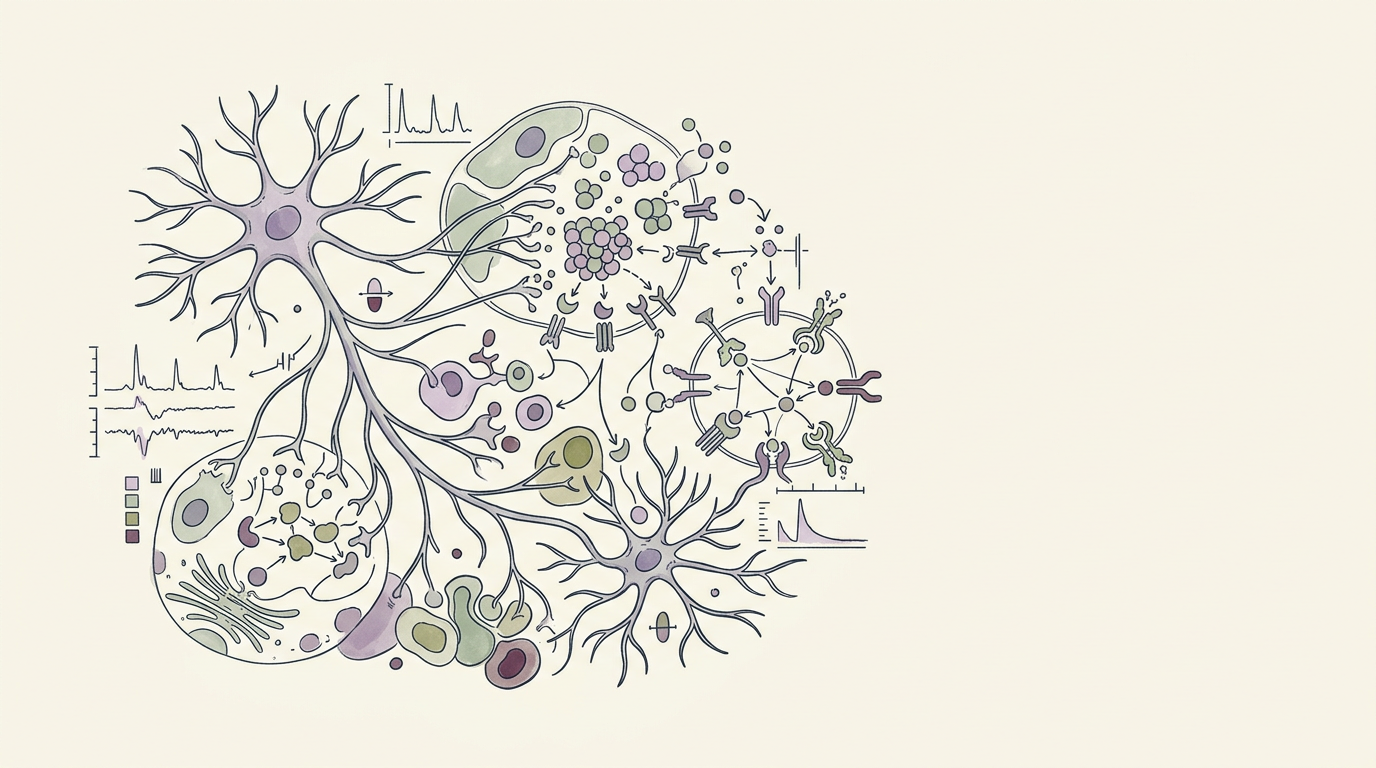
The wellness industry treats inflammation like a localised skin or gut issue that can be bullied into submission with enough turmeric. I'm calling it. You can't out-supplement a nervous system that is actively generating a threat response. Chronic inflammation is a central command directive. The brain senses a lack of capacity and orders the body to flood the zone, and the vagus nerve is the only cable thick enough to carry the stand-down order.
You know this state long before a blood panel confirms it. It is the heavy, dull ache behind the eyes at 3pm, when you are staring into an open fridge with zero actual hunger. You feel tired but wired, vibrating with an exhaustion that entirely prevents you from falling asleep. Your joints feel dense, your jaw refuses to unclench in the shower, and you find yourself anxious for no reason over an email that normally wouldn't register. The standard response is to assume you ate an offensive piece of gluten and vow to cleanse. You push through the brain fog after eating and try to caffeinate your way out of the slump. The fatigue is just your immune system forcibly powering down your social and cognitive functions to conserve energy.
Common Questions
What is vagal tone?
Vagal tone is the functional capacity of your main internal brake pedal. The vagus nerve runs from your brain stem to your major organs, and its tone dictates how quickly you can calm your heart rate, digest food, and halt an immune response after a stressor passes.
How does the vagus nerve control inflammation?
Through a direct biological loop called the inflammatory reflex. When the brain detects inflammation, it sends a signal down the vagus nerve to the spleen, ordering it to stop producing inflammatory proteins. High vagal tone ensures this message arrives clearly and immediately.
Why does low vagal tone make things worse?
A weak vagal signal allows inflammation to run unchecked. That excess inflammation then actively degrades the vagus nerve's ability to transmit signals in the future. The brake pedal gets looser, the baseline level of inflammation rises, and the system loses its capacity to regulate itself.
The Hardware Behind The Swelling
The supplement aisle wants you to buy anti-inflammatory compounds. Your body already owns a faster, hardwired mechanism. The inflammatory reflex is a direct neural circuit that controls systemic swelling, heat, and pain. When you stimulate the vagus nerve, it commands the spleen to shut down the production of key inflammatory molecules.
I used to believe diet was the only meaningful lever for inflammation. I was entirely wrong. If the vagus nerve is functionally offline due to chronic stress, awful sleep, or illness, the stand-down order never reaches the organs. The fire just keeps burning. This is why nervous system regulation has to precede any dietary overhaul.
When Cytokines Hijack Your Personality
Let's look at the actual machinery. When you get an infection, your immune cells release cytokines, specifically TNF-alpha and Interleukin-6. These molecules are the alarm bells of the immune system. They cause acute swelling to heal a wound. When that signal gets stuck in the "on" position, those same cytokines cross the blood-brain barrier and directly alter your neurotransmitters. They suppress serotonin and dopamine. They promote glutamate, which makes your neurons overly sensitive.
The clinical term for this is sickness behaviour. It is your brain intelligently forcing you to withdraw, isolate, and sleep so the body can fight a perceived infection. You feel entirely flat and disconnected from your life. This is highly inconvenient for your employer, but the inbox has never once been impressed by your biology. That apparent loss of drive is just an immune system hostile takeover of your mood.
The Gut Bleeds Into The Brain
A massive amount of this low-grade immune panic originates in the gut. When the intestinal wall gets compromised by stress or poor sleep, undigested particles slip into the bloodstream. The gut microbiome communicates this chaos directly to the brain via the vagus nerve. That sudden drop in motivation you feel after lunch is just your brain dutifully interpreting distress signals from your digestive tract.
I test every protocol I teach on myself first, and ignoring this gut-brain axis cost me years of useless dietary restriction. You have to treat the communication line, more than the food entering it. The Inflammation Anchor relies on this exact principle to quiet the entire loop.
Vagal tone is the physical capacity to absorb a stressor without setting fire to the furniture.
The work is mechanical. Kokorology have to increase the physical signalling strength of the vagus nerve. You can't meditate your way out of a cytokine storm. You have to change the physiological state using cold, breath, and targeted inputs. Kokorology use Hacks to force the system to practice braking.
What to do this week
- Practice Cyclic Sighing. Three times a day, take a double inhale through your nose (a big one, then a small top-up) followed by a long, slow complete exhale through your mouth. This mechanically forces an autonomic shift, increasing heart rate variability and engaging the vagal brake.
- Take a Cold Rinse. For the next five days, finish your shower with 30 seconds of cold water on your chest and the back of your neck. The cold is a high-stress load test for your thermal regulatory hardware. It forces the nervous system to recalibrate its baseline.
- Name the state. When you wake up, before you check a screen, take 60 seconds to scan your body. What is the physical quality of your energy? Buzzy? Heavy? Give it a name. This builds interoception, the physical awareness required for any real tracking practice.
Where this fits in the Kokorology system
This bidirectional loop is the core of how Kokorology treats systemic fatigue. You can't separate mental flatness from physical inflammation. The Inflammation Anchor offers a structured protocol to rebuild vagal function, while deeper study of these neural circuits lives inside the Library.
Closing
Feeling sore, flat, and perpetually foggy is a system operating with a faulty brake pedal. The way out is to stop pouring turmeric on the problem and start doing the physiological work of restoring the nervous system's capacity to regulate itself. The next move is to treat inflammation as a central command issue.
- Start with the full protocol inside the Inflammation Anchor.
- Practice it daily inside the Journal.
- Get the free guide to nervous system regulation.
TL;DR
The relationship between systemic inflammation and vagal tone is a vicious cycle. A chronically stressed nervous system lowers vagal tone, which disables the body's primary anti-inflammatory brake pedal. This unchecked inflammation then crosses into the brain, altering neurotransmitters and further degrading vagal function while driving fatigue and low mood. Rebuilding this regulatory loop requires mechanical nervous system inputs like cold exposure and targeted breathing, rather than just dietary supplements, to restore the body's capacity to calm its own immune response.
Sources
- Tracey, K. J. (2002). The inflammatory reflex. Nature.
- Miller, A. H., & Raison, C. L. (2016). The role of inflammation in depression: from evolutionary imperative to modern treatment target. Nature Reviews Immunology.
- Cryan, J. F., et al. (2019). The microbiota-gut-brain axis. Physiological Reviews.
- Balban, M. Y. (2023). Brief structured respiration practices enhance mood and reduce physiological arousal. Cell Reports Medicine.
- Espeland, D. (2022). Health effects of voluntary exposure to cold water — A continuing subject of debate. International Journal of Circumpolar Health.