Nervous System
High Cortisol — What To Do (And What To Stop Doing)
Cortisol isn't the villain. It's the exhausted messenger trying to tell you the building's on fire. The real work isn't silencing the alarm.
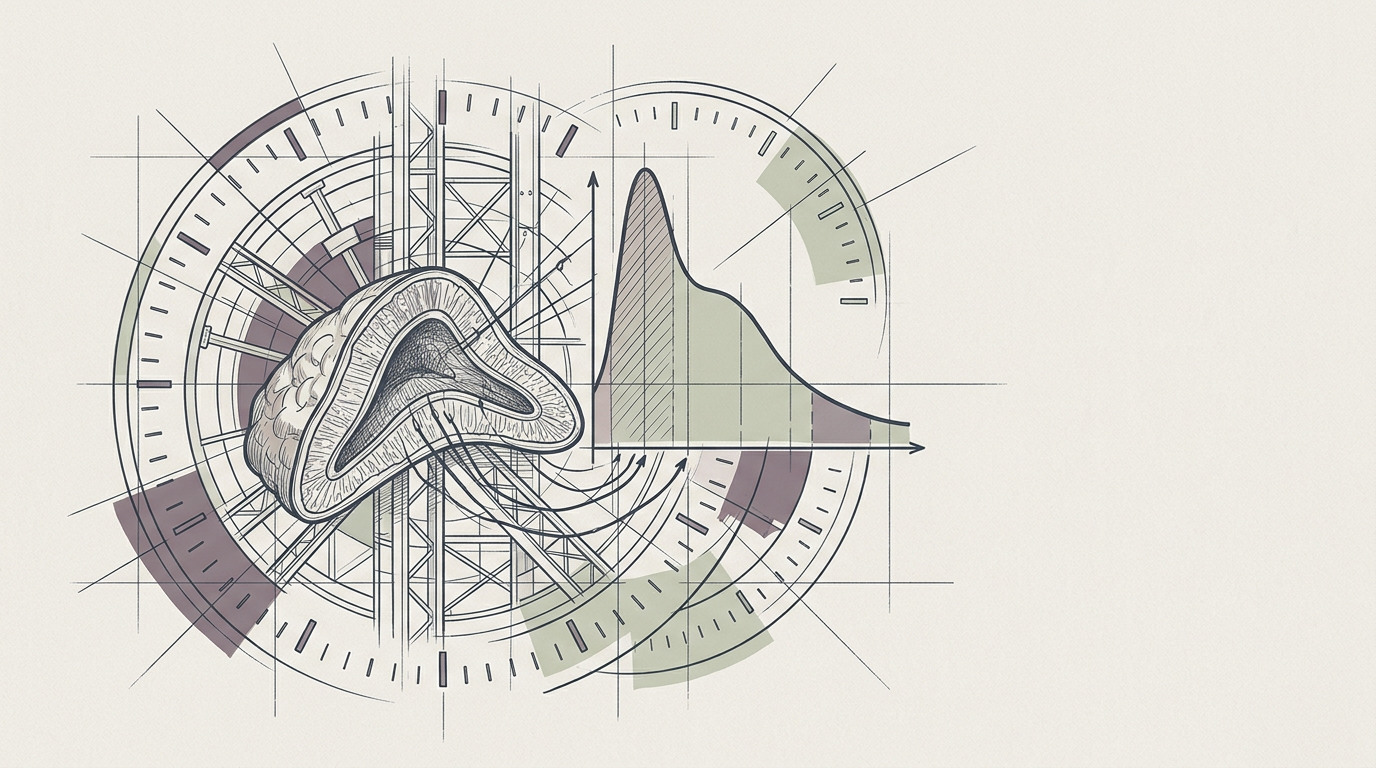
We’ve been trained to treat high cortisol like an enemy invasion. The moment we feel wired, frazzled, or unable to sleep, we google for quick-fix protocols to beat it back into submission. This turns your biology into a battlefield, with you fighting your own internal alarm system. But cortisol isn't the problem; it’s the messenger. Asking "cortisol alto que hacer?"—what to do about high cortisol—is a valid starting point, but the answer isn't about silencing the signal. It's about renovating the architecture that's causing the alarm to scream in the first place.
Common Questions
What is cortisol?
It's an energy mobilisation hormone, not just a "stress hormone". Your body releases it from your adrenal glands according to a daily rhythm, peaking in the morning to get you out of bed and declining through the day. It’s essential for life. The problem arises when the rhythm is disrupted and it stays high when it should be low.
Cómo bajo el cortisol?
The question itself frames the problem as a fight. A better question is, how do you rebuild the systems that regulate it? You can't just "lower" cortisol without consequences. Instead, you provide your body with strong signals—like morning light, timed meals, and gentle movement—so it can restore its own natural, healthy cortisol rhythm. It's about rebuilding, not just reducing.
Why do I feel "tired but wired"?
This is the classic signature of a dysregulated cortisol rhythm. You may have low cortisol in the morning when you need it (the "tired"), and inappropriately high cortisol at night when you don't (the "wired"). Your system has lost its dynamic range, stuck in a state of low-grade, exhausting vigilance.
Is all stress bad for cortisol levels?
No. Short, intense bursts of cortisol from exercise or a healthy challenge are fine; the system is built for that. According to Robert Sapolsky's decades of research, the real damage comes from chronic, unrelenting psychological stress. It's the difference between a sprint and being forced to jog in place for three weeks straight.
Related anchors: sleep anchor · skin anchor · burnt-out anchor
The Body Isn't Broken, It's Reporting a Fault
Everyone treats a high cortisol reading like a personal failing, a sign you haven't been meditating hard enough. It isn't. It's a perfectly logical output from a nervous system that perceives its environment to be chronically demanding or unsafe. Your HPA axis (hypothalamic-pituitary-adrenal axis)—the brain-body circuit that governs your stress response—is doing its job. It's hitting the accelerator because it thinks you need the fuel.
The goal isn't to cut the fuel line. It's to convince the driver—your brain's threat-detection system—that it can take its foot off the pedal. Chasing quick fixes with supplements or adaptogens without changing the underlying conditions is like putting a fancy rug over a hole in the floor. Sooner or later, you’re going to fall through. True nervous system regulation is about structural repair, not interior decorating.
Allostatic Load: Your Body's Overdraft Fee
When your HPA axis is constantly firing, you start to accumulate what endocrinologist Bruce McEwen called "allostatic load". Think of it as the biological wear and tear that results from being chronically overdrawn on your energy budget. Your body is smart; it adapts to the constant demand by changing its own baseline. It starts to expect stress.
High cortisol isn't the cost of living. It's the interest payment on a debt you didn't realise you were accruing.
This "new normal" is incredibly expensive. It reroutes resources away from long-term projects like immunity, digestion, and repair, and keeps them locked in short-term crisis mode. This is why chronic stress doesn't just feel bad; it actively dismantles your health from the inside out, contributing to everything from brain fog to metabolic issues. It's a state you can map, moment by moment, inside a tool like the Kokorology Journal.
The Rhythm Is The Regulation: Your Daily Cortisol Curve
Here’s the part everyone misses. The conversation around cortisol is obsessed with levels—high versus low. But the real story is in the rhythm. A healthy system has a sharp peak in cortisol about 30–60 minutes after waking (this is called the Cortisol Awakening Response) and then a steady decline throughout the day, reaching its lowest point around midnight.
This daily arc is the scaffolding for your energy, mood, and sleep. According to recent research, it’s the shape of this curve, not just a single data point, that predicts health outcomes. A 2017 meta-analysis by Emma Adam found that a blunted, or flattened, diurnal cortisol curve is strongly associated with burnout, depression, and fatigue.
When your curve is flat, you’ve lost contrast. There’s no bright "on" signal in the morning and no clear "off" signal at night. You're just... humming. It’s the physiological equivalent of living your entire life under the flat, draining light of a fluorescent-lit office. No sunrise, no sunset, just a constant, exhausting grey. Rebuilding that curve is the single most important project for anyone feeling burnt out.
So, Cortisol Alto Que Hacer? The Architect's Answer
The question, then, isn't how to attack high cortisol. It is: what inputs does my system need to rebuild its natural daily rhythm? Your body is listening, waiting for clear, unambiguous signals to anchor itself in time. Your job is to provide them. This isn't about willpower; it's about architecture.
Instead of chasing a feeling of calm, you provide the raw materials for it. Morning sunlight tells your master clock in the brain to start the 24-hour countdown. A protein-forward breakfast stabilises blood sugar and prevents an energy crash that the body might interpret as a crisis. An evening routine that dims the lights tells the system that the day's work is done and it's safe to power down. These aren't wellness fantasies; they are non-negotiable biological inputs. If you're overwhelmed and don't know where to start, a structured week-long programme like The Reset can provide the exact scaffolding you need.
What to do this week
This isn't a list of "stress hacks". It's a simple protocol to begin rebuilding your cortisol rhythm. Do all four for seven straight days and just notice the difference.
- Sunlight before screen-light. Before you touch your phone, get 5–10 minutes of direct morning sunlight in your eyes. This sets your circadian clock more powerfully than anything else. If it's dark or overcast, turn on all your brightest indoor lights.
- Front-load your protein. Eat a savoury breakfast with at least 30g of protein within 60 minutes of waking. This provides your body with stable energy, preventing a mid-morning slump that your adrenals would otherwise have to fix with a cortisol spike.
- Take a 15-minute walk after lunch. This small dose of movement helps with digestion and blunts the afternoon cortisol rise that can interfere with your evening wind-down.
- Create a 'light sunset'. 90 minutes before bed, dim all your lights and turn off overheads. Switch devices to night mode. This is a crucial signal to your brain to start producing melatonin and allow cortisol to reach its nightly low.
TL;DR
The question "cortisol alto que hacer" (what to do about high cortisol) mistakes the signal for the problem. High cortisol is a readout from a system under chronic load, not a personal failure. The most effective strategy isn't to attack the hormone, but to rebuild its natural daily rhythm. Researchers like Bruce McEwen and Emma Adam have shown that the shape of your cortisol curve is more important than any single level. You restore this rhythm by providing clear architectural signals: morning light, timed protein intake, and evening darkness.
Where this fits in the Kokorology system
This is a core principle of the Regulation pillar. Your cortisol rhythm is a key piece of your biological architecture. For a step-by-step protocol to rebuild it, see the Cortisol Anchor.
Closing
Shifting your frame from fighting cortisol to supporting its rhythm is a profound change in strategy. It moves you from a position of antagonism against your own body to one of collaboration. You stop trying to silence the alarm and start tending to the architecture so the alarm no longer needs to ring. It’s a quieter, more intelligent, and far more effective way to work.
- Start with the full protocol inside The Cortisol Anchor.
- Practice rebuilding your rhythm with The 7-Day Reset.
- Get weekly insights like this with our free Nervous System Regulation guide.
Sources
- Adam, E. K., et al. (2017). Diurnal cortisol slopes and mental and physical health outcomes: A systematic review and meta-analysis. Psychoneuroendocrinology, 83, 25–41.
- McEwen, B. S. (2017). Neurobiological and systemic effects of chronic stress. Chronic Stress (Thousand Oaks), 1.
- Sapolsky, R. M. (2015). The physiological basis of the stress-disease connection. Acta Physiologica, 215(S701), 3–11.