Nervous System
Your Brain Is Screaming for Carbs Right Now. Here Is Why.
A progesterone crash in the luteal phase temporarily drops insulin sensitivity and brain serotonin. Even 10mg of Mounjaro cannot stop what the nervous system demands. Fighting it with willpower only raises cortisol an…
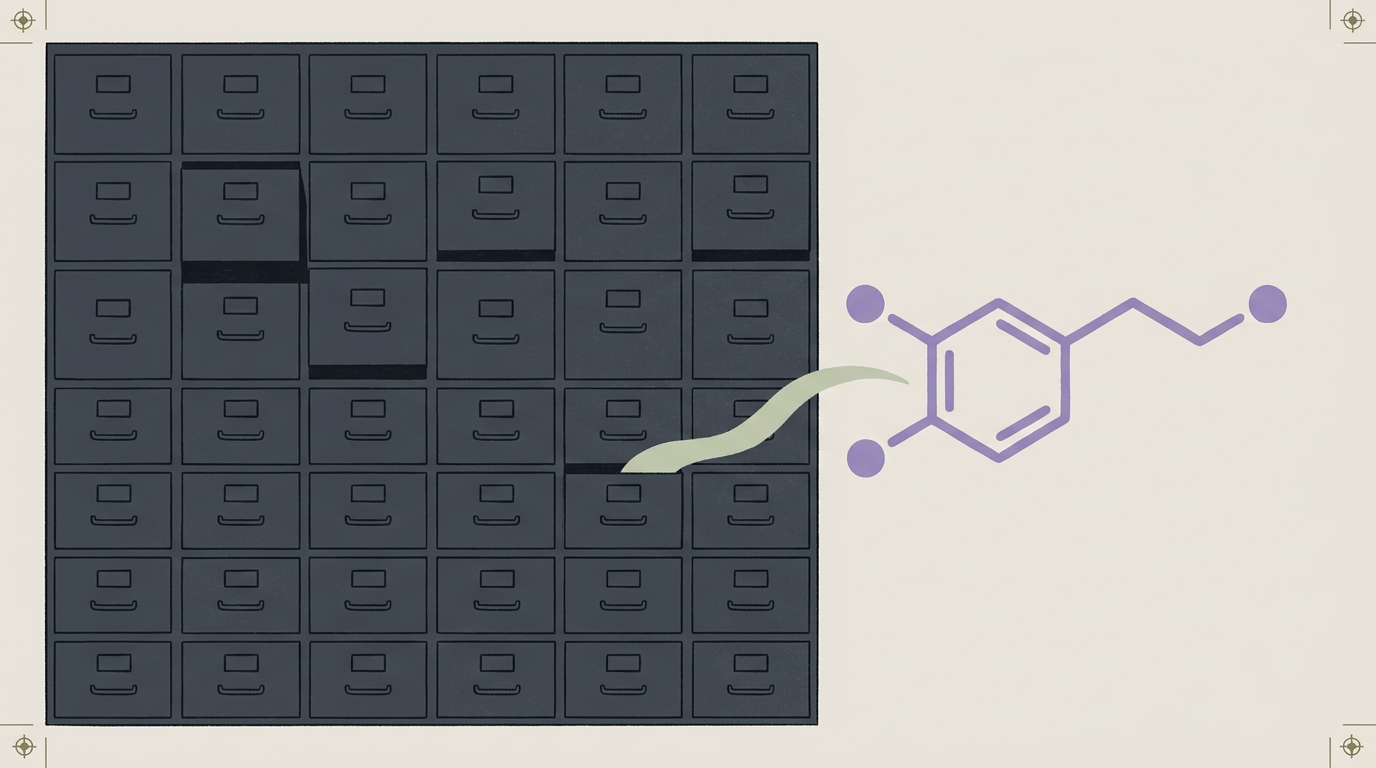
Your Brain Is Screaming for Carbs Right Now. Here Is Why.
The belief that your craving for carbs is a personal failure is the wellness industry's most profitable lie. It's not a moral test you're failing; it's a non-negotiable request from your brain for the raw materials it needs to build neurotransmitters. Fighting it is not discipline. It's just picking a fight with your own nervous system, an opponent with a perfect home-field advantage and a direct line to your adrenal glands. You will not win.
Common Questions
Why do I crave carbs before my period?
A drop in progesterone during the late luteal phase makes your cells slightly less responsive to insulin and can lower serotonin. Your brain, wanting more serotonin, sends a strong signal for the fastest raw material to produce it: simple carbohydrates. It's a biological demand, not a character flaw.
Is it bad to give in to carb cravings?
Not inherently. The problem isn't the craving, it's the kind of carb you use to answer it. A refined sugar bomb causes a sharp insulin spike and crash, making things worse. A complex carbohydrate provides a more sustained release, satisfying the brain's request without derailing your entire system.
Can stress cause carb cravings?
Yes. Chronic stress elevates cortisol, which interferes with blood sugar and can deplete serotonin reserves. Your brain then calls for a quick carb fix to get a temporary mood lift. It's a short-term coping mechanism hardwired into your HPA axis, your body's central stress response system.
Does this only happen to women?
No, though the monthly cyclical driver is specific to the menstrual cycle. The stress-cortisol-serotonin pathway is universal. A high-pressure job, poor sleep, or over-training—anything that dysregulates the state of your nervous system—can trigger the same demand for a quick-energy carb hit to temporarily patch a neurochemical deficit.
The Willpower Tax
The advice to "just have more discipline" when a craving hits is not only useless, it's actively harmful. Fighting a physiological demand with brute-force willpower is like trying to hold your breath indefinitely. You can manage for a bit, but biology always wins. The struggle itself is a stressor, raising the very cortisol that likely contributed to the craving in the first place. You are paying a tax on your system for zero return.
This creates a vicious loop: you feel a biological urge, you try to suppress it with shame and willpower, your stress levels rise, the biological urge gets stronger, and eventually you "give in"—not because you're weak, but because your body executed an override command. Then you blame yourself, adding another layer of stress, and the whole cycle primes itself to run again tomorrow.
A Neurochemical Pink Tax
For those who menstruate, this pattern is often sharpest in the luteal phase—the one to two weeks before your period. A predictable crash in the hormone progesterone has two key architectural consequences: it temporarily decreases your cells' insulin sensitivity and messes with brain serotonin production. Serotonin is your "everything is fine, we have enough resources" neurotransmitter. When it dips, your brain, an organ obsessed with survival, initiates a search for the fastest possible precursor. That precursor is carbohydrates.
It's not you being "weak for chocolate." It's your brain doing chemistry with the ingredients available. It's a neurochemical pink tax, levied monthly. Even a powerful GLP-1 medication can't entirely stop a hormonal directive this fundamental. The demand is coming from the system's core operating instructions, and ignoring it just turns up the volume on the alarm bells. Tracking your cycle with a tool like the Kokorology Journal isn't about navel-gazing; it's about seeing the architectural blueprint so you can anticipate the demand instead of being run over by it.
The Architecture of a Stress Craving
Let's zoom in on the mechanism. Your Hypothalamic-Pituitary-Adrenal (HPA) axis is the stress-hormone control loop running from your brain to your adrenal glands and back again. When it’s chronically activated (the signature state of modern work), cortisol levels stay high. This isn't just a vibe; it has concrete biochemical effects. Specifically, chronically high cortisol interferes with the transport of tryptophan—serotonin’s essential precursor amino acid—across the blood-brain barrier.
Fewer raw materials mean less serotonin. In response, the brain triggers a craving for high-glycemic carbohydrates. Why? Because the insulin spike from those carbs helps force more tryptophan into the brain, giving you a temporary, blessed bump in serotonin. Your desperate craving for a pastry at 3 PM isn't a personality flaw. It’s a desperate architectural workaround for a supply chain problem. Deeper dives on these mechanisms are available in our Library.
The body doesn't have moral failings; it has supply chain issues.
Sledgehammers vs. Socket Wrenches
The wellness industry sold you an oversimplified, unhelpful story: carbs are the enemy. This is nonsense. A handful of candy and a bowl of quinoa are both carbohydrates, but they are not the same tool. One is a sledgehammer that smashes your blood sugar regulation to bits; the other is a set of socket wrenches for a specific repair job.
The sledgehammer—highly refined sugar, processed snacks—creates a massive insulin spike, a brief and frantic serotonin bump, and a subsequent crash that leaves your system more dysregulated than before. The socket wrench—a complex carb like a sweet potato, sourdough bread, or berries—provides a slower, more sustained glucose release. It satisfies the brain's request for materials without sending your entire metabolic framework into a boom-bust cycle. The appropriate response to a craving is not to ignore it, but to answer it intelligently.
Yes, the Vagus Nerve Again
This entire process is mediated by interoception—the nervous system's capacity to sense the internal state of the body. The main information highway for this is the vagus nerve. When your nervous system is dysregulated, interoceptive clarity is low. The brain can't easily distinguish "I'm tired" from "I'm stressed" from "I'm actually hungry." The signals blur into one generic, high-alert alarm: "GET ENERGY NOW."
This is when the call for the crudest, loudest, fastest form of energy—sugar—is most intense. Improving your vagal tone, the baseline activity of this nerve, is like cleaning a dirty sensor. The signals become clearer. You start to recognize what your body is actually asking for. Often, the answer is sleep, a walk, or five minutes of quiet, not a donut. A 60-second cold splash to the face or a few resonant hums are not "self-care;" they are nervous system Hacks that reboot the sensor, clarifying the signal.
What to do this week
- Track the signal. For three days, when a strong craving hits, pause. Don't act or resist. Notice the time, what you were just doing, and how you feel (bored, stressed, tired, angry?). You’re not judging, you're gathering data. Use the Kokorology Journal or any notebook.
- Upgrade your response. When the craving comes, have a better tool ready. Answer the request with a small baked sweet potato, a handful of berries, or an apple with almond butter. Observe how you feel 30 minutes later.
- Front-load your stability. Eat a breakfast rich in protein and healthy fats. This stabilizes blood sugar for hours, dramatically reducing the likelihood of a frantic neurochemical S.O.S. call from your brain later in the day.
- Deploy the Physiological Sigh. When a craving feels panicky or stress-driven, interrupt the circuit. Take a deep inhale through your nose, then another small sip of air at the top to fully inflate your lungs. Then, a long, slow, complete exhale through your mouth. Do this twice. This is a direct intervention, not a mindset trick.
Where this fits in the Kokorology system
Understanding these biological demands is a core part of building your own owner's manual. This isn't about willpower; it's about architecture. You learn the foundations of this in our L1 Regulation Course, and apply it daily through our guided Anchors.
Closing
Your body is a logical system, not a recalcitrant toddler. Its requests, however inconvenient, contain data. The craving for carbs isn't a sign of weakness; it's a readout of a neurochemical deficit. The work isn't to silence the signal with shame, but to learn to read it, and then fulfill the request with a tool that works for the system, not against it.
- Start tracking these patterns daily inside the Kokorology Journal.
- Work with us on the underlying mechanisms in our foundational course, Regulation (L1).
- Start with our free guide to the nervous system.
TL;DR
Your intense craving for carbs isn't a moral failing; it's a biological demand. Hormonal shifts, particularly the progesterone drop in the luteal phase, reduce serotonin and destabilize blood sugar, prompting the brain to call for a quick carbohydrate fix. Chronic stress does the same via cortisol signaling. Fighting this demand with willpower only increases stress. The solution is not to ignore the craving, but to answer it strategically with complex carbohydrates that support your system instead of derailing it.
Sources
- Kristen G. Hairston et al. (2010). The relationship between adrenal androgens, glucose metabolism and visceral adiposity in premenopausal women. Clinical Endocrinology.
- Stephen W. Porges (2011). The Polyvagal Theory: Neurophysiological Foundations of Emotions, Attachment, Communication, and Self-Regulation. W. W. Norton & Company.
- Robert Sapolsky (2004). Why Zebras Don't Get Ulcers. Holt Paperbacks.
- Richard D. Wurtman & Judith J. Wurtman (1995). Brain serotonin, carbohydrate-craving, obesity and depression. Obesity Research.