Nervous System
Your Brain Is Screaming for Carbs Right Now. Here Is Why.
A progesterone crash in the luteal phase temporarily drops insulin sensitivity and brain serotonin. Even 10mg of Mounjaro cannot stop what the nervous system demands. Fighting it with willpower only raises cortisol an…
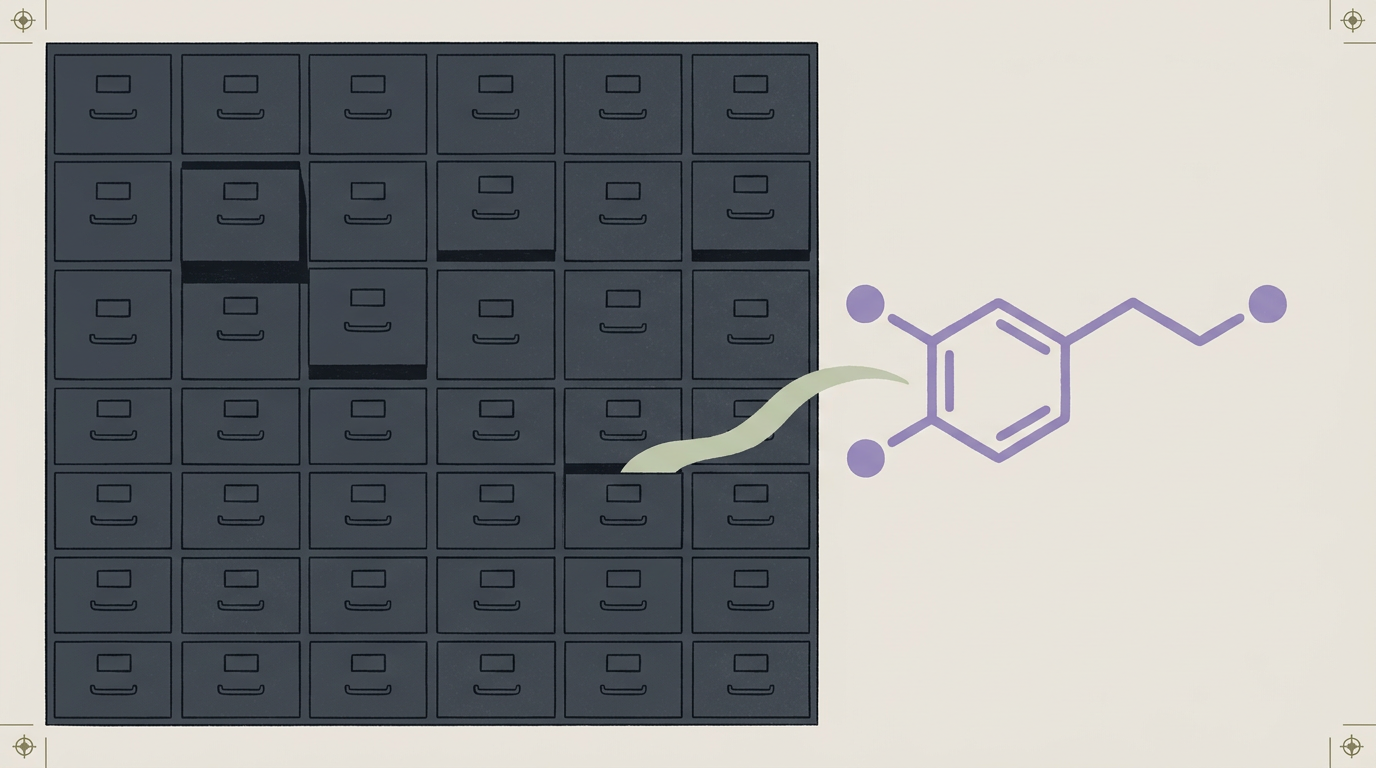
I've stopped telling people to push through the 3 PM sugar crash with a glass of water and a walk. That was terrible advice. The wellness industry treats a carb craving as a lapse in discipline that you must out-meditate. A sudden, violent demand for simple carbohydrates is actually a forced behavioral override from your nervous system. When the brain runs low on the raw materials needed to manufacture serotonin, it hijacks your behavior to get them. Fighting it with sheer willpower just spikes your cortisol, accelerating the exact depletion you're trying to fix.
You know the exact physical sensation of this crash. You are standing in front of the open fridge with no physical hunger, scanning the shelves while your jaw is tightly clenched from a day of meetings. You feel exhausted but can't rest, your eyes darting from the leftover pasta to the chocolate chips in the back. The second coffee you had at 2 PM didn't land, and now you have that specific brain fog after eating your sensible salad that makes finishing a single email feel like dragging a sled through mud. You feel anxious for no reason, pacing the kitchen while your shoulders hover somewhere up near your ears. This is the physiological reality of a system running on fumes, demanding an immediate, high-glycemic intervention to keep the lights on.
Common Questions
Why do I crave carbs before my period?
A drop in progesterone during the late luteal phase makes your cells slightly less responsive to insulin and alters serotonin production. The brain senses this dip and signals for the fastest raw material available to manufacture more: simple carbohydrates. It is a biological demand for specific chemistry.
Is it bad to give in to carb cravings?
The craving itself is neutral data. The trouble usually comes from the specific carbohydrate chosen to answer it. A massive hit of refined sugar causes a sharp insulin spike and an immediate crash, further dysregulating your state. Complex carbohydrates provide a slower release that satisfies the request sustainably.
Can stress cause carb cravings?
Yes. Chronic stress keeps cortisol high, which interferes with blood sugar regulation and rapidly burns through serotonin reserves. Your system then demands a quick carbohydrate hit to force a temporary mood and energy lift. This is a short-term coping mechanism hardwired into your HPA axis.
Does this only happen to women?
The cyclical hormonal driver is specific to the menstrual cycle. However, the stress-cortisol-serotonin pathway applies to everyone. Poor sleep, a high-pressure week, or heavy training can trigger the identical demand for a quick-energy hit to patch a neurochemical gap.
Doing chemistry with what you have
For those who menstruate, this pattern usually peaks in the luteal phase, those ten to fourteen days before your period begins. A predictable crash in progesterone temporarily decreases your cells' insulin sensitivity and alters how the brain synthesizes serotonin. Serotonin is your primary safety neurotransmitter—the chemical signal that resources are plentiful and the environment is secure. When it dips, the brain, an organ obsessed entirely with survival, initiates a frantic search for the fastest possible precursor to make more. That precursor is carbohydrates.
Your body is simply doing chemistry with the ingredients available. Even if you're taking 10mg of a powerful GLP-1 medication, you'll likely still feel this fundamental hormonal directive pulling at your attention. Ignoring the demand just turns up the volume on the autonomic alarm bells. I track my own cycle using the Kokorology Journal purely to anticipate this physiological shift. Having the right foods ready beats being caught off guard when the emergency override kicks in.
Biology always wins a staring contest with willpower.
The serotonin bottleneck
Let's look at the actual machinery. The Hypothalamic-Pituitary-Adrenal (HPA) axis is the control loop running from your brain to your adrenal glands and back again. When it sits in a chronically activated state—otherwise known as a standard Tuesday in modern corporate life—cortisol stays high. The adrenal glands have never once been impressed by your inbox.
Elevated cortisol actively interferes with the transport of tryptophan across the blood-brain barrier. Tryptophan is the essential amino acid required to make serotonin. Fewer raw materials crossing the barrier means less serotonin gets produced. In response, the brain triggers a craving for high-glycemic carbohydrates. An insulin spike helps force more tryptophan into the brain, giving you a temporary, blessed bump in serotonin. Your desperate need for a pastry at 3 PM is a physiological workaround for a biological shortage. Kokorology keep deeper dives on these specific cascades in the Library.
The static on the line
This entire process relies on interoception, your nervous system's capacity to sense the internal state of the body. When your baseline state is highly dysregulated, interoceptive clarity degrades. The brain can't easily distinguish a lack of sleep from a surge of anxiety from a genuine need for glucose. The distinct signals blur into one generic, high-alert alarm demanding immediate energy.
This is when the call for the crudest, loudest form of fuel is most intense. Improving your vagal tone—the resting activity of the vagus nerve, which acts as the parking brake for your nervous system—clears the static on the line. The signals become sharper. You start to recognize what your body actually needs. Often, the actual answer is an hour of extra sleep or five minutes of quiet. A 60-second cold splash to the face is a direct nervous system Hack that reboot the sensor, clarifying the sensation.
Answering the request
Your nervous system doesn't care about your macro targets. I used to believe all carbs were interchangeable, provided they fit my daily calorie count. That was before I tracked what a bowl of plain white rice did to my resting heart rate three hours later. Highly refined sugar creates a massive insulin spike, a brief and frantic serotonin bump, and a subsequent crash that leaves your system completely dysregulated.
A complex carbohydrate like a sweet potato, sourdough bread, or a handful of berries provides a slower, sustained glucose release. It satisfies the brain's request for materials without sending your physiology into a massive spike and crash. The appropriate response to a craving is to answer it intelligently with a tool that works for the system.
What to do this week
- Track the signal. For three days, when a strong craving hits, just pause. Notice the time, what you were doing, and how you feel—bored, stressed, tired, or genuinely hungry. You aren't judging the craving; you are just gathering data.
- Upgrade the response. Have a better tool ready. Answer the afternoon request with a small baked sweet potato, a handful of berries, or an apple with almond butter. Watch what happens to your focus thirty minutes later.
- Front-load the protein. Eat protein and healthy fats early in the day. This stabilizes blood sugar for hours, significantly reducing the likelihood of a frantic neurochemical demand from your brain at 4 PM.
- Interrupt the circuit. When a craving feels panicky or entirely stress-driven, take a deep inhale through your nose, a small sip of air at the top, and a long exhale through your mouth. Do it twice.
Where this fits in the Kokorology system
Understanding these biological demands is a core part of establishing a regulated baseline. You learn the foundations of this state-shifting in the Regulation course, and apply it daily through the guided Anchors.
Closing
Your body is a highly logical system. Its requests, however inconvenient, contain precise data. The craving for simple carbs is a literal readout of a neurochemical state. The work is to learn to read the signal accurately, and then fulfill the request with a choice that actually resolves the state rather than prolonging it.
- Work with the system on the underlying mechanisms in the foundational course, Regulation (L1).
- Track your interoceptive signals daily inside the Kokorology Journal.
- Start with the free guide to the nervous system.
TL;DR
Your intense craving for carbs is a pure biological demand. Hormonal shifts, particularly the progesterone drop in the luteal phase, alter serotonin synthesis and destabilize blood sugar, prompting the brain to pull the alarm for a quick carbohydrate fix. Chronic stress does the exact same thing via elevated cortisol. Fighting this demand with willpower only increases your stress load. The solution is to answer the craving strategically with complex carbohydrates that support your nervous system instead of spiking your insulin.
Sources
- Richard D. Wurtman & Judith J. Wurtman (1995). Brain serotonin, carbohydrate-craving, obesity and depression. Obesity Research.
- Kristen G. Hairston et al. (2010). The relationship between adrenal androgens, glucose metabolism and visceral adiposity in premenopausal women. Clinical Endocrinology.
- Lisa Feldman Barrett (2017). How Emotions Are Made: The Secret Life of the Brain. Houghton Mifflin Harcourt.
- Sahib S. Khalsa et al. (2018). Interoception and Mental Health: A Roadmap. Biological Psychiatry: Cognitive Neuroscience and Neuroimaging.