Nervous System
Sympathetic neural tone and 24-hour fatigue
Being tired but wired is not a moral failing. It is a mechanical problem where the body's accelerator pedal is stuck to the floor.
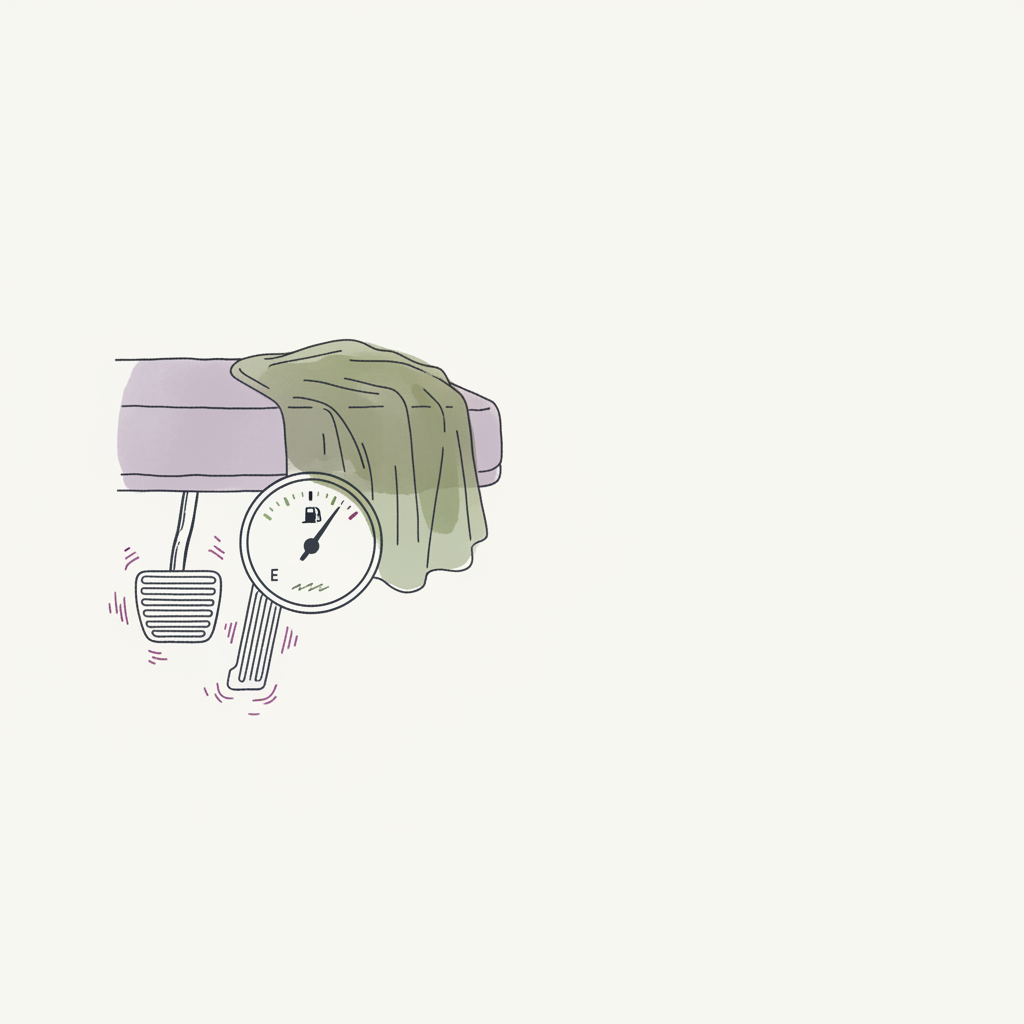
The feeling of being 'tired but wired' is your nervous system’s version of screaming into a pillow. It’s not a personal failing, a caffeine overdose, or a sign you need more grit. It is a physiological state, a structural readout telling you that your body's accelerator pedal is stuck to the floor while the engine is running on fumes. The problem isn't your willpower; it's your wiring.
It’s 11 p.m. You’re scrolling through your phone, eyes burning, mind blank. You know you should sleep, but your body is humming with a strange, restless energy. When you finally lie down, your heart is racing for no reason. You feel profoundly exhausted but can't rest, a state so familiar it’s almost boring. During the day, you’re foggy and irritable, relying on a second coffee that just makes you jittery. You feel disconnected from your body, wondering why a perfectly normal day has left you feeling both drained and on high alert. This is the classic signature of being tired but wired: your biology is braced for a threat that your conscious mind can't see.
Common Questions
What does 'tired but wired' actually mean?
It’s a state of high sympathetic nervous system activation combined with physical exhaustion. Your body is flooded with stress hormones like adrenaline and cortisol, keeping you alert and vigilant, even when your energy reserves are completely depleted. Your accelerator is floored, but the tank is empty.
Is this just a problem with cortisol?
Cortisol gets all the attention, but it’s only part of the story. Being tired but wired involves the entire stress-response system, including the fast-acting adrenaline and noradrenaline that create the 'wired' buzz. Focusing only on cortisol is like blaming one single musician for an orchestra playing out of tune.
Can supplements fix being tired but wired?
No. While certain nutrients support the nervous system, supplements are like patching a single leak in a dam that is structurally unsound. The fix for being tired but wired isn't about adding a new powder to your smoothie; it's about renovating the architecture of your stress response.
Related anchors: vagal tone anchor · sleep anchor · burnt-out anchor
Your 'Normal Day' is the Problem
Most people's 'normal day' is a masterclass in how to convince your ancient biology that it's being persistently hunted by a predator that pays its invoices late. The back-to-back calls, the endless notification stream, the 5-to-9 hustle after the 9-to-5, the guilt over taking a proper lunch break—these aren't just items on a to-do list. Each one is a micro-dose of threat that keeps your sympathetic nervous system—the 'fight or flight' machinery—simmering.
Your body doesn't distinguish between a deadline and a tiger. It just registers the demand. When these demands are relentless, your system never gets the 'all-clear' signal to stand down. It learns to live at a higher baseline of activation. This elevated sympathetic tone is why you can feel exhausted after a day spent entirely in a chair. Your body has been running a marathon, even if you haven't moved a muscle.
The problem isn't that you're stressed. It's that you've forgotten how to be not-stressed.
The first step is to stop grading your days by productivity and start assessing them by physiological cost. The goal isn't to do less, but to build in moments that deliberately signal safety to your nervous system. A five-minute walk without your phone, a few slow breaths before your next meeting, actually closing your laptop at the end of the day. These aren't luxuries; they are non-negotiable maintenance for a system running too hot.
The Alarm System That Won't Switch Off
To understand why you feel tired but wired, you need to meet the two key players in your brain's security team. First is the HPA axis (the hypothalamic-pituitary-adrenal axis), the control loop that runs from your brain to your adrenal glands. This is the slow-burn, paperwork-heavy emergency response that releases cortisol. It’s designed for sustained crises, like a famine or a long winter.
Second is the locus coeruleus, a tiny cluster of cells deep in your brainstem. Think of it as the bouncer at the door with a twitchy finger on the panic button. It’s the main source of noradrenaline in the brain, the chemical that creates vigilance, focus, and arousal. It’s what snaps you awake when you hear a strange noise at night.
In a state of chronic stress, these two systems get stuck on. The HPA axis keeps pumping out cortisol, disrupting your sleep and metabolism. Simultaneously, the locus coeruleus becomes over-sensitive, firing off noradrenaline in response to minor triggers—an annoying email, a traffic jam, a news alert. The result is a body exhausted by cortisol but simultaneously jolted into alertness by noradrenaline. You are both drained and perpetually startled. This isn't a feeling; it's a specific neurochemical signature.
Your Rhythm is Your Regulator
Your nervous system is tethered to rhythm. The most important of these is your circadian rhythm, the 24-hour clock that governs nearly every process in your body, including your stress response. When this rhythm is stable, cortisol peaks naturally in the morning to wake you up and falls in the evening to allow for sleep. When it's disrupted, chaos ensues.
This disruption looks different depending on where you are. In the UK and Ireland, it can be the long, grey winters that flatten the light-dark cycle. In the the system, it’s often the ambition to grind through a '5-to-9' after your '9-to-5', treating sleep as an inconvenience. For the readers in the Gulf, the powerful air conditioning and late-night social culture can unmoor the body from the natural heat and light cycles outside. In India, the intensity of the school run or the metabolic load of a festival season can create a similar mismatch.
Your body's clock is set primarily by light. Getting bright, natural light in your eyes within the first hour of waking is the most powerful signal you can send to anchor your entire hormonal system for the day. It tells your HPA axis, 'The day has begun, you can start the clock now.' Without this clear signal, the system is left guessing, often leading to that flat, tired feeling in the morning and a 'second wind' of wired energy just as you should be winding down. Re-establishing this rhythm is a foundational piece of nervous system regulation.
What to do this week
- Practice the Physiological Sigh. At three random points in your day, take two sharp inhales through your nose followed by one long, slow exhale through your mouth. This is one of the fastest ways to engage your vagus nerve and manually downshift from a sympathetic state.
- Get 10 minutes of morning light. Before you look at a screen, get outside or stand by a bright window. Don't wear sunglasses. This single action helps set your circadian clock and regulate cortisol timing for the entire day.
- Track the 'wired' feeling. In the Journal or a simple notebook, make a note of what time you feel that 'tired but wired' buzz. What just happened? An email? A conversation? A thought? Don't judge it; just notice the trigger. Awareness precedes control.
Where this fits in the Kokorology system
The 'tired but wired' state is a classic sign of chronic sympathetic activation and a dysregulated HPA axis. It's not a fringe symptom; it's a core readout that your system's capacity is overloaded. This is the exact territory Kokorology navigate in the Regulation (L1) course, and for those feeling completely overwhelmed, the 7-day Reset is designed to help you find the floor.
Closing
This isn't about finding a magic bullet, but about learning to operate the machinery you already own.
- Start with the 7-day Reset to build a stable foundation.
- Practice daily inside the Journal to map your own patterns.
- Get the free guide to the nervous system to understand the architecture.
TL;DR
The feeling of being 'tired but wired' is not a mood or a mindset problem. It is a physiological state caused by a chronically activated sympathetic nervous system and a dysregulated HPA axis. Your body is stuck in 'on' mode, flooded with alertness signals like noradrenaline even when your energy reserves are empty. The solution is architectural: manually engaging the parasympathetic nervous system (the 'brake') and re-anchoring your circadian rhythm to restore your body's natural capacity for rest.
Sources
- Robert M. Sapolsky (2005). The influence of social hierarchy on primate health. Science.
- Sonia J. Lupien et al. (2009). Effects of stress throughout the lifespan on the brain, behaviour and cognition. Nature Reviews Neuroscience.
- Hugo D. Critchley & Sarah N. Garfinkel (2017). Interoception and emotion. Current Opinion in Psychology.
- Melis Yilmaz Balban et al. (2023). Brief structured respiration practices enhance mood and reduce physiological arousal. Cell Reports Medicine.
- Kevin J. Tracey (2002). The inflammatory reflex. Nature.