Nervous System
Sympathetic neural tone and 24-hour fatigue
The tired-but-wired state is a mechanical problem where your sympathetic nervous system is pinned open and your brain is flooded with alertness signals.
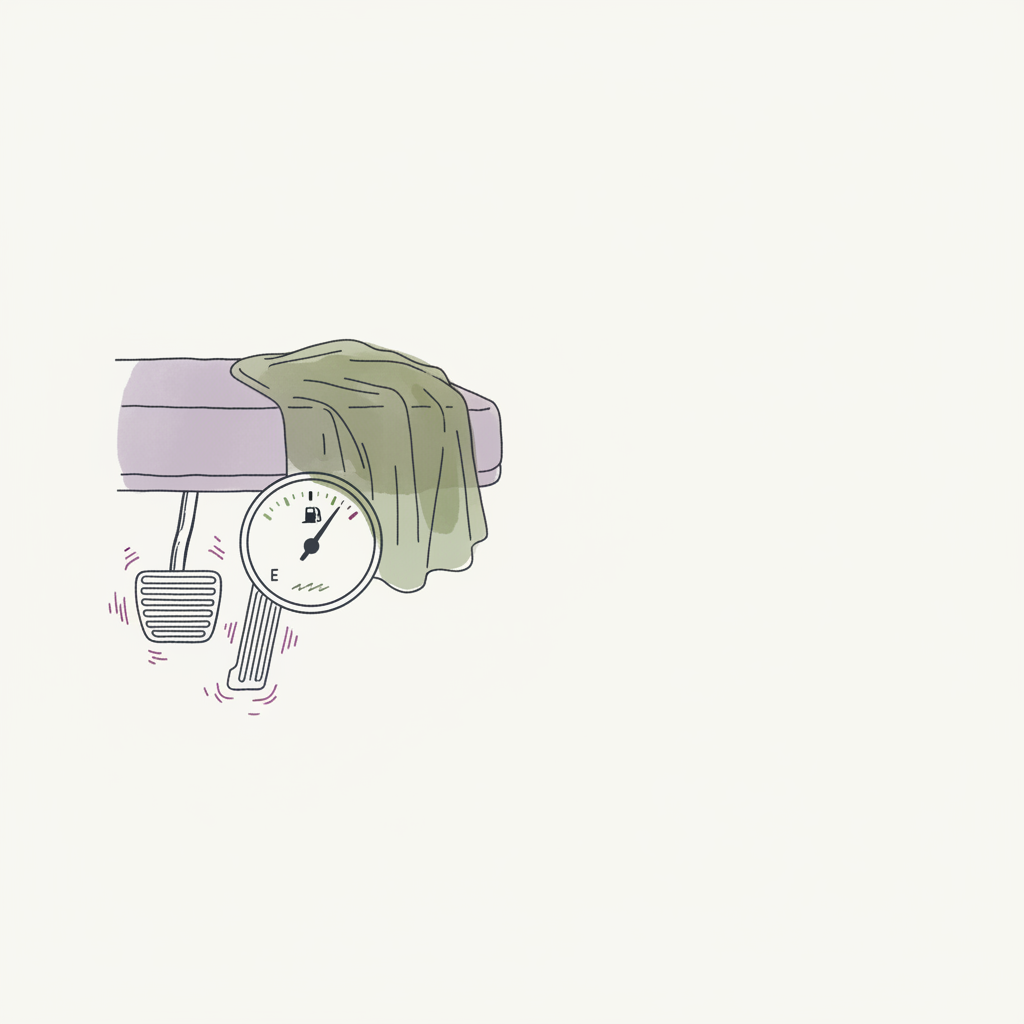
The supplement aisle treats the tired-but-wired state as a magnesium deficiency, and the optimization forums blame your blue light exposure. I used to treat it as a scheduling error, convinced I could time-block my way out of the late-night buzz behind my eyes. All of these approaches ignore the actual machinery. That vibrating exhaustion is a flat-out sympathetic nervous system lock, driven by an HPA axis (the stress-hormone loop running from your brain to your adrenal glands) that no longer knows how to stand down.
You know the exact hour. It's 11:47 p.m., your eyes are burning, and you're doom-scrolling through a feed you don't even care about. You feel that classic tired but wired hum in your forearms, and when you finally put the phone face down, your heart is racing for no reason. You're profoundly depleted, yet you can't sleep even though exhausted. The next day, you rely on a second coffee that just makes your jaw clench tighter, leaving you staring into an open fridge with zero hunger. You wake up at 3am feeling completely disconnected from your body, wondering why a perfectly ordinary Tuesday has left you simultaneously drained and braced for an impact that never comes.
Common Questions
What does tired but wired actually mean?
It is a state of high sympathetic nervous system activation combined with physical exhaustion. Your system is flooded with stress hormones like adrenaline and cortisol, keeping you vigilant even when your physical capacity is completely depleted. Your body is burning fuel it doesn't currently possess.
Is cortisol the main culprit?
Cortisol gets all the attention because it is easy to measure, but the fast-acting adrenaline and noradrenaline create the actual buzzing sensation. Chronic stress leaves both systems stuck in the 'on' position, flooding your brain with alertness chemicals while simultaneously draining your baseline energy.
Can supplements resolve the late-night buzz?
While specific nutrients support general function, no powder can override an autonomic nervous system that firmly believes it is under threat. Regulating this state requires shifting the physiological signals your brain receives, rather than just adding compounds to a hyper-aroused system.
The alarm system that ignores your logic
Kokorology live in a culture that consistently convinces the ancient biology it is being hunted by predators. The back-to-back calls, the unread messages, the expectation of a 5-to-9 hustle after the 9-to-5—each one registers as a micro-dose of threat that keeps your sympathetic nervous system simmering. Your brain doesn't distinguish between a looming deadline and a physical attack. It just measures the demand and shifts your state accordingly.
I've stopped recommending complex evening wind-down routines for this. If you spend twelve hours teaching your nervous system to stay on high alert, ten minutes of chamomile tea at 10 p.m. won't reverse the momentum. Your body learns to live at a higher baseline of activation, which is exactly why you feel exhausted after a day spent entirely in a desk chair. Your inbox has never once been impressed by your elevated heart rate, yet your body reacts as if your life depends on it.
What I notice in sessions is that people try to logic their way out of a chemical state. You cannot reason with an autonomic reflex; you can only change its inputs.
The locus coeruleus and the midnight kitchen
To understand the mechanics, Kokorology have to look at two specific components of your internal security team. First is the HPA axis, the slow-burn emergency response that releases cortisol to handle sustained crises. Second is the locus coeruleus, a tiny cluster of cells deep in the brainstem. Think of it as a highly sensitive alarm system calibrated for immediate physical danger.
The locus coeruleus is the main source of noradrenaline in the brain. It controls vigilance, focus, and arousal. Under chronic load, both systems malfunction. The HPA axis keeps dripping cortisol, disrupting your metabolism, while the locus coeruleus becomes hypersensitive. It starts firing off noradrenaline in response to entirely harmless inputs—a Slack notification, a loud car outside, a misplaced set of keys. You are drained by the cortisol but jolted awake by the noradrenaline.
Your biology is flawlessly executing an emergency protocol for a crisis that exists entirely on a screen.
This is the exact neurochemical signature of wanting to reorganize your kitchen at midnight when you can barely keep your eyes open.
Your rhythm dictates your regulation
Your nervous system requires rhythm to function. The circadian clock governs nearly every process in your body, and when it destabilizes, the predictable morning cortisol peak flattens out, leaving you groggy at dawn and wired at midnight. Kokorology are seeing this disruption scale up environmentally, too. Recent tracking out of Nebraska highlighted how relentless nighttime heatwaves are destroying sleep pressure, proving that when the physical environment offers no cooling relief, the body's autonomic recovery simply stalls.
You cannot force the locus coeruleus to calm down through sheer willpower. The strongest signal you can send to anchor your hormonal system is bright, natural light in your eyes within the first hour of waking. It gives the HPA axis a definitive biological cue to begin the daily cycle. Without it, the system guesses, usually resulting in that sluggish morning fog and a completely inappropriate second wind at 10 p.m. Re-establishing this rhythm is the foundational step of nervous system regulation.
What to do this week
- Step outside for ten minutes of unfiltered morning light before looking at a screen. This anchors the circadian clock and regulates cortisol timing for the entire day.
- Use the physiological sigh to manually engage the vagus nerve. Take two sharp inhales through the nose, followed by one long, audible exhale through the mouth. Do this three times when you notice your jaw clenching.
- Track the specific hour the buzz hits. Use the Journal to document exactly when the wired feeling peaks. Don't analyze it; just record the time and the preceding event to map your own neurochemical spikes.
Where this fits in the Kokorology system
The tired-but-wired state is a loud, mechanical readout of an overloaded system. Kokorology map this exact territory in the Regulation (L1) course to help you rebuild capacity. If you are currently running on fumes and the buzz is constant, the 7-day Reset provides a structured path back to a functional baseline.
Closing
Regulating this state requires you to operate the machinery you actually have, rather than fighting the biology you wish you had.
- Start with the 7-day Reset to build a stable physiological baseline.
- Practice daily inside the Journal to map your own triggers.
- Sit with this in the Regulation (L1) course to master the mechanics.
TL;DR
The feeling of being tired but wired is a mechanical state driven by a chronically activated sympathetic nervous system and a dysregulated HPA axis. Your body remains locked in a high-alert posture, flooded with vigilance signals like noradrenaline long after your physical energy is depleted. Resolving this requires manually engaging the parasympathetic nervous system and anchoring your circadian rhythm with morning light to restore your baseline capacity for rest.
Sources
- Sonia J. Lupien et al. (2009). Effects of stress throughout the lifespan on the brain, behaviour and cognition. Nature Reviews Neuroscience.
- Melis Yilmaz Balban et al. (2023). Brief structured respiration practices enhance mood and reduce physiological arousal. Cell Reports Medicine.
- Grist - Health & Environment (2026). Nighttime heatwaves threaten sleep, health in Nebraska. Grist.
- Julian F. Thayer (2009). Vagal tone and the inflammatory reflex. Cleveland Clinic Journal of Medicine.