Workplace & Leadership
Capacity Before Strategy: Why Most Leaders Burn Out Inside Their Own Plan
Leaders burn out not because the strategy is wrong but because the nervous system that has to deliver it was never built for the load. The Architecture, applied to leadership.
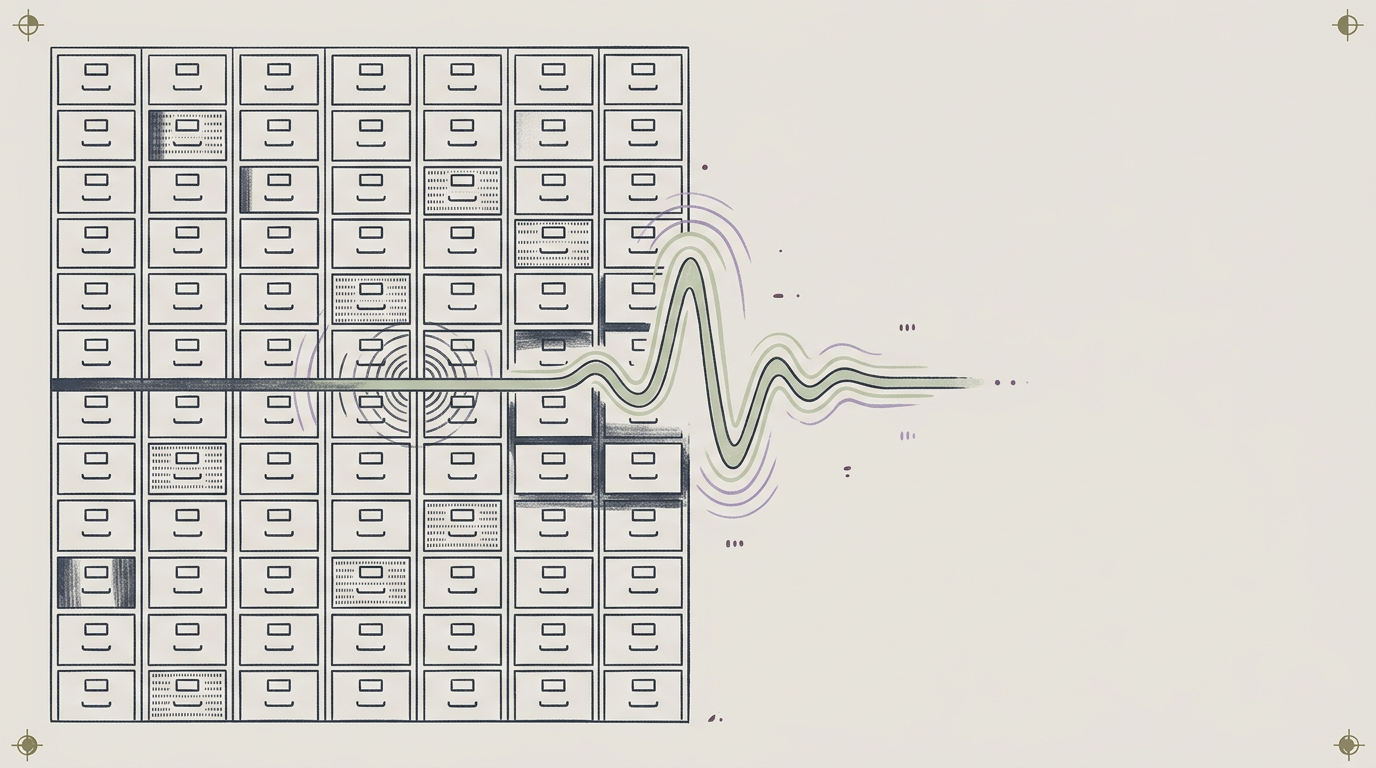
Capacity Before Strategy: Why Most Leaders Burn Out Inside Their Own Plan
The prevailing wisdom is that leaders burn out from bad strategies, impossible workloads, or a simple failure of grit. Your plan was too ambitious, you didn't delegate enough, you should have tried that new productivity app. The narrative is always about will and work. This is a convenient and completely wrong diagnosis. Leadership burnout is rarely a failure of strategy; it’s a structural failure of biology. Your well-architected five-year plan is being executed by a nervous system that was only built for a two-year load, and the math on that was never going to work.
Common Questions
What is leadership burnout?
It's a state of chronic depletion where your physiological capacity to meet demands has been exhausted. Think of it as systemic bankruptcy. It's the result of accumulated allostatic load—the wear and tear from chronic stress—and shows up as cognitive fog, emotional exhaustion, and a deep sense of inefficacy. It's a structural failure, not a moral one.
Can you recover from leadership burnout?
Yes, but not with a longer vacation or a mindfulness app. Recovery requires rebuilding the underlying architecture of your nervous system. It's a project of physiological renovation: restoring sleep, down-regulating the stress response, and expanding your window of tolerance. It’s about increasing your biological capacity, not just clearing your inbox.
Isn't burnout just being tired?
No. Tired is a temporary state resolved by rest; burnout is a system crash. It's the difference between a phone with a low battery and one with a fried motherboard. One needs a recharge, the other needs a deep, structural repair. Tiredness is a signal; burnout is the consequence of ignoring that signal for too long.
Related anchors: vagal tone anchor · sleep anchor · gut-immune anchor
Your Strategy Isn't Too Ambitious. Your Nervous System Is Under-Engineered.
We celebrate the audacious strategy. The big, hairy, audacious goal. The leader who pushes the envelope. But we never audit the biological cost of that ambition. We treat the leader's nervous system as an infinitely elastic resource, which is like drawing up blueprints for a skyscraper and planning to build it out of plywood. The design might be brilliant, but the materials will fail under load.
This is the concept of allostatic load: the cumulative, cascading wear and tear on your body from being in a constant state of low-grade (or high-grade) activation. Every "urgent" email, every back-to-back Zoom call, every stakeholder you have to manage—each one makes a small withdrawal from your systemic bank account. Burnout is what happens when you've been running a deficit for years. The problem isn’t your ambition; the problem is you've been trying to fund it with a system designed for a different, less demanding job. The first step in fixing this is understanding the basics of nervous system regulation.
The HPA Axis: Your Company's Real Crisis-Management Team
Every organization has a process for handling crises. Your body does, too. It’s called the HPA axis (the Hypothalamic-Pituitary-Adrenal axis), and it’s the control loop that runs from your brain to your adrenal glands, pumping out cortisol and other stress hormones when you perceive a threat. In a healthy system, this is a short-term response: threat appears, axis activates, threat resolves, axis powers down.
In modern leadership, the "threat" is the always-on firehose of demands. The HPA axis never gets the "all clear" signal. It just keeps running. The C-suite loves to talk about systems thinking for everything except the one system they actually live inside. When your HPA axis is chronically active, you're not just "stressed." Your decision-making circuits are impaired, your immune system is suppressed, and your ability to think strategically evaporates. You're trying to land a 747 while the cockpit is filling with smoke. You can't "mindset" your way out of a physiological doom loop. The work is to learn how to manually send the "power down" signal.
The Delusion of 'Executive Presence'
Here's a fun one. The leadership development industry has built a whole cathedral around the concept of "executive presence." They'll sell you courses on power poses, vocal intonation, and how to tell a compelling story. This is all cosmetic surgery on a structural problem.
The agenda for every important meeting should be: regulated nervous systems first, PowerPoint second.
Real presence isn't something you learn from a media coach; it's the external expression of a regulated internal state. It's the calm, grounded authority that comes from a nervous system operating within its window of tolerance. It’s the result of high vagal tone—the measure of how well your vagus nerve (the body's main parasympathetic highway) can apply the brakes to your stress response. You can't fake a regulated state in a high-stakes board meeting. They might not have the language for it, but every person in that room can feel the difference between grounded capacity and brittle, posturing anxiety. If you want to build real presence, stop practicing your power pose and start working on your biology. It's the real work of our leadership offering, Performance (L2).
Your Locus Coeruleus Needs a Performance Review
Let’s get nerdy for a minute. Deep inside your brainstem is a tiny cluster of neurons called the locus coeruleus (LC). Don't let the size fool you; this structure is the command-and-control center for your attention and arousal. It’s the brain's novelty detector and focus knob, dialing your alertness up or down based on incoming data. It decides what’s important and what's just noise.
When you're rested and regulated, the LC operates with precision. It fires in clean, phasic bursts, helping you lock onto a problem, solve it, and move on. But when you're under chronic stress and sleeping badly, the LC shifts into a messy, tonic firing mode. It's constantly "on," spraying norepinephrine across your cortex. The result? You're distractible, irritable, and unable to sustain focus. Your brain is treating everything like an equal-level threat. This is the neurobiological reason why, when you’re burned out, you can stare at a simple spreadsheet for an hour and accomplish nothing. Your focus system is broken. The most powerful tool for servicing the LC is sleep, specifically the deep-sleep cycles where your brain's waste clearance system—the glymphatic system—cleans out the metabolic junk that gums up the works. More on mechanisms like this lives in our Library.
Interoception: Stop Outsourcing Your Internal Dashboard
Leaders are trained to be externally focused: on KPIs, on market trends, on the competition. They're obsessed with dashboards for everything except themselves. The most critical data stream for sustainable leadership is interoception: your brain's perception of your body's internal state. It’s the sense of your own heart rate, your gut, your breath, your muscle tension.
This is not some woo-woo wellness concept. It is a concrete sensory system, just like vision or hearing. And it is the only source of real-time data on your own capacity. Ignoring it is like flying a 747 by staring at last quarter's flight performance reports instead of looking at the altimeter. Burnout doesn't sneak up on you; your body sends signals for months or years. The problem is, most leaders have been trained to systematically ignore those signals in the name of "toughness." Learning to read your own internal dashboard isn't navel-gazing. It's an act of high-performance data analysis. An easy way to start is by tracking these signals daily in the Kokorology Journal.
What to do this week
- Install bookends. Spend the first five minutes of your day with morning sunlight in your eyes (no phone) and the last five minutes in quiet darkness. This is a non-negotiable input for your circadian rhythm, which governs your HPA axis.
- Run three internal system checks. At 10 am, 2 pm, and 6 pm, pause for 60 seconds. Close your eyes and scan your internal state without judgment. What’s your breathing like? Is your jaw clenched? Are your shoulders by your ears? Name the data. That's it. Our one-minute Hacks are designed for this.
- Practice a "physiological sigh." When you feel stress rising, take two sharp inhales through your nose, then a long, slow exhale through your mouth. This is a well-established, rapid way to offload carbon dioxide and signal to your brainstem that it’s time to calm down. It's a manual override for your stress response.
- Identify and cut one "capacity leak." Look at your calendar for the next week. Find one meeting, commitment, or task that is low-impact but high-stress. Kill it. This is not about pushing through; it's about strategic energy management.
Where this fits in the Kokorology system
This entire framework—capacity before strategy—is the foundation of the Kokorology method. Burnout isn't a mindset problem; it's an architectural one. We teach leaders how to rebuild that architecture in our foundational course, Regulation (L1), and how to apply it under pressure in Performance (L2).
Closing
The cultural script for leaders is one of relentless forward motion and infinite capacity. It's a script that ends in burnout. The counter-move is not to abandon your ambition, but to build a biological engine capable of sustaining it. Stop optimizing your strategy and start renovating the system that has to execute it. That’s the only way the math starts to work.
- Work with this systemically in our advanced leadership module, Performance (L2).
- If you're in a burnout cycle right now, begin with the structured 7-day nervous system Reset.
- Get the foundational principles in our free primer on nervous system regulation.
TL;DR
Leadership burnout is not a failure of strategy, resilience, or time management. It is a biological problem: a mismatch between the chronic load of the work and the finite capacity of the leader's nervous system. The constant stress dysregulates key systems like the HPA axis and the locus coeruleus, degrading cognitive function and decision-making. The solution is not more grit but a structural renovation of your internal architecture. Rebuilding your capacity through targeted practices for nervous system regulation is the prerequisite for any sustainable strategy.
Sources
- Bruce S. McEwen (2017). Neurobiological and Systemic Effects of Chronic Stress. Chronic Stress.
- Stephen W. Porges (2011). The Polyvagal Theory: Neurophysiological Foundations of Emotions, Attachment, Communication, and Self-regulation. W. W. Norton & Company.
- Robert Sapolsky (2004). Why Zebras Don't Get Ulcers. Holt Paperbacks.
- Sara C. Mednick, et al. (2021). The restorative effect of naps on objective alertness and cognitive performance. Current Opinion in Physiology.
- Antonio Damasio (2005). Descartes' Error: Emotion, Reason, and the Human Brain. Penguin Books.
- Manfredi F. et al. (2020). The Locus Coeruleus: A new player in the neurobiology of mood disorders?. Brain Research.