Workplace & Leadership
Capacity Before Strategy: Why Most Leaders Burn Out Inside Their Own Plan
Leaders burn out not because the strategy is wrong but because the nervous system that has to deliver it was never built for the load. The Architecture, applied to leadership.
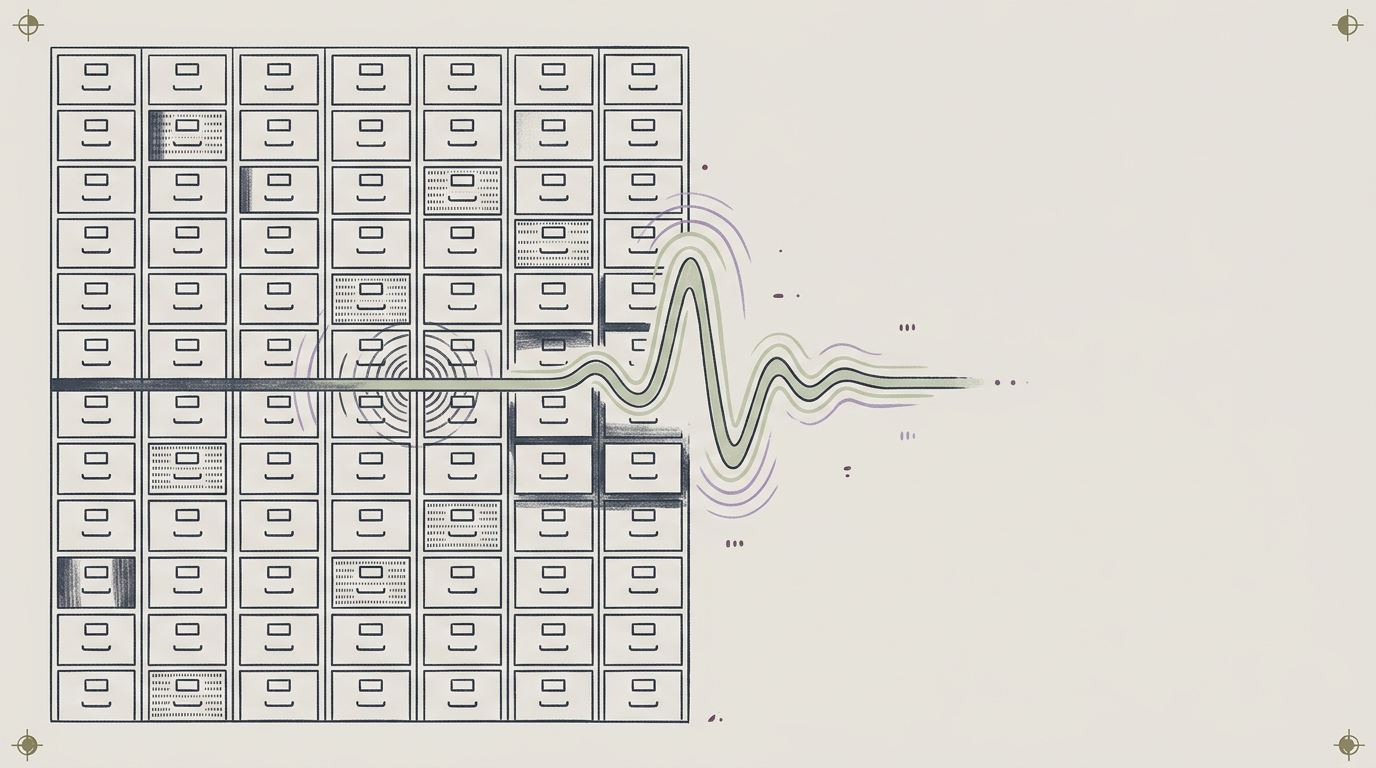
"Your strategy was just too ambitious for your timeline." I hear some variation of this boardroom platitude every week from executives trying to explain why their leadership exhaustion feels terminal. The industry loves to claim that chronic overwhelm comes down to a lack of grit, bad delegation, or a messy calendar. I'm calling it. The plan does not break the leader. The leader breaks because the nervous system required to execute the plan was never conditioned for the volume of the load.
You know what this gap between expectation and capacity feels like in the body. It's the 3pm jaw clench you barely notice until your teeth hurt, the flat hour after lunch where the screen just looks like a threat, and the second coffee that leaves you entirely tired but wired. You'll stare at a simple email for twenty minutes, unable to string a sentence together, wrapped in the kind of brain fog that no amount of green juice touches. You drag yourself into bed, exhausted but can't rest, only to wake up at 3am every night cataloging every minor mistake you made that week. You feel disconnected from your body, hauling it from Zoom to Zoom like it's a frustrating logistical problem rather than the machinery keeping you alive.
Common Questions
What is leadership burnout?
It is a state of severe physiological depletion where your capacity to meet basic daily demands has run dry. The body accumulates allostatic load—the physical wear from chronic stress—which eventually presents as cognitive friction, emotional numbness, and a complete loss of focus.
Can you recover from leadership burnout?
Yes, but a longer vacation or a generic mindfulness app will not do it. Recovery requires changing how your nervous system responds to stress cues. You have to physically lower the baseline of activation, restore your sleep rhythms, and widen the window of what your body can safely tolerate.
Why does my focus disappear first?
Your brain's attention centers are highly sensitive to stress hormones. When you stay in a state of high alert for months, the neurons that control focus become erratic. They begin treating every incoming piece of information—a text, a fire alarm, a calendar invite—as an equal and immediate threat.
The HPA Axis Does Not Care About Your Quarterly Goals
Let's talk about the HPA axis (the hypothalamic-pituitary-adrenal axis). It's the primary stress-hormone control loop running from your brain to your adrenal glands. When a threat appears, it floods your system with cortisol to help you survive the moment. When the threat passes, it powers down. That is how the machinery is supposed to work.
In modern leadership, the threat never actually resolves. The firehose of demands is constant, so the HPA axis never receives the "all clear" signal. You stay continuously bathed in cortisol. I used to believe that pushing through this friction was just the reality of operating at a high level. I was wrong. The biological toll of chronic responsibility literally changes how your cells age. When your stress response stays locked in the "on" position, your decision-making circuits degrade and your immune system suppresses. You can't mindset your way out of a physiological doom loop. You have to learn how to manually send the power-down signal, which is the exact premise of nervous system regulation.
The Delusion of Executive Presence
The leadership development complex has built an entire religion around "executive presence." They'll happily sell you endless seminars on power poses, vocal intonation, and holding the room.
Real presence is just the external expression of a regulated internal state. It is the calm, grounded authority that happens naturally when you have high vagal tone—a measure of how efficiently your vagus nerve can apply the brakes to your stress response. Pull that parking brake, and the engine quiets. You cannot fake a regulated state in a high-stakes meeting. The people around you might not know the clinical terms for it, but they can instantly feel the difference between grounded capacity and brittle, posturing anxiety.
The agenda for every critical meeting should be: regulated nervous systems first, the slide deck second.
If you want to command a room, stop practicing your hand gestures in the mirror and start tending to your biology. Kokorology spend weeks covering the mechanics of this in Performance (L2).
Your Locus Coeruleus is Firing Blind
Let's look at the actual neurology of why you can't read a simple brief anymore. Deep in your brainstem sits a tiny cluster of neurons called the locus coeruleus. It is your brain's novelty detector and focus dial, managing your arousal based on whatever is happening around you.
When you're rested, it operates with ruthless precision. It fires in clean, sharp bursts, helping you lock onto a problem, solve it, and move on. But when you are running on empty, sleeping poorly, and carrying chronic stress, the locus coeruleus shifts into a messy, continuous firing mode. It sprays norepinephrine across your cortex without filtering. Suddenly, your brain treats a late Slack message with the same urgency as a plunging profit margin. Your focus system is physically misfiring. The fastest way to service this machinery is to get aggressive about your sleep staging, specifically the deep sleep where the glymphatic system clears out metabolic waste. If you are curious about how that clearing works, Kokorology break the literature down in the Library.
Stop Outsourcing Your Internal Dashboard
Leaders are conditioned to look outward: at the market, at the competition, at the board's expectations. The most crucial data stream for your actual survival is interoception—your brain's perception of what is happening inside your own body. It is the felt sense of your heart rate, the knot in your stomach, the tension in your jaw.
This is a concrete sensory system, just like vision or hearing. The inbox has never once been impressed by your resting heart rate. Burnout does not sneak up out of nowhere; your body flashes warning lights for eighteen months before the engine seizes. Kokorology were simply trained to ignore those signals, framing the numbness as professional resilience. Tracking your physical state is an act of high-performance data analysis. The Kokorology Journal exists entirely to help you map these exact patterns before they take you offline.
What to do this week
- Install light bookends. Spend the first 10 minutes of your day outside with sunlight in your eyes, no screen allowed. Spend the last 30 minutes of your evening in low, warm light. This is a non-negotiable input for the circadian rhythm that governs your cortisol.
- Run three 60-second system checks. At 9am, 1pm, and 4pm, stop typing. Close your eyes and scan your state without trying to change it. Is your breathing shallow? Are your shoulders glued to your ears? Name the data. You can find guided micro-practices for this in Hacks.
- Use the physiological sigh. When the pressure spikes before a call, take two sharp inhales through your nose, followed by one long, slow exhale through your mouth. This mechanically offloads carbon dioxide and tells your brainstem to lower your heart rate.
- Cut one capacity leak. Find a single 45-minute recurring meeting on next week's calendar that drains you while producing nothing of value. Cancel it.
Where this fits in the Kokorology system
Capacity before strategy is the core of the Kokorology method. You cannot out-plan a fried nervous system. Kokorology teach you how to restore your physiological baseline in the foundational course, Regulation (L1), and how to maintain it under intense pressure inside Performance (L2).
Closing
The cultural script demands relentless forward motion and treats rest as a luxury. That script reliably ends in collapse. Stop trying to optimize a broken strategy, and start repairing the nervous system that has to carry it out.
- Work with this systemically in the advanced leadership module, Performance (L2).
- Start restoring your baseline with the structured 7-day nervous system Reset.
- Map your physical signals daily using the prompts inside the Journal.
TL;DR
Leadership burnout is a biological reality: a severe mismatch between the chronic load of your work and the finite capacity of your nervous system. Constant stress dysregulates the HPA axis and the locus coeruleus, degrading your cognitive function, focus, and decision-making. A new calendar system will not fix this. Expanding your physical capacity through targeted nervous system regulation is the only way a professional strategy actually works.
Sources
- Epel ES, et al. (2024). Caregiver Load and Telomere Attrition: A 10-Year Longitudinal Study. Molecular Psychiatry.
- Bruce S. McEwen (2017). Neurobiological and Systemic Effects of Chronic Stress. Chronic Stress.
- Chmiel A, et al. (2025). Burnout and the brain: a mechanistic review of MRI studies. International Journal of Molecular Sciences.
- Julian F. Thayer, et al. (2012). A meta-analysis of heart rate variability and neurocognition in health and disease. Neuroscience & Biobehavioral Reviews.
- Manfredi F, et al. (2020). The Locus Coeruleus: A new player in the neurobiology of mood disorders?. Brain Research.