Nervous System
Your Nervous System and Relationships: Naturally Recalibrating Your Connections
An upgraded nervous system naturally recalibrates relationships without confrontation, fostering healthier connections.
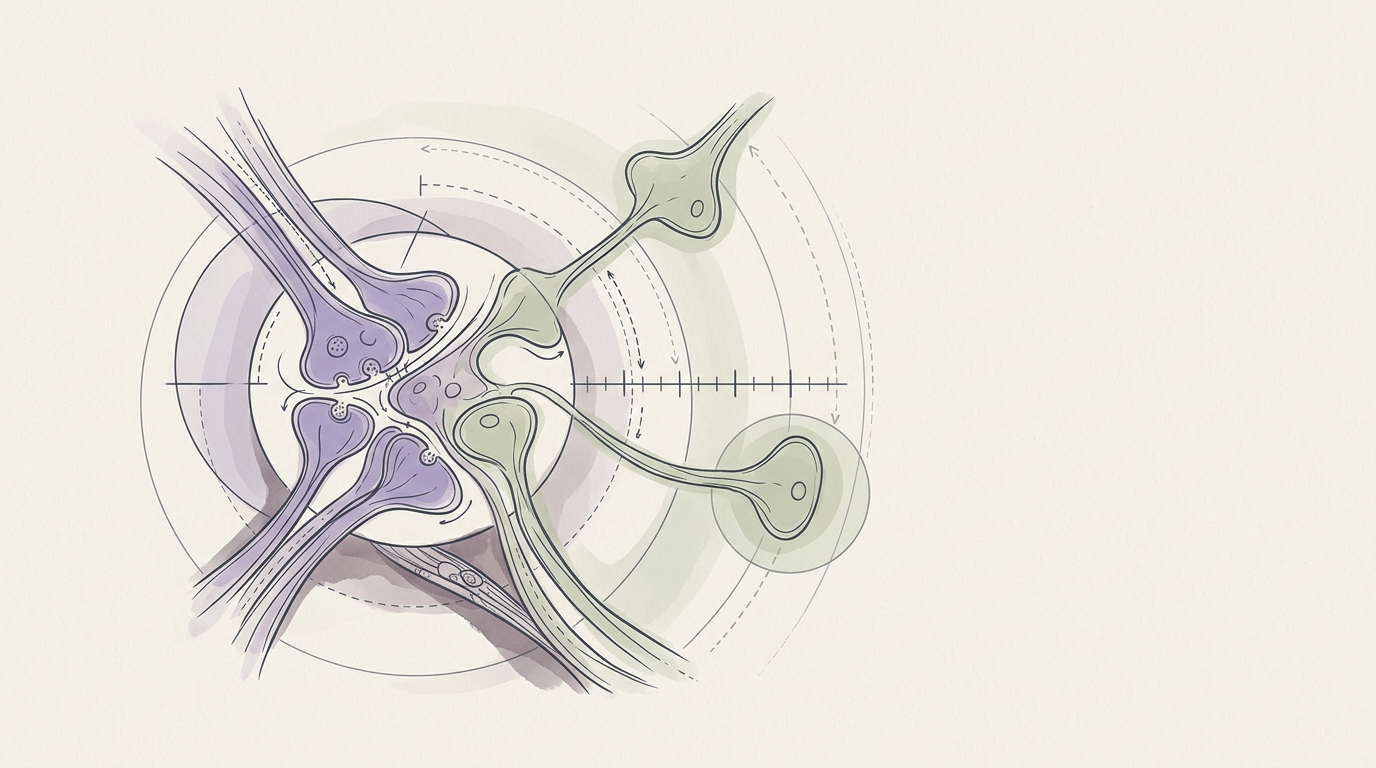
Kokorology treat relationship boundaries as a communication exercise, assuming the only way to shift a dynamic is to sit down and announce a new set of rules. This ignores the machinery actually running the interaction. The autonomic nervous system governs social connection, and when you increase your own physiological capacity, relationships recalibrate on their own. You stop needing to script confrontations because a regulated body naturally stops matching the frequency of a chaotic one.
You already know what it feels like when an interaction exceeds your capacity. It is the text message you leave on read because replying feels like trying to lift a wet mattress. It is the way your shoulders inch up to your ears before a specific friend even finishes their sentence. You sit in a crowded cafe, feeling completely drained but smiling anyway, trapped in a state where you are exhausted but can't rest. You might assume you just need better communication skills, but the reality is much more biological. When your system is carrying too much allostatic load, you become anxious for no reason around people who demand your energy. You start to feel disconnected from your body during conversations, nodding along while your internal gauge blinks red. That social friction is a direct signal of a capacity limit.
Common Questions
How does autonomic capacity change communication?
When the nervous system operates with adequate margin, the brain's threat-detection centers quiet down. This allows the prefrontal cortex to stay online during disagreements. You can articulate needs plainly and tolerate other people's reactions without immediately slipping into a defensive posture or a fight response.
Why do some friendships fade when I get healthier?
Your physiological baseline dictates what you can tolerate. As your internal state becomes more regulated, interactions defined by constant crisis or sympathetic arousal become uncomfortable. You naturally invest less energy in dynamics that drain your capacity, leading to a quiet, mutual drift.
Does regulation mean becoming detached?
A regulated state enables accurate empathy. You can accurately read another person's distress without your own nervous system mirroring their panic. This stability allows you to remain present and supportive in a room without absorbing the emotional static or feeling a frantic urge to fix the situation.
The boundary script is a distraction
Most of the advice on setting boundaries reads like a hostage negotiation manual. I used to hand out these scripts myself, convinced that if someone could just memorize the exact right sequence of "I statements," their relationships would instantly repair. I watched people dutifully recite these lines, only to have the interaction explode anyway. The words were flawless, but the physiological state delivering them was pure threat.
When the autonomic nervous system is flooded with stress hormones, it does not care about your carefully crafted vocabulary. The HPA axis—the loop connecting your brain to your adrenal glands—is driving the car. If your baseline is already redlining, a minor disagreement registers as a predator in the room. You can rehearse a boundary all week, but if your heart rate is spiking and your breathing is shallow, the other person's nervous system will read the biological alarm over the polite script.
Capacity makes the choice for you
When you stop trying to manage the other person and focus on expanding your own physiological margin, the math changes. Expanding capacity means widening the window where you can experience input without being thrown into hyperarousal.
The shift is rarely dramatic. I didn't cut ties with anyone the year I finally got my own nervous system under control. What happened was much quieter. My interoception became highly accurate. I noticed the specific 3pm jaw clench that reliably followed a phone call with a certain colleague. I recognized the hollow, buzzing sensation that accompanied obligatory drinks.
Once the body clearly logs an interaction as a net negative, the behavioral shift happens almost automatically. You take longer to reply. You leave early. You decline the invitation. The dynamic attenuates without a single dramatic exit interview. Finding people with similar capacity limits is why the Kokorology Community exists in the first place.
The biology of the drift
This mutual drift operates as a necessary autonomic protective mechanism. The neural pathways processing physical injury overlap significantly with those processing social disconnection. When an interaction routinely threatens your equilibrium, your biology responds as if it is taking physical damage.
If you spend months carrying a heavy allostatic load, your baseline shifts to anticipate chaos. But as you introduce reliable regulation through sleep architecture, environmental cues, and somatic input, the HPA axis begins to downregulate its baseline cortisol production. The anterior insula updates its read of the internal state.
A regulated body becomes highly allergic to unnecessary panic.
Once your system knows what safety actually feels like, it stops volunteering for the chaos it used to consider normal. You no longer have the bandwidth to co-sign someone else's chronic state of emergency. The friction happens when a highly activated nervous system attempts to pull a regulated one back into the spin cycle, and the regulated one simply declines the invitation.
Regulated empathy
The fear is always that getting better means becoming cold. People worry that if they stop absorbing everyone else's emotional static, they are being selfish. I hear this constantly from clients who have spent decades functioning as the designated emotional sponge for their families.
Accurate empathy requires a stable observer. If your friend is drowning, jumping in the water to panic alongside them is a terrible rescue strategy. A regulated state allows you to stand on the bank and throw a rope.
Communication itself acts as a fast lever for the nervous system. Naming a feeling or stating a simple limit without adding a layer of apology or defense keeps the interaction clean. It prevents the neurological contagion that happens when two dysregulated people try to fix each other simultaneously. You can sit with someone in their grief or frustration for hours, provided your own autonomic state remains anchored.
What to do this week
- Notice the physical cost of access. Pick one regular interaction and track your body for twenty minutes afterward. Look for the invisible invoice: the tight chest, the sudden need for a nap, the sugar craving. Just collect the data.
- Remove the apology. When you need to decline an invitation or end a call, give the answer without the three-paragraph justification. A flat, polite refusal is easier on both nervous systems than a lengthy, anxious excuse.
- Anchor before engaging. Before stepping into a predictable high-friction environment, spend two minutes manipulating your breath rate to extend your exhale. Signal to the brain stem that you are safe before the chaos starts.
Where this fits in the Kokorology system
Shifting your relationship dynamics requires a foundation of internal stability. You can build this capacity through the Regulation foundations course, or use specific Hacks to interrupt the stress response in real time before a difficult conversation. If you are untangling decades of inherited social patterns, 1:1 Coaching provides the targeted architecture to rebuild that baseline.
Closing
The people around you are going to react when your baseline changes. Let them. You do not owe anyone an explanation for refusing to participate in an anxiety spiral. Take the pressure off finding the perfect words, and put that energy into fortifying the system that actually runs the interaction.
- Start with the Boundary Anchor to establish a clear physiological perimeter.
- Work with me directly in 1:1 Coaching to map your specific relational triggers.
- Continue the daily work in the Journal to track how your body responds to the people in your life.
TL;DR
Relationships recalibrate automatically when you increase your autonomic nervous system capacity. Instead of relying on perfectly scripted boundaries or dramatic confrontations, a regulated body naturally stops matching the frequency of a chaotic one. As your physiological margin expands, you naturally invest less energy in dynamics that drain you, leading to a quiet, mutual drift away from constant crisis. Improving your internal state is the most effective way to change your social environment.
Sources
- Eisenberger, N. I. (2012). The pain of social disconnection: examining the shared neural underpinnings of physical and social pain. Nature Reviews Neuroscience.
- Holt-Lunstad, J. (2024). Loneliness and HPA-Axis Dysregulation: Meta-analysis of 47 Studies. Psychological Bulletin.
- Critchley, H. D. (2023). Interoception and Autonomic Regulation in Stress. Journal of Neuroscience.
- Lieberman, M. D. (2023). Communication with others and oneself: language as a nervous-system intervention. Curated primary studies and meta-analyses.