Workplace & Leadership
Why your DEI work is failing without nervous system regulation
Enhance workplace wellbeing through nervous system regulation for effective DEI initiatives.
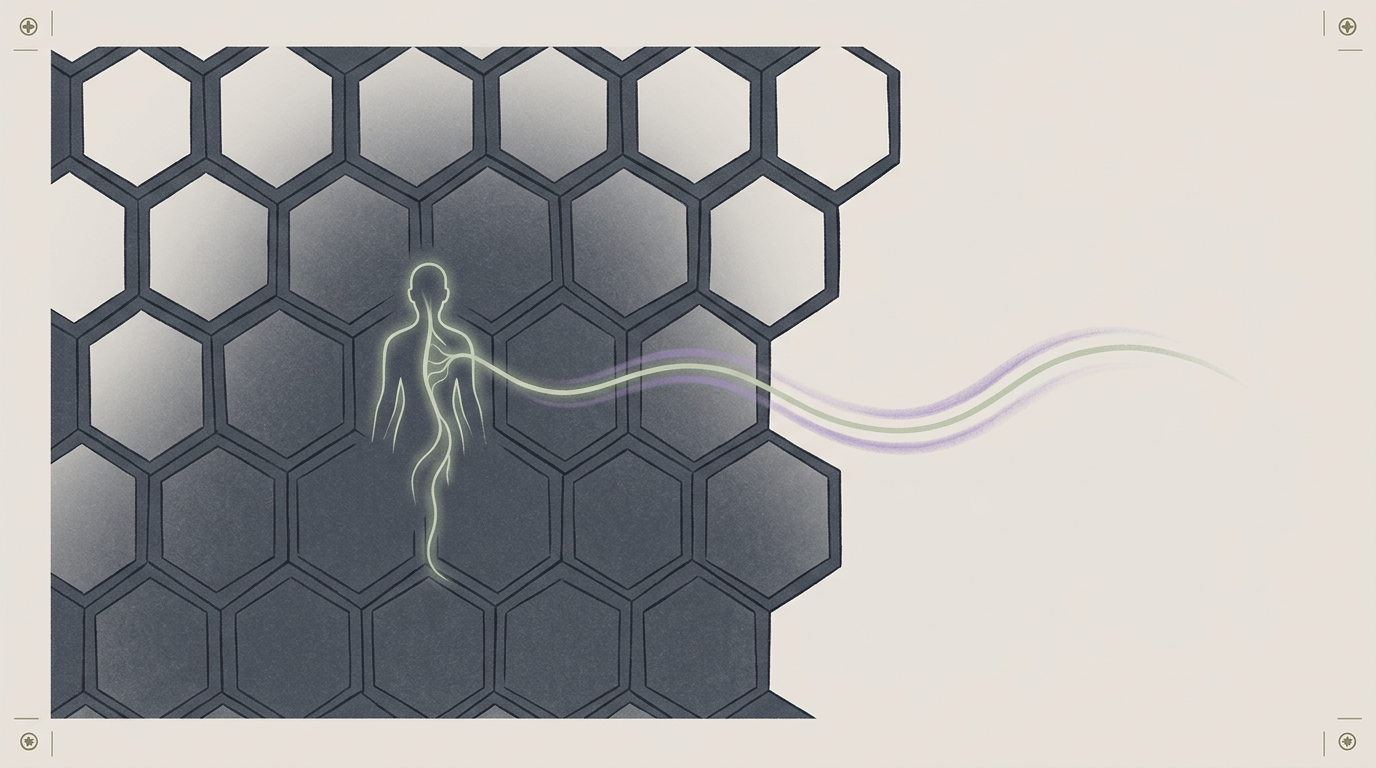
Corporate DEI budgets are largely spent trying to reason with smoke alarms. The standard assumption is that bias and exclusion are knowledge gaps, cleanly fixed by an unconscious-bias workshop and a new policy document. I disagree. When you ask a room full of people to unpack power and identity without establishing a baseline of nervous system regulation, you are just hosting a book club in a house fire. The amygdala reads the challenge as a physical threat, shuts down the prefrontal cortex, and leaves everyone in a defensive crouch. You cannot workshop your way out of an active stress response.
You already know exactly what this social threat feels like in your own physiology, long before HR sends a calendar invite. It is the sudden drop in your stomach when someone questions your lived reality in a Tuesday morning meeting. It is the 3pm jaw clench that travels up into a buzz behind your eyes. You sit through the mandated training nodding politely, but underneath you feel entirely disconnected from your body. Then you log off, tired but wired, staring blankly into an open fridge with no hunger. You crawl into bed and find yourself waking up at 3am every night with your heart racing when you lie down, replaying a microaggression you told yourself you didn't care about. The exhaustion is profound because your biology has spent the entire day bracing for impact.
Common Questions
What is nervous system regulation?
It is the capacity of your autonomic machinery to shift gears smoothly, matching your internal state to the external reality. It means moving into high arousal to meet a deadline, and then returning to a baseline of calm. It requires a responsive system, rather than one stuck in chronic mobilization or shutdown.
Why do workplace conversations trigger a physical response?
Your body processes social exclusion through the same neural circuitry it uses to process physical pain. A perceived slight or an identity threat activates the HPA axis, flooding your bloodstream with cortisol. To your ancient biology, losing group safety is just as lethal as encountering a predator.
Can you mandate psychological safety?
Psychological safety emerges naturally when a room is filled with regulated nervous systems. You cannot demand it, put it on a slide deck, or enforce it through corporate policy. It is a biological outcome that requires equipping your team with actual tools to manage their physiological state.
The threat response in the boardroom
I used to believe that bad workplace dynamics were just a matter of poor communication skills. I was wrong. The trouble with the standard corporate unconscious-bias training is that it asks people to do complex cognitive work while their biology is actively preparing for combat. You sit a group of well-meaning employees in a room and inform them that they harbor hidden prejudices. The brain’s threat-detection center lights up immediately.
Two dysregulated nervous systems in a meeting room escalate conflict. The amygdala reads the other person’s crossed arms or clipped tone as a mortal danger, prompting the body to dial down activity in the prefrontal cortex—the exact tissue you need for empathy, curiosity, and perspective-taking. At that moment, the participant is no longer a thoughtful colleague. They are a mammal backed into a corner. Kokorology ask people to lean into discomfort, completely ignoring that their internal alarm bells are screaming at them to survive.
Social threat is physical threat
Your hardware evolved over millennia and never received a software update for uncomfortable Zoom calls. It makes zero distinction between the danger of being ostracized by the village and the danger of being hunted.
When a conversation threatens someone's identity or worldview, the HPA axis—the loop running from your brain to your adrenal glands and back—takes over. A social threat triggers this circuit efficiently, dumping cortisol and adrenaline into the bloodstream. Isolation and exclusion are HPA-axis events. The body interprets "no one here has my back" as a survival emergency. This is why you leave a tense diversity panel feeling jittery, depleted, and weirdly out of breath. Your body thinks you just sprinted away from a threat. No amount of forced deep breathing or requests to "be open-minded" will work when the architecture is locked in defense mode.
The neurobiology of listening
Every facilitator loves the instruction to "listen to understand, not to respond." It is a beautiful sentiment that is anatomically impossible if your cardiac vagal control is compromised.
The mechanics are straightforward. Your autonomic nervous system constantly scans the environment for cues of safety or danger through interoception, well before your conscious mind catches up. When a cue lands wrong—a subtle shift in a manager's posture, a specific phrase used to dismiss a concern—your system reorganizes for defense. High sympathetic arousal drastically narrows your attention. You lose the capacity to accurately interpret facial expressions and vocal tones. The nuance drops out of the room entirely because your visual and auditory processing have narrowed to focus exclusively on survival targets. You have been asked to hold space for a colleague when your internal security apparatus has taken the wheel.
The state of the nervous system precedes the content of the conversation.
From policy to physiological co-regulation
Kokorology are not self-contained biological units. Humans are designed to co-regulate. A leader with a grounded presence non-verbally telegraphs safety, pulling the rest of the room into a regulated state. A dysregulated executive telegraphs panic, putting everyone on edge before the first slide even loads.
I've stopped recommending communication workshops to companies that haven't first addressed state management. If you want a workplace that can handle the friction of genuine inclusion, you have to build the capacity to stay present. Equip your teams with physiology-based hacks they can use under pressure. Teach them to recognize the physical signs of sympathetic arousal and apply a behavioral brake. Treat conflict resolution as an intervention on the nervous system, because that is exactly what it is.
What to do this week
- Notice the shift. In your next high-stakes meeting, track your own internal state without judgment. Are you feeling open, or braced and defensive? Just noticing the shift in your breathing or jaw is the first step.
- Use the brake. Before you walk into a difficult one-on-one, take 60 seconds to practice a physiological sigh—two short inhales through the nose, followed by one long, slow exhale through the mouth. Repeat three times.
- Audit your programming. Look at your company’s next culture initiative. If the agenda does not include a single mechanism for state management, ask the organizers how they plan to bypass human biology.
Where this fits in the Kokorology system
This approach treats workplace inclusion as a question of biological capacity. Building the physical tolerance to navigate hard conversations—first in yourself, then in your teams—is the core work Kokorology cover in the foundational Regulation L1 course, and scale for executives inside the Performance L2 program.
Closing
Stop spending shareholder money on initiatives that disregard the body. The real work of building a high-trust culture requires building the collective physiological capacity to hold difficult conversations. Once the bodies in the room feel secure, you can actually begin the meeting.
- Start with the structured seven-day nervous system Reset.
- Continue the work inside the Performance L2 leadership program.
- Practice daily regulation tools with the Kokorology Journal.
TL;DR
Most DEI initiatives fail because they ignore physiology. Asking people to unpack bias and identity triggers the body's threat response, shutting down the prefrontal cortex and the capacity for empathy. You cannot mandate inclusion from a state of active defense. The solution requires prioritizing nervous system regulation first. By giving teams the tools to manage their physiological state, you create the biological safety required for difficult conversations to actually work.
Sources
- Melis Yilmaz Balban (2023). Brief Structured Respiration Practices Enhance Mood and Reduce Physiological Arousal. Cell Reports Medicine.
- Julian F. Thayer (2012). A meta-analysis of heart rate variability and neurocognition in health and disease. Neuroscience & Biobehavioral Reviews.
- Naomi I. Eisenberger (2012). The pain of social disconnection: examining the shared neural underpinnings of physical and social pain. Nature Reviews Neuroscience.
- Julianne Holt-Lunstad (2024). Loneliness and HPA-Axis Dysregulation: Meta-analysis of 47 Studies. Psychological Bulletin.