Nervous System
Why You Are Tired but Wired After a Normal Day
Feeling tired but wired happens because your nervous system remains locked in high alert long after the workday officially ends.
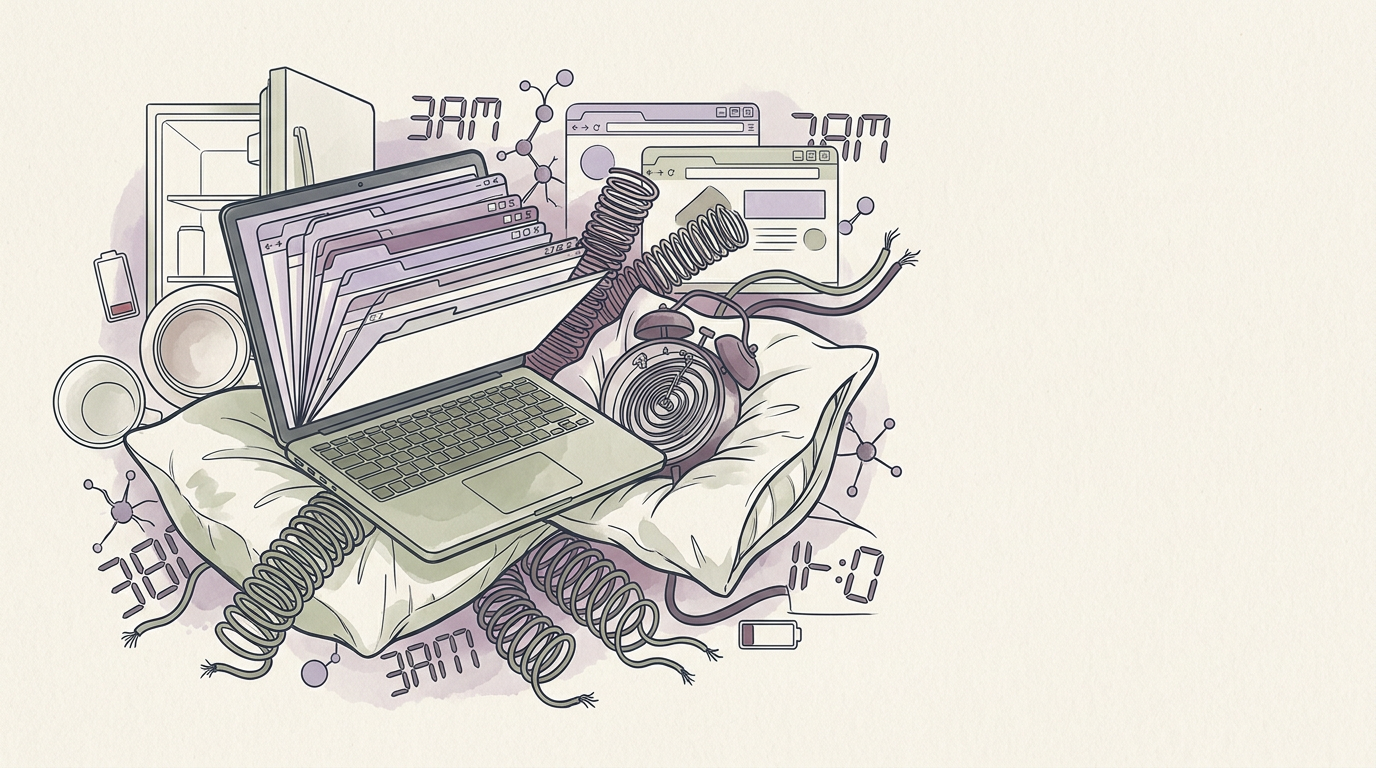
The cultural definition of a "normal Tuesday" requires the human nervous system to endure a baseline of threat detection that would have appalled the ancestors. Kokorology expect to process two hundred emails, jump across twelve time zones on video, manage the micro-tensions of a busy household, and then transition into deep rest by simply turning off a lamp. The body responds to this sustained sympathetic arousal by jamming the internal alarm bell in the "on" position. Kokorology demand a clean shutdown from a system that is actively flooded with cortisol.
You know exactly how this state vibrates through the body. It's the 3pm jaw clench that you only notice when you finally try to eat something. It's staring into the open fridge at 7pm, possessing zero actual hunger but desperate for any sensory input that might change the channel in your head. You find yourself pacing the kitchen, thoroughly tired but wired, waiting for a second wind that never arrives. The evening stretches out, and you feel entirely exhausted but can't rest, swiping through your phone while your shoulders remain pinned to your ears. When you finally do lie down in the dark, the quiet feels loud. You wake up at 3am to a racing heart and a brain diligently categorising tomorrow's problems, wondering why sheer physical depletion is failing to drag you into sleep.
Common Questions
What does tired but wired mean?
This state occurs when your physical body is depleted of energy while your autonomic nervous system remains locked in high alert. The physiological alarm bells are still ringing, making it impossible to transition into the restorative phases of sleep despite severe fatigue.
Why do I feel exhausted but unable to rest?
Your HPA axis—the control loop running from your brain to your adrenal glands—is continuously releasing stress hormones like cortisol and adrenaline. This chemical flood keeps your brain scanning for danger, overriding your muscular need to power down.
How do I switch off the internal alarm?
Downregulating an overactive system requires active physical signaling. You have to physically prove to your brain that the environment is safe through paced breathing, dropping sensory input, and widening your visual field.
The Mechanism of Arousal
Wellness marketing wants you to believe that lighting a lavender candle is a sufficient counterweight to nine hours of hypervigilance. I used to believe this too. I spent my late twenties furious at my own brain, assuming my inability to sleep after a twelve-hour corporate sprint was a discipline problem. I'd lie there angry at myself for failing to meditate away the adrenaline. The reality is entirely mechanical. The nervous system tallies up every Slack ping, every unresolved conversation, and every skipped lunch as a microscopic threat. By 6pm, your HPA axis is churning out cortisol. The inbox has never once been impressed by your heart rate. Your physiology is prepared to outrun a predator, and you're asking it to read a novel in bed.
The Dopamine-Cortisol Loop
Kokorology try to fix the afternoon slump by throwing stimulants at a system that actually needs nervous-system regulation. You grab the 3pm espresso or start chasing small dopamine hits through social media to push through the brain fog. Dopamine drives motivation, and in a vacuum, it feels like focus. When you stack it on top of a chronically elevated sympathetic state—your primary survival gear—you create a chaotic internal cocktail. The locus coeruleus, a tiny brainstem nucleus that controls norepinephrine release, stays continuously active. It floods your brain with the chemical equivalent of a fire alarm. You get the jittery motivation to keep scrolling or organising your inbox, and absolutely zero capacity to actually process complex information.
Interoceptive Noise
This sustained arousal wreaks havoc on your internal signaling. When the locus coeruleus fires constantly, it inhibits the anterior insula, the brain region responsible for interoception. Interoception is your ability to accurately sense what's happening inside your physical body. If that channel is jammed with static, you lose the ability to accurately sense whether you're hungry, thirsty, or just lonely. You feel disconnected from your body because the communication line is literally scrambled.
The body is shouting that it needs a heavy blanket and darkness, and the brain translates that as an urgent need to check emails one last time.
This is exactly why staring at your wearable device's sleep score exacerbates the hypervigilance. The data outsources your somatic awareness to an algorithm on your wrist. Cultivating a regulated state requires rebuilding your own internal map, rather than checking an app to see if you're allowed to feel tired today.
The Glymphatic Reality
Sleep is an active, demanding biological process. During deep sleep, the glymphatic system clears metabolic waste from the brain. If your autonomic nervous system remains geared for combat, your brain refuses to allow the vulnerable transition into those deep, restorative sleep stages. You might close your eyes, but the sleep architecture remains shallow and fragmented. The arousal has to drain out first, allowing the body's natural sleep pressure to finally take over.
What to do this week
- Map your transition zones: Pick one specific threshold in your day—walking from the home office to the kitchen, or the five minutes after parking the car. Spend 60 seconds dropping your visual gaze to the horizon and exhaling longer than you inhale.
- Delay the 3pm dopamine grab: When the mid-afternoon urge to check your phone or grab sugar hits, pause for one literal minute. The craving is a signal of dysregulation. Stand up, shake out your arms, and let the urge peak and pass.
- Create a hard sensory boundary: Stop asking your brain to wind down while staring into a light-emitting diode. Put the phone in another room at 9pm. If you need a distraction, read a physical book or listen to an audio track in the dark.
Where this fits in the Kokorology system
Addressing this persistent state of arousal is the core work inside the Hacks library, where Kokorology focus on rapid state-shifts. Once you understand the machinery driving the hypervigilance, you can use the Journal to track your daily inputs and map exactly which micro-stressors are keeping your system pinned in the red.
Closing
The impulse to medicate this discomfort with a new supplement or a rigid morning routine is incredibly common. The actual work is much quieter. It requires the diligent, unglamorous practice of proving to your physiology that the crisis is over and it's finally safe to stand down.
- Start your recovery with the 7-day Reset.
- Work with a Kokorology coach to unstick chronic patterns.
- Practice down-regulation daily inside Kokorology Anchors.
TL;DR
Feeling tired but wired occurs when your body is physically exhausted but your autonomic nervous system remains locked in a state of high alert. This chronic sympathetic arousal floods the brain with stress hormones, scrambling your internal sensory signals and preventing the deep sleep your brain needs for metabolic clearance. Rather than chasing relaxation through more stimulation, you have to actively signal safety to your physiology through conscious transitions, visual widening, and clear sensory boundaries.
Sources
- Balban MY et al. (2023). Brief structured respiration practices enhance mood and reduce physiological arousal. Cell Reports Medicine.
- Craig, A. D. (2009). How do you feel—now? The anterior insula and human awareness. Nature Reviews Neuroscience.
- Lehrer PM (2014). Heart rate variability biofeedback: how and why does it work?. Frontiers in Psychology.
- Thayer JF (2009). Vagal tone and the inflammatory reflex. Cleveland Clinic Journal of Medicine.