Nervous System
Your 'tired but wired' state is a cortisol timing error
The tired but wired feeling is a cortisol timing error where the nervous system is still responding to the demands of the day at midnight.
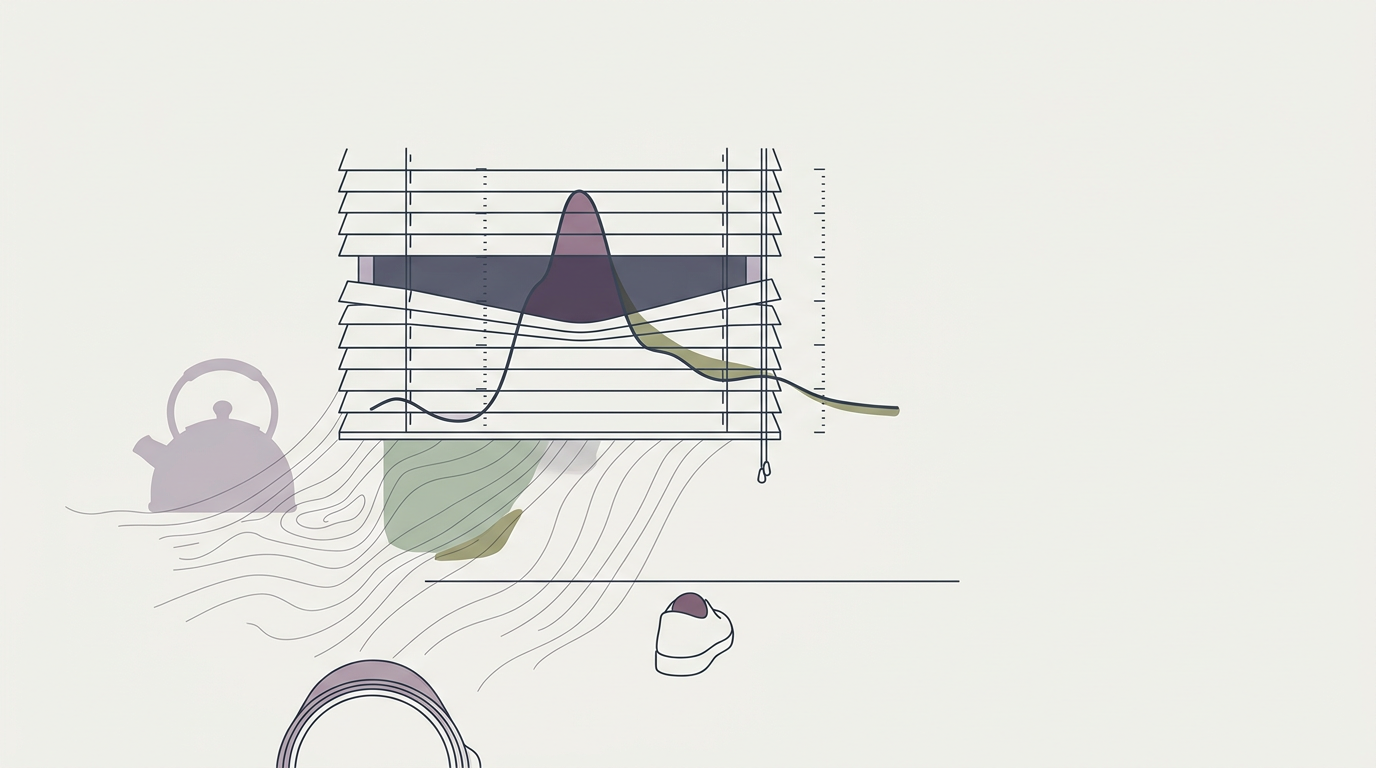
The wellness industry treats bad sleep as a magnesium deficiency or a screen-time violation. They sell heavy blankets and eye masks. I'm calling it. A dark room means nothing to an HPA axis trapped in the middle of a cortisol spike. The threat-detection loop running from your brain to your adrenal glands believes you are still mid-argument or mid-sprint. Your nervous system is bracing for an impact that already happened twelve hours ago.
You know the physical texture of this state. You close the laptop at 9pm and the fatigue hits your bones, but by the time you actually lie down, your jaw won't unclench. You are tired but wired. The shoulders stay pinned near your ears. You're exhausted but can't rest, your brain frantically drafting emails to people you haven't spoken to in three years. You might eventually drift off, only to wake up at 3am every night with your heart racing when you lie down. The fridge opens but there's no hunger, just a restless pacing in the kitchen. That buzzing behind the eyes is the lingering sympathetic activation of a day that never officially ended. You feel a humming, jittery energy in your chest while your limbs feel like lead.
Common Questions
Will taking melatonin calm the nervous system down?
Melatonin operates strictly as a biological timer. It signals to your body that darkness has arrived. If your adrenaline and cortisol levels are still surging, swallowing a melatonin gummy is like whispering a lullaby during a fire alarm. The stress hormones always win.
How does a late afternoon coffee affect this state?
Caffeine actively blocks adenosine receptors. Adenosine is the molecule that accumulates during the day to build sleep pressure. A late espresso occupies those receptors until midnight, meaning your brain never receives the chemical signal that it needs to power down, regardless of how exhausted the body feels.
Why does the wired feeling escalate during perimenopause?
Hormonal shifts change your baseline capacity. Declining progesterone removes a naturally calming buffer, leaving the nervous system far more sensitive to circulating cortisol. The exact same daily friction you managed effortlessly at thirty-two now pushes your system into a prolonged sympathetic state that lingers well past bedtime.
Cortisol is an ignition sequence
Kokorology treat cortisol like a toxin. I used to believe the goal was to flatline it completely. That was before I understood that waking up requires a massive, coordinated hormonal surge. Within thirty minutes of opening your eyes, a healthy system produces a sharp cortisol peak. It's your biological ignition sequence, demanding alertness and movement.
The trouble begins when that morning peak fails to taper. Every frantic Slack message, missed train, and skipped lunch signals the HPA axis to pump out more fuel. By the time you commute home, the system is fully flooded. Your internal rhythm is completely disconnected from the actual position of the sun.
The autonomic parking brake
The autonomic nervous system handles the transition between effort and recovery. You have the sympathetic side driving the car, and the parasympathetic side pulling the parking brake. I see this daily in 1:1 coaching sessions: chronic low-grade stress damages vagal tone. You lose the flexibility to shift gears.
The baroreflex—the mechanism that controls your blood pressure and heart rate when you stand up or sit down—becomes sluggish. Your brain loses accurate interoception, meaning it misreads the internal signals of the body. It feels the thudding heart and assumes the danger is still present, completely missing the fact that you are sitting on a soft sofa in a quiet room. You can't think your way out of this physiological state. The cognitive brain is largely offline.
Changing the sensory input
Kokorology try to wind down by watching television, which just feeds more rapid visual stimuli into a brain already scanning for threats. You need an active physical intervention to manually override the sympathetic loop.
The inbox has never once been impressed by your heart rate.
You've got to speak the language the nervous system actually understands: breath, temperature, and visual field. A reliable hack is extending your exhale. Making the out-breath longer than the in-breath directly stimulates the vagus nerve, forcing the heart rate to slow and pulling that internal parking brake. You are giving the body concrete proof that it is safe to drop the guard.
Movement timing and the evening static
I spent my twenties assuming I was just a night owl. I'd push through the 3pm slump with caffeine, hit the gym at 8pm, and wonder why I was staring at the ceiling at 1am. I was deliberately manufacturing a late-day cortisol spike. High-intensity movement late in the evening tells the body it needs to fight or flee.
If you struggle with evening regulation, shift the heavy lifting to the morning. Use the evening for low-demand, floor-based movement. Stretching and controlled breathing help the central nervous system clear the accumulated static of the day.
What to do this week
- Move your intense workouts before 2pm.
- Get outside within twenty minutes of waking up. Light in the eyes sets the morning cortisol peak, establishing the anchor for the evening drop.
- Stop eating three hours before bed. Digestion requires metabolic energy that keeps your core temperature elevated.
- Swap the late-night doom-scroll for a ten-minute Journal practice on the floor.
Where this fits in the Kokorology system
Regulating the daily cortisol rhythm is the foundation of the Nervous System Regulation course. You can't rebuild your daytime capacity if your evening baseline is stuck in survival mode. For immediate tools to interrupt a wired evening, browse the Anchors library for guided downregulation protocols.
Closing
The rhythm dictates the state. When you fix the timing of the signal, the body knows exactly how to rest.
- Start the structured reset inside Regulation L1.
- Work on chronic dysregulation directly in 1:1 Coaching.
- Read the breakdown of morning sunlight in the Library.
TL;DR
Feeling tired but wired is a cortisol timing error. The nervous system gets stuck in a state of sympathetic activation, treating late-day stressors as immediate physical threats. This floods the body with cortisol at the exact hour it should be tapering off for sleep. The solution requires actively signaling safety to the autonomic nervous system through breath, light exposure, and temperature shifts rather than just waiting for fatigue to win.
Sources
- Critchley (2023). Interoception and Autonomic Regulation in Stress. Journal of Neuroscience.
- Lupien SJ, McEwen BS, Gunnar MR, Heim C (2009). Effects of stress throughout the lifespan on the brain, behaviour and cognition. Nature Reviews Neuroscience.
- Thayer JF, Hansen AL, Saus-Rose E, Johnsen BH (2009). Heart rate variability, prefrontal neural function, and cognitive performance: the neurovisceral integration perspective on self-regulation, adaptation, and health. Annals of Behavioral Medicine.
- McEwen BS (2000). The neurobiology of stress: from serendipity to clinical relevance. Brain Research.