Nervous System
What to Buy and Not Buy This Prime Day
Your Prime Day cart is a nervous system readout showing exactly where your capacity is failing and your static is highest.
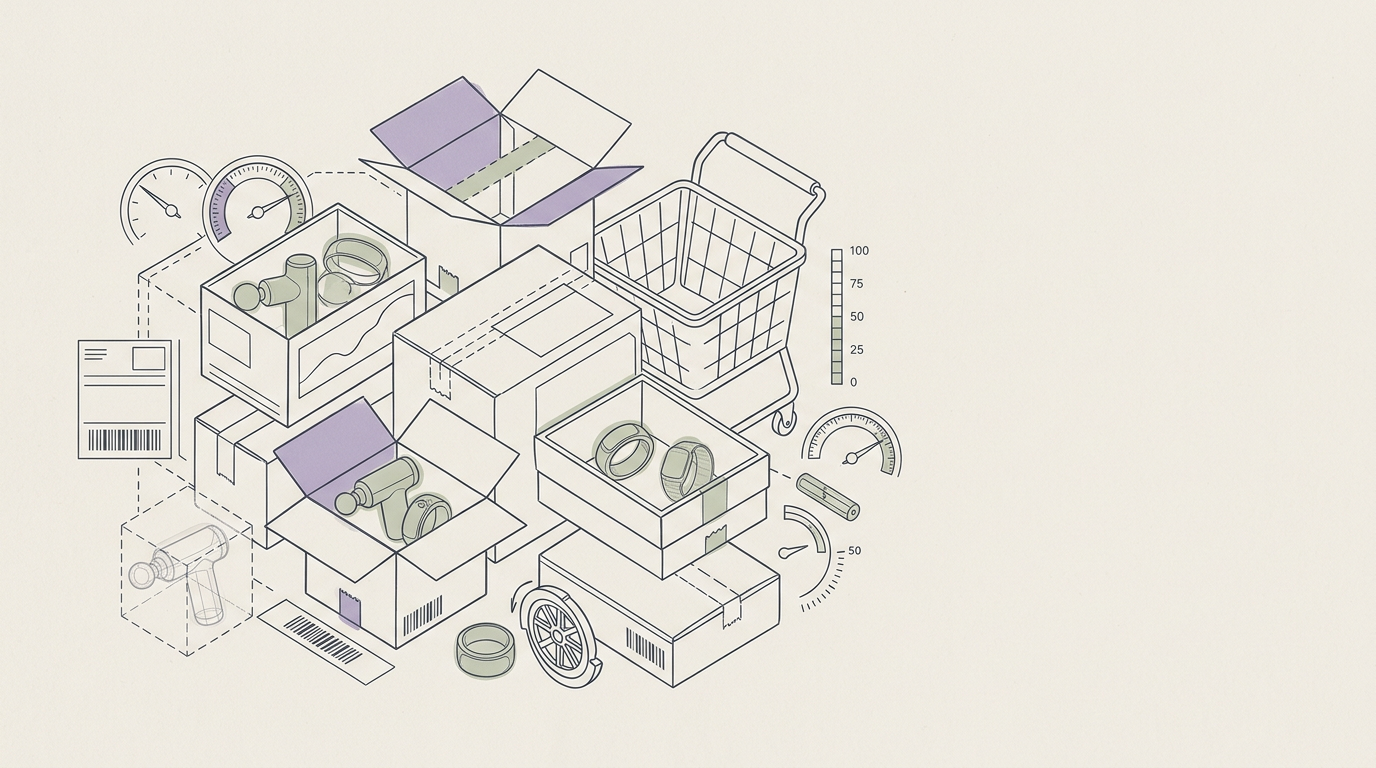
The quickest way to gauge someone's nervous system capacity is to look at their Amazon cart in July. The standard approach to Prime Day treats the supplement aisle and wearable tech deals as a substitute for an off switch. Stacking a weighted blanket, three sleep trackers, and a giant tub of Ashwagandha onto an already overloaded morning routine simply forces an exhausted system to process more inputs. Physiology answers to load and safety, and no amount of two-day shipping changes the allostatic burden you are currently carrying.
You open a new tab to buy a magnesium supplement while your jaw is locked so tight it aches up into your temples. You're in that familiar state where you feel tired but wired, staring at thirty different eye masks because the light in your bedroom suddenly feels abrasive. It's the 3pm slump where you open the fridge with zero hunger, searching for a dopamine hit that never lands. You hit checkout hoping a vibrating massage gun will unknot shoulders that haven't dropped in three days, even though you know you'll wake up at 3am every night anyway. The brain fog after eating lunch pushes you to order another focus-enhancing mushroom powder. You feel disconnected from your body, relying on external plastic devices to force a shift in state because the internal machinery feels completely inaccessible.
Common Questions
Why do I want to buy so much health tech?
The autonomic nervous system is seeking a shift in state. When internal capacity drops, external interventions look like the fastest route to safety. Your biology scans the environment for anything that might increase baseline regulation, and marketing algorithms are perfectly calibrated to intercept that physiological drive.
What happens when I stack too many protocols?
The system registers the stacking as additional static. The HPA axis—the loop controlling stress hormones from your brain to your adrenal glands—cannot tell the difference between a work deadline and a complicated ten-step morning routine that demands intense focus. Both require energy, and both keep the sympathetic nervous system highly aroused.
How do I know if a tool is actually helping?
Track the duration of your recovery. A useful device or supplement increases your baseline capacity over time. A tool that provides a temporary burst of stimulation followed by an immediate crash is masking the strain. It does not resolve the baseline.
The Data Deluge
Every protocol I teach, I tested on myself first. I used to believe that having continuous data on my heart rate, sleep staging, and blood oxygen would automatically make me healthier. I wore the rings and the chest straps. The reality is that staring at a screen telling you your sleep was poor directly increases your sympathetic arousal. Data without a regulation practice is just another stressor. The nervous system requires a shift in autonomic state. An alert notifying you that you are exhausted simply adds to the static.
The Spanish Society of General Practitioners recently met to discuss how clinical practice integrates with new technology. The medical field is trying to figure out how to handle this massive data deluge, and Kokorology're struggling with the exact same friction at home. Having more metrics on your sleep architecture doesn't automatically restore it. You still have to do the work of winding the system down.
The Glymphatic Trap
A cart full of adaptogens and sleep aids maps the exact contour of your allostatic load—the accumulated wear and tear from repeated adaptation to stressors. The HPA axis coordinates this survival response, flooding your system with cortisol to keep you alert. If your prefrontal cortex is exhausted from endless decision-making, popping a pill doesn't magically clear the metabolic waste from your brain.
The glymphatic system clears amyloid beta and tau from your brain into your plasma primarily while you sleep. When your circadian rhythm is wrecked, those clearance pathways stay choked with debris. No green powder scrubs them clean.
You cannot out-purchase a high allostatic load. The system requires regulation, not another shipping notification.
Access Versus Adherence
The most potent interventions rarely have a barcode. The body needs accurate interoception—the ability to feel what is happening inside. When you offload that awareness to a vibrating ring, your baroreflex and internal sensors stop getting the attention they require. A steady morning routine with natural light does more for your circadian rhythm than a blue-light blocking screen protector.
Look at massive public health rollouts, like the new twice-yearly HIV prevention jab in South Africa. Having free access to the physical intervention is useless without a behavioral pathway to actually use it. The same is true for your Prime Day haul. You have to establish the capacity to engage with the tool. A massage gun sits in the closet if your nervous system is too wired to sit still for ten minutes.
What to do this week
- Wait 48 hours before buying any wellness tech. The delay separates the physiological urge to fix your state from the actual utility of the product.
- Replace one planned supplement purchase with ten minutes of morning sunlight. Light exposure anchors the circadian rhythm and builds sleep pressure naturally.
- Do a 7-day capacity audit. Write down the strongest body signal each evening and the one friction point that worsened it.
- Clear the static. Remove one wearable device for three days and notice if your anxiety increases or decreases without the constant metrics.
Where this fits in the Kokorology system
This approach sits inside the Kokorology framework by prioritizing internal regulation over external accumulation. Use the Reset when you need to strip away the noise and restore your baseline over seven days. If you want to understand the exact mechanisms behind why your supplements aren't working, dive into the Library. When the body is regulated, you stop needing Amazon to fix your afternoon crash.
Closing
The next move is to stop buying your way out of dysregulation and start tracking what the body is actually doing.
- Start with the Kokorology Journal to map your daily state and spot the patterns driving your exhaustion.
- Work with Performance L2 to build genuine capacity rather than masking the symptoms with caffeine.
- Practice targeted interventions daily inside the Anchors library.
TL;DR
Your Prime Day cart is a direct reflection of your current allostatic load. Wellness gadgets and supplements cannot override an exhausted nervous system that fundamentally lacks capacity. Instead of masking symptoms with external tech, restore your baseline by addressing sleep pressure, circadian rhythm, and autonomic state. The most effective interventions require lowering the demands on your body, clearing the daily static, and restoring internal regulation through consistent, low-friction habits.
Sources
- McEwen (1998). Stress, adaptation, and disease: Allostasis and allostatic load. Annals of the New York Academy of Sciences.
- Critchley (2023). Interoception and Autonomic Regulation in Stress. Journal of Neuroscience.
- Dijk & Czeisler (1995). Contribution of the circadian pacemaker and the sleep homeostat to sleep propensity, sleep structure, electroencephalographic slow waves, and sleep spindle activity in humans. The Journal of Neuroscience.
- Dagum (2026). The glymphatic system clears amyloid beta and tau from brain to plasma in humans. Nature Communications.