Research
What the Cortisol Awakening Response Is Really Telling You
You have been told a high morning cortisol spike is good. It's more likely a sign your nervous system is preparing for war.
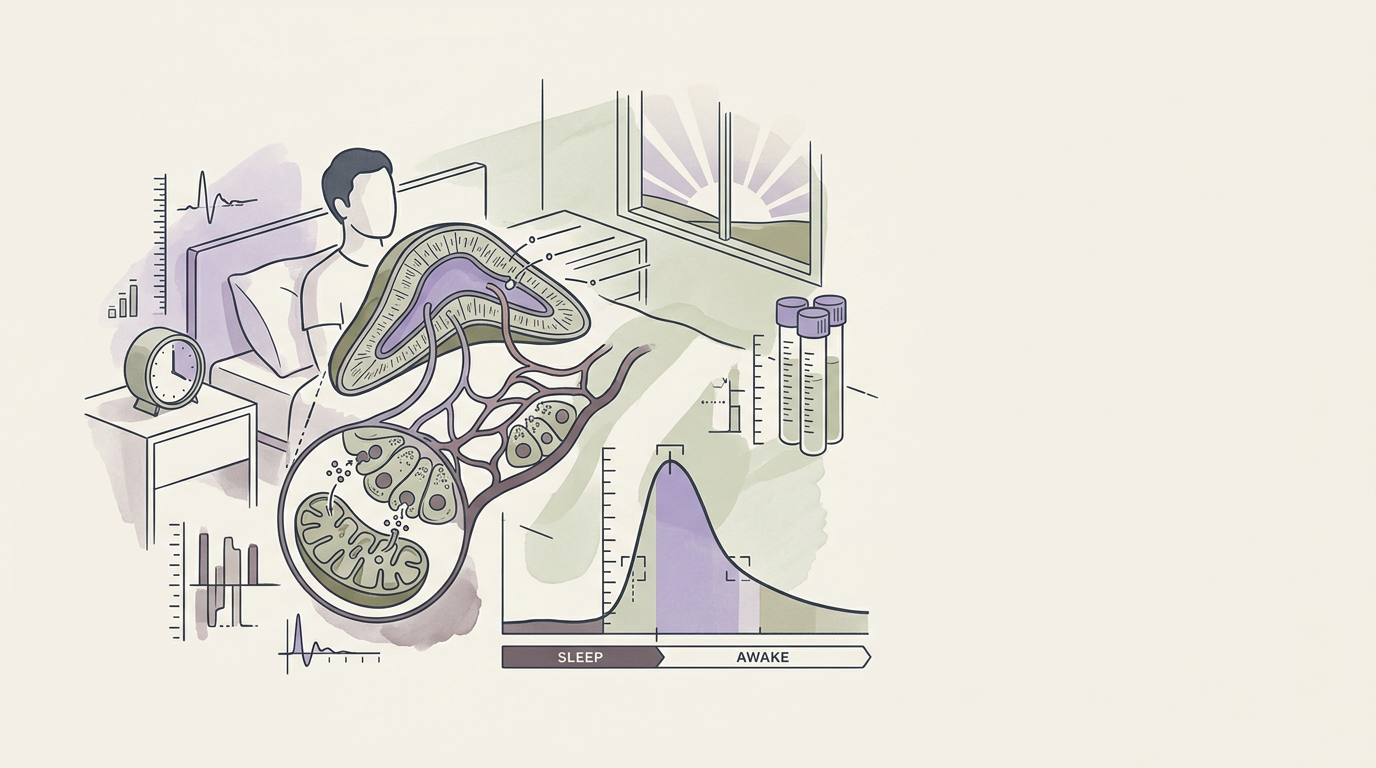
Optimization culture loves to turn biology into a subscription model. Kokorology are told the morning cortisol spike is a performance metric, where a high number proves you have a robust, highly functional routine. I don't buy it. A massive hormonal surge at dawn usually just means your nervous system is preparing for a war it expects to lose.
You probably know the physical texture of this long before you look at a wearable device. You open your eyes at 6am already in the red, heart thrumming before your feet hit the floor, carrying a buzzing sensation of being late for something that hasn't happened yet. The jaw is tightly clenched while you stare at the ceiling. By evening, the pendulum swings the other way, and you're exhausted but can't rest, scrolling through social media in the dark. You might find yourself anxious for no reason over a single unread email, or wake up at 3am every night with your mind racing through the week's obligations. That's what happens when the stress-hormone control loop gets stuck on high alert.
Common Questions
What is the Cortisol Awakening Response?
The Cortisol Awakening Response, or CAR, is the sharp, expected increase in cortisol that occurs in the 30 to 45 minutes immediately following sleep. It functions as the body's natural ignition sequence, getting you alert and physiologically mobilized for the coming day.
Is a high Cortisol Awakening Response good or bad?
A strong spike can signal a responsive, healthy nervous system. But a chronically exaggerated surge often points to anticipatory stress, meaning the body is over-preparing for a perceived threat. Context and daily load determine whether that high number is functional or desperate.
What does a blunted Cortisol Awakening Response mean?
A flat or blunted curve frequently appears after extended periods of chronic stress. The body intentionally turns down the dial to conserve energy after months of operating on high alert. It operates like a phone dropping into low-power mode to survive an ongoing drain.
Can I test my Cortisol Awakening Response at home?
Salivary testing kits can measure your morning cortisol levels, but a single day provides only a narrow snapshot. Most people already have the felt data they need. The actual work is adjusting the daily sensory inputs that shape the curve.
The Trap of Gamifying Your Hormones
I used to think tracking every biological variable was the key to fixing a dysregulated state. I spent an entire year measuring my morning metrics, convinced the data would eventually tell me how to feel. The trouble with wearable tech and at-home lab tests is that they turn your internal physiology into just another thing to be good at. The morning cortisol peak gets treated like a daily exam you can study for with an ice bath and green powder.
Your HPA axis (the control loop running from your brain to your adrenal glands and back) doesn't care about your productivity goals. It sends a surge of cortisol based entirely on its prediction for the day. When the system anticipates high demand—a packed meeting schedule, a difficult conversation, or just the low-grade hum of existing in a culture that views rest as a weakness—it floods the zone. That massive morning spike is metabolically expensive. The body is expending heavy energy early. When this happens day after day, you get the familiar 3pm crash because the tank is completely dry by mid-afternoon.
The Flatline and the Cost of Vigilance
If a massive spike is the system bracing for impact, a blunted or flat curve is the system refusing to play. After a long period of high alert, perhaps months of a high-pressure project or unresolved personal stress, the brain decides that mounting a huge stress response every morning is a waste of precious energy. It pulls the plug on the daily surge.
The wellness aisle loves to label this adrenal fatigue. In reality, the glands are perfectly fine, and the body is executing a deliberate, adaptive down-regulation. The system protects itself from the corrosive effects of chronic stress by refusing to mount a response. This is why you can feel entirely flat and unmotivated at 7am, yet become tired but wired in the evening as your natural rhythm fully inverts. You can use the Journal to map this specific pattern, noting exactly when you feel activated and when you feel drained. The pattern itself is the starting point for recovery.
The Master Clock and the Primacy of Light
Here's the piece most morning routine advice completely misses. Your Cortisol Awakening Response is governed by a tiny cluster of neurons in your brain called the suprachiasmatic nucleus. The SCN is the body's master clock, sitting just above where the optic nerves cross. Its primary job is to synchronize your internal state with the external 24-hour day, and its most critical piece of data is light.
When light in the blue spectrum hits your retina in the morning, it sends a direct, non-negotiable signal to the SCN that the day has begun. The SCN then orchestrates the neuroendocrine cascade that results in your cortisol peak. This is why the timing and quality of your morning light exposure is the single most powerful input for stabilizing your state. The body requires that unambiguous signal to set the rhythm. Without it, the system guesses, and it usually guesses wrong.
The inbox has never once been impressed by your heart rate.
The 10pm Scrolling Pacifier
It's worth observing the quiet transaction that happens when you're exhausted but unable to switch off at 10pm. The impulse to fill an online cart and click buy during a random Tuesday night sales event is a regulatory strategy for a stressed nervous system.
That tiny hit of dopamine you get from the purchase offers a fleeting moment of reward in a system starved for it. It temporarily quiets the noise. The dopamine spike is swiftly followed by a cortisol dip and then a rebound, leaving you feeling significantly more depleted the next day. The online cart functions as the world's most inefficiently delivered pacifier. I've had to catch myself doing this with workout gear I definitely didn't need. Recognizing the behavior allows you to see the mechanism clearly. When the urge to doom-scroll or shop hits late at night, ask what your system is actually demanding. Often, it's just rest. This is a foundational piece of building better nervous system regulation.
Name the Threat
The language Kokorology use to describe the physical sensations directly impacts how the brain processes them. Kokorology routinely label a racing heart and tight chest in the morning as clinical anxiety. In many cases, it's purely anticipatory load. The nervous system is looking ahead at the calendar and ramping up arousal to meet the demands of three back-to-back Zoom calls and a chaotic school run.
By shifting the label from anxiety to anticipation, you move the sensation out of the realm of pathology and into the realm of physiology. The body is simply doing its job by preparing for the environment it expects to encounter. You can learn to manage these expected environmental stressors inside the Performance course. Modifying the environment, or at least how the body perceives it, fundamentally changes the hormonal output.
What to do this week
- Get 10 minutes of morning light within an hour of waking. Step outside without sunglasses or a phone. You want the light hitting the retina to give the SCN the precise signal it needs to anchor your circadian rhythm.
- Delay your first coffee by 90 minutes. Your cortisol naturally peaks in the first hour after you wake up. Adding caffeine on top of that amplifies the physiological stress response. Let your own system do the heavy lifting first.
- Perform a Pre-Scroll Pause. Before you open your email for the first time, take three deliberate, slow exhales. This tiny buffer separates your waking state from the flood of incoming demands. You can try one of the 60-second audio Hacks if you need a prompt.
- Name the anticipation. Instead of calling the morning rush anxiety, identify exactly what your body is bracing for. Just naming the predicted load shifts the feeling into a practical problem you can actually solve.
Where this fits in the Kokorology system
Understanding your morning physiology is about reading the signals from your internal state and adjusting the inputs accordingly. If your system feels like it's constantly in a state of high alert or total shutdown, it usually signals that a full baseline reset is required. You can start with the Reset, the guided program to down-regulate and find steady ground.
Closing
The goal is an appropriate morning response that accurately reflects the demands of your day without pushing your system into a state of excessive wear. This begins with awareness of the real inputs that shape your physiology: light, timing, and perceived safety.
- Work on the inputs inside the Kokorology Regulation L1 course.
- Get a guided 7-day reset for your whole system with The Reset program.
- Practice regulating dopamine and drive with the Dopamine Anchor protocol.
TL;DR
Your Cortisol Awakening Response (CAR) is a signal of your nervous system's anticipated load for the day. A high spike often points to high anticipatory stress, while a blunted curve serves as a self-protective energy-saving strategy after chronic wear. The most powerful inputs you have to regulate this rhythm are not expensive supplements, but fundamentals like the timing of your morning light exposure, delaying caffeine, and managing perceived threat before your day begins.
Sources
- Ungurianu, A. (2025). The biological clock influenced by burnout, hormonal dysregulation and circadian misalignment: a systematic review. Clocks & Sleep.
- Clow, A., & Smyth, N. (2020). The cortisol awakening response: A mystery, finally solved?. Stress.
- Dijk, D. J., & Czeisler, C. A. (1995). Contribution of the circadian pacemaker and the sleep homeostat to sleep propensity, sleep structure, electroencephalographic slow waves, and sleep spindle activity in humans. The Journal of Neuroscience.
- Zaccaro, A. (2018). How breath-control can change your life: a systematic review on psycho-physiological correlates of slow breathing. Frontiers in Human Neuroscience.