Research
What Porges Actually Said About the Ventral Vagal
The wellness world has turned the ventral vagal state into a kind of nervous system nirvana. It’s become the physiological equivalent of a spa day: a blissed-out, tranquil, happy-clappy destination you’re supposed to ‘ha
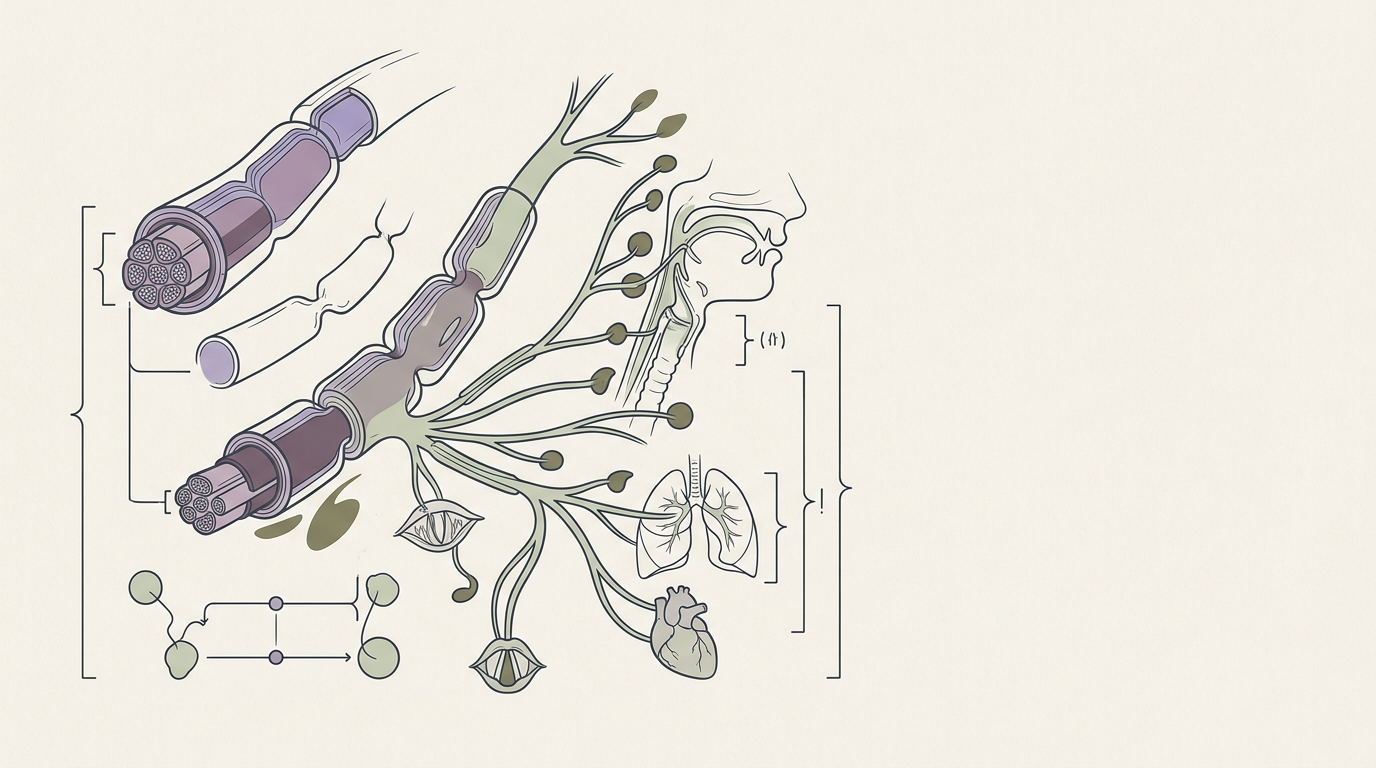
The wellness space has turned the ventral vagal state into a kind of nervous system nirvana. They sell it as a blissed-out, tranquil destination you arrive at through enough cold plunges and binaural beats. I'm calling it right now: treating your biology like a solo spa day guarantees you'll stay dysregulated. The ventral vagal complex operates as a strict piece of biological machinery for social connection, demanding cues of safety from other humans to function.
You already know the physical cost of trying to isolate your way into relaxation. You sit on a meditation cushion trying to clear your mind, and you just end up anxious for no reason. Your shoulders stay pinned to your ears in the shower, and by 3pm, the jaw clench is so intense it radiates behind your eyes. You scroll through endless advice about finding your calm, yet you remain tired but wired, staring at the ceiling at 2am. You retreat from everyone to fix your stress, only to feel disconnected from your body entirely.
Common Questions
What is the ventral vagal state?
It's the neurophysiological machinery for feeling safe and connected with others. Governed by a newer, myelinated part of the vagus nerve, it acts as a biological brake on your older defense systems. It enables readiness for connection and the ability to self-regulate while engaging with the world.
How does it override the fight-or-flight response?
It functions as a higher-order system that inhibits defensive sympathetic arousal or dorsal shutdown. You can be highly alert and mobilised while still feeling socially safe and connected. It allows for animated, joyful play or intense focus rather than panicked, hypervigilant survival.
Can you force it to turn on?
Absolutely not. Its activation requires subconscious detection of safety cues in the environment. Your nervous system constantly scans for prosody in voices, soft facial expressions, and relaxed postures. You can't command yourself to feel safe through sheer willpower.
Beyond Chill Mode
If maximum chill were the evolutionary goal, a sensory deprivation tank would be the pinnacle of human achievement. The entire purpose of this myelinated pathway is to facilitate safe and effective social connection. It forms the biological core of what allows the system to have a functioning society, and it sits at the absolute center of nervous system regulation.
The prefrontal cortex—the thinking, planning part of your brain—talks to your heart via the vagus nerve. High vagal tone reflects a well-integrated system where the brain effectively quiets the body’s stress responses. The ventral vagal pathway delivers that top-down regulation, enabling you to be calm in the presence of other people. You get to listen without defensiveness. Good luck finding the neurobiology of safety inside a meditation app.
Your nervous system is far less impressed by your daily cold plunge and far more impressed by a friend who listens to your story without looking at their phone.
The Mechanics of Safety
The standard advice tells you to go find your calm alone in a quiet room. I used to believe this myself, spending hours trying to breathe my way out of a stress spiral before I realised I was just starving my nervous system of the exact data it needed. The autonomic nervous system relies on a hierarchical structure to manage threats. The myelinated ventral vagal complex acts as a sophisticated parking brake. Pull it, and the defensive engines of fight-and-flight immediately quiet down.
To pull that brake, the brain requires proof of safety. This relies on neuroception—the constant, subconscious scanning of your environment for signals of danger or connection. It listens to the prosody and musicality of people's voices. It watches their facial expressions and senses their posture. When it detects safety, it engages the pathway. The result is pure presence, giving you the capacity to sit in a room with another human without your body bracing for impact.
The Metabolic Demand of Connection
Trying to achieve a state of social engagement in complete isolation is like trying to learn to swim by correspondence. Your brain constantly attempts to predict your body's energy requirements and meet them ahead of time. Social connection with a trusted person serves as one of the most metabolically efficient ways to manage that demand.
A co-regulating conversation literally calms your physiology, reducing the wear and tear accumulating from chronic stress. The data on human social genomics bears this out clearly. Loneliness drives up gene expression tied to inflammation and adversity, while social connection reverses that exact transcriptional response. Connection regulates the system. Trying to manage that energy demand entirely on your own requires immense physiological effort.
The Interoceptive Readout
Chasing a euphoric high just creates more sympathetic noise. You need a clear interoceptive readout to know what your body actually requires. The insular cortex builds a cohesive sense of your internal state, letting you feel hunger, tiredness, or the specific tension in your gut.
A well-regulated vagal tone gives you a crisp signal without the static of anxiety. Tracking these subtle shifts in felt sense is exactly why I built the Kokorology Journal. The goal is a quiet sense of okay-ness and the total absence of a background hum of defensive tension. When you stop chasing a feeling, you can finally build an environment that supports your biology.
What to do this week
- Vocal Tone Audit. Record yourself speaking for 30 seconds on your phone. Listen back, entirely ignoring the content, and map the tune. Notice if it sounds fast, flat, or sharp, or if there is genuine melodic range.
- Synchronous > Asynchronous. Swap one significant text conversation for a voice note or a real-time call. Give your nervous system the data of a human voice.
- A Micro-Moment of Safety. Place a gentle hand on your sternum. Take one slow breath, focusing on the exhale. You aren't trying to achieve anything. You are simply offering a physical cue of safety to your own body.
- Curate Your Soundscape. Consciously choose your background audio for a single afternoon. Swap the high-intensity news for instrumental tracks or gentle human vocals, and watch what happens to the tension in your shoulders. You can find more micro-adjustments like this in the library of 60-second Hacks.
Where this fits in the Kokorology system
This mechanical understanding of safety forms the core of how Kokorology approach Nervous System Regulation. When this social engagement system goes offline, the body defaults to a state of chronic threat and high cortisol, which Kokorology dismantle step-by-step inside the Stress & Anxiety Anchor.
Closing
The theory only matters if it changes your practice. You have to stop trying to force your nervous system into a shape it can't hold and start creating the conditions for it to find its own footing. Move from control to cultivation, and the biology handles the rest.
- Start rebuilding your baseline inside Regulation (L1).
- Track your interoceptive signals daily inside the Kokorology Journal.
- Access immediate reset tools in the Kokorology Hacks library.
TL;DR
The popular notion of the ventral vagal state as a bliss-out zone completely misunderstands the mechanism. It operates as the biological machinery for your social engagement system, designed to down-regulate older threat responses only when specific safety cues are present. This state of safety and connection requires co-regulation via real-time signals like vocal prosody and gentle eye contact, rather than isolated optimization routines. The work requires building an environment of safety that allows this state to emerge naturally.
Sources
- Cole, S. W. (2015). Human social genomics. PLoS Genetics.
- Craig, A. D. (2002). How do you feel? Interoception: the sense of the physiological condition of the body. Nature Reviews Neuroscience.
- Feldman Barrett, L. (2017). How Emotions Are Made: The Secret Life of the Brain.
- Lieberman, M. D. (2023). Communication with others and oneself: language as a nervous-system intervention. Kokorology Curated Research Library.
- Thayer, J. F., & Lane, R. D. (2009). Claude Bernard and the Bimodal Control of the Heart. Journal of Psychosomatic Research.
- McEwen, B. S. (2006). Protective and damaging effects of stress mediators: the good and bad sides of the response to stress. Metabolism.