Research
What Actually Resets After a 3 Day Weekend
Most people treat a three-day weekend like a nutritional supplement, a concentrated dose of ‘rest’ meant to cure a month’s worth of overwork. Then they feel a bit cheated when they return to their desk on Tuesday feeling
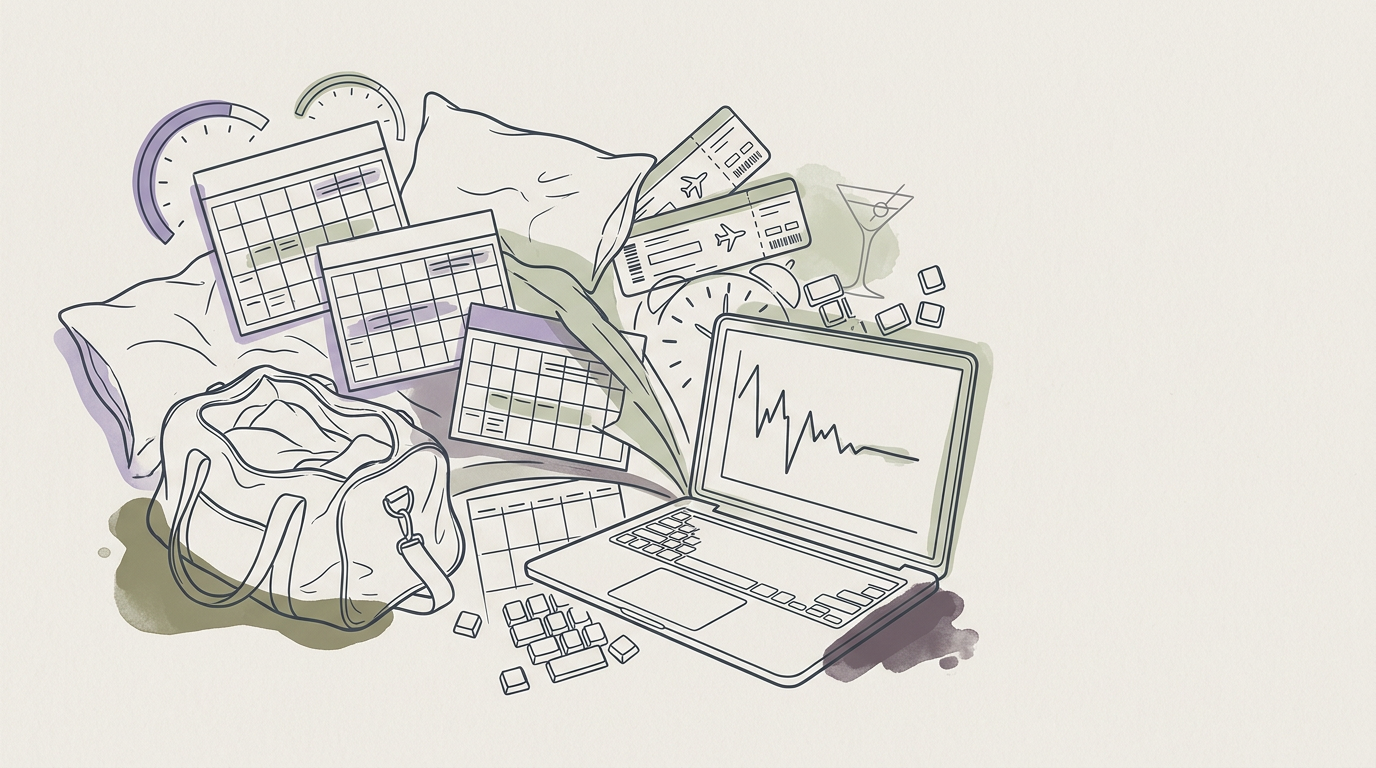
I used to think the Tuesday exhaustion after a three-day weekend meant I just hadn't relaxed hard enough. Kokorology treat the bank holiday like a heavy dose of recovery meant to fix a month of overwork. The reality is that the travel, the disrupted sleep, and the forced socialising simply add a novel form of nervous system load.
You drag your bag through the front door at 8pm on Monday, drop it in the hallway, and realise you feel worse than you did on Friday. You are deeply tired but wired, pacing the kitchen instead of just going to bed. The jaw that finally unclenched during Saturday afternoon's barbecue has locked back up, and you find yourself staring blankly into the fridge with no actual hunger. By Tuesday morning, you wake up at 3am every night in the week that follows, staring at an inbox while navigating profound brain fog. You feel anxious for no reason, convinced you've wasted the break, when all you actually did was change the flavour of your stress.
Common Questions
Why do I feel so exhausted after a relaxing long weekend?
Your nervous system thrives on predictability. A long weekend often involves travel stress, broken sleep schedules, more alcohol, and intense social obligations. Your body processes this sustained disruption to its rhythm as a low-grade threat, which is just as taxing as a difficult week at a desk.
How long does it actually take to recover from a 3-day weekend?
It depends entirely on how far you pushed your capacity. Recovering from missed sleep takes several days of consistent, high-quality rest. Stabilising your body’s central stress-hormone control loop, the HPA axis, usually requires the better part of a week of steady, mundane routines.
What is the single most important thing for a post-weekend reset?
Anchor your circadian rhythm. Get bright, natural light in your eyes within 30 minutes of waking and minimise bright light in the two hours before bed. This is the most powerful signal you can send your brain that the chaos is over and predictability has been restored.
The cumulative cost of having fun
The Tuesday morning fog usually gets blamed on an extra glass of prosecco or a late-night barbecue. That's a convenient story that ignores the physiological burden of the entire weekend. The real mechanism at work is allostatic load, the physical wear and tear that accumulates when your body is repeatedly exposed to stress.
Every part of the break demands adaptation. The airport security line, the two hours in holiday traffic, the argument with your uncle, the pressure to visibly have fun all require a metabolic response. By the time you get home, your system is running on fumes, having spent the weekend navigating a sustained threat response. Keeping a simple log of your energy and mood in the Journal makes this pattern painfully obvious.
Sleep architecture does not care about your intentions
I hear people say they'll just catch up on three nights of compromised sleep with one good night on Monday. Sleep has an intricate architecture that requires consistency. When it is disrupted by travel, alcohol, or simply sleeping in a strange hotel bed, you lose entire phases of crucial maintenance work, like deep sleep and glymphatic clearance.
Even moderate sleep restriction rapidly drains the brain's high-energy phosphate buffer, collapsing your cognitive stamina. Pushing your system for extended hours, even fun hours, exhausts the very neurochemical substrates you need for mood regulation and focus. You recover by recommitting to your body’s schedule for multiple days, like the targeted protocol in the sleep anchor.
The alarm that won't turn off
This is the specific neurochemical state that drives people mad on Monday night. You want to sleep, but your mind is racing and you can't switch off. The culprit is an overstimulated locus coeruleus, the tiny, ancient part of your brainstem that acts as a novelty detector and system-wide alarm.
A weekend of unpredictability keeps this little blue dot firing, pumping out norepinephrine, your brain's primary arousal signal. When it's been on high alert for 72 hours, it doesn't just clock off because you're back in your own house. The exhaustion comes from having no physical energy left, while the wired feeling comes from a brain still aggressively scanning for threats. A few of the micro-practices in the hacks are designed specifically to help down-regulate this system on demand.
The holiday inbox has never once been impressed by your resting heart rate.
Returning to normal is its own stressor
Kokorology expect to feel completely refreshed at 9am on Tuesday, but the abrupt transition back to a structured work routine is just another shock to the system. It's rhythm whiplash. You've just spent three days with one set of rules, and now you're asking your biology to snap back to another.
Existing strain on the systems is dangerously amplified by additional stressors. The low-grade stress of your average work week didn't vanish over the weekend. When you return, you're dealing with an inbox on a system that is already depleted and dysregulated from the break. Learning the foundational skill of nervous system regulation means managing these inevitable transitions without cratering your capacity.
What to do this week
- Anchor your rhythm. For the next three days, get 10 minutes of direct, natural morning light within 30 minutes of waking. No phone. Just stand outside.
- Hydrate and stabilise. Your system is dehydrated and your blood sugar is on a rollercoaster. Start the day with a large glass of water and a pinch of salt. Eat at least 30g of protein at breakfast to avoid a mid-morning energy crash.
- Cancel and defer. Your prefrontal cortex is functionally offline. Do not make major decisions for the next 48 hours. Defer difficult conversations.
- Embrace the horizontal. Your readiness scores are likely in the dirt. This isn't the week for high-intensity training. Take a walk, stretch, or just lie on the floor for ten minutes.
Where this fits in the Kokorology system
This dynamic is a textbook case of disrupted homeostasis, the body's drive to maintain a stable internal environment. The post-weekend recovery process is about providing the clear, consistent signals your nervous system needs to re-establish that balance. This work sits at the heart of the protocol for restoring your baseline, the Cortisol Anchor.
Closing
The feeling of whiplash after a long weekend means your nervous system is reacting normally to three days of novelty and disruption. The way back to centre is to deliberately and gently restore your routines, one predictable rhythm at a time. The next move is always a small one.
- Start with the 7-day Reset if you feel completely overwhelmed and don't know where to begin.
- Work with your own patterns of depletion and recovery inside the Journal.
- Sit with the foundational principles in the free Nervous System Regulation Guide.
TL;DR
A three-day weekend often creates more physiological strain than it resolves, leaving you with allostatic load, sleep disruption, and social fatigue. The real recovery happens in the days that follow. You have to re-anchor your sleep/wake cycle with morning light, stabilise your system with hydration and protein, and down-regulate an overstimulated locus coeruleus so your body can exit its high-alert state and begin repairs.
Sources
- Kivimäki, M. (2018). Work stress and risk of death in men and women with and without cardiometabolic disease: A multicohort study. The Lancet Diabetes & Endocrinology.
- Mather, M. & Harley, C. W. (2016). The Locus Coeruleus: A Hub for Arousal and Memory. Cold Spring Harbor Perspectives in Biology.
- McEwen, B. S. (2019). The Brain on Stress: The Good, The Bad, and The Ugly. Keynote address, Society for Neuroscience.
- Dworak, M., McCarley, R.W., Kim, T., Kalinchuk, A.V., & Basheer, R. (2010). Sleep and brain energy levels: ATP changes during sleep. Journal of Neuroscience.
- Virtanen, M. (2012). Overtime work as a predictor of major depressive episode: A 5-year follow-up of the Whitehall II study. PLoS ONE.