Nervous System
The 3pm mood check is measuring the wrong thing
Tracking your mood at 3pm only records the exhaustion after it happens. The nervous system requires a map of the inputs driving the state.
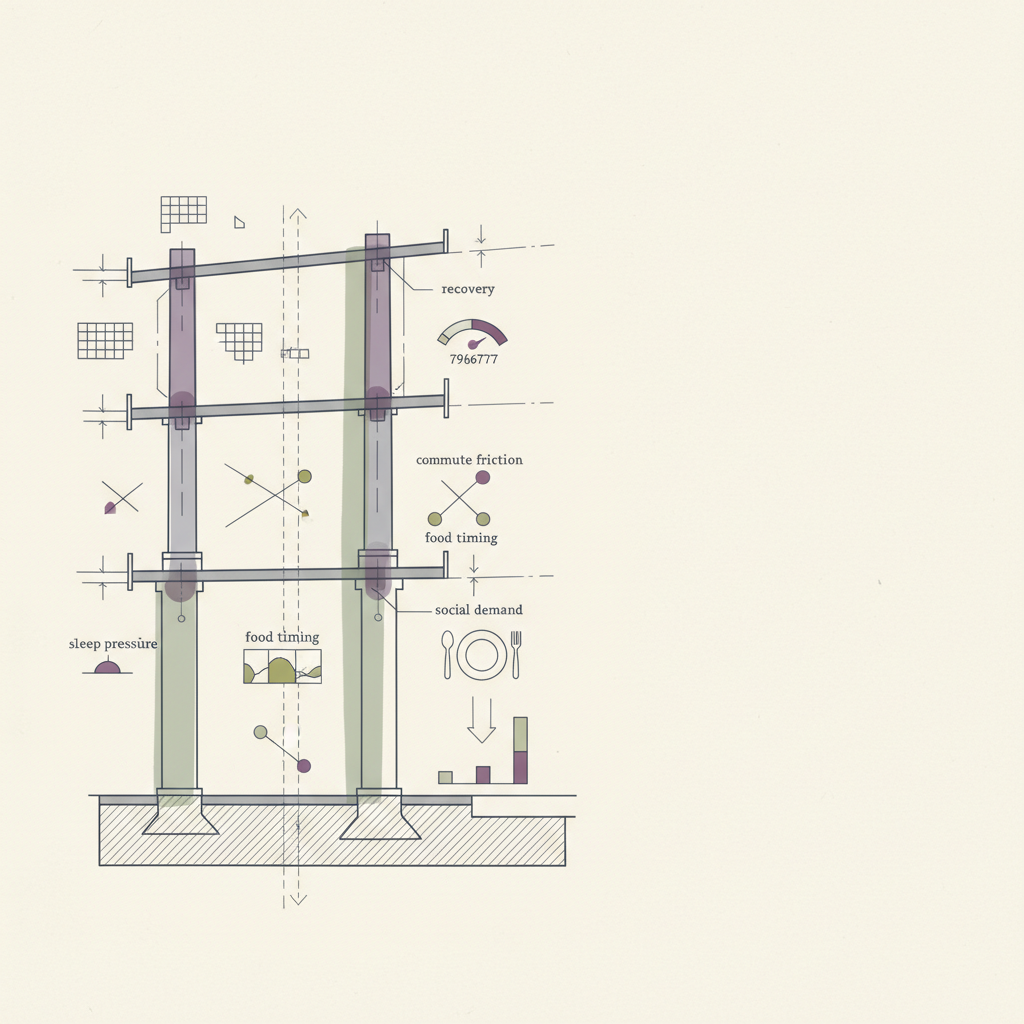
I used to believe that if I just tracked my mood consistently enough, I could fix the mid-afternoon slump. The app industry insists that logging a smiley face or a sad face at 3pm will reveal the secret to feeling better. I'm calling it. The 3pm mood check is completely useless. By the time you notice the frustration, the autonomic shift has already happened. You're asking a hypervigilant nervous system to rate its own distress. The body needs a drop in physical load, and Kokorology respond with a prompt to select an emoji.
You know exactly what this feels like before the notification even pings. It's the 3pm jaw clench that travels up to the buzz behind your eyes. You find yourself staring into the open fridge with absolutely zero hunger, just looking for a hit of dopamine to push through the next hour. You type half-finished sentences in Slack and delete them. You're dealing with the classic tired but wired state, where your brain fog after eating makes focus impossible, yet you feel inexplicably tense. You crawl into bed exhausted but can't rest. The app asks how your day was, and the only honest answer is that your biology is entirely out of capacity.
Common Questions
What does mood tracking do to the nervous system?
Prompting an overwhelmed brain to evaluate its own emotions requires heavy prefrontal effort. When your nervous system is heavily regulated toward defense, asking it to analyze feelings adds more demand to a system that desperately needs a break from processing inputs.
Why do I feel worse after logging my symptoms?
Scanning for negative emotions reinforces a hypervigilant state. The brain learns to anticipate distress, heightening your threat detection mechanisms. You end up practicing the exact loop you want to escape, keeping cortisol levels elevated throughout the afternoon.
What should I measure instead of mood?
Measure the physical inputs driving the state. Track your protein timing, your sleep pressure, how many hours you spent under artificial light, and whether you took a genuine break from screens. Biology responds to physical changes, not digital reflections.
The trap of the emotional review
The wellness industry has somehow turned natural fluctuations in human capacity into a daily exam you can fail. When Kokorology log the feelings, Kokorology assume Kokorology're gathering neutral data. The observer effect guarantees Kokorology aren't. Directing intense attention toward a negative state amplifies the interoceptive signal of that state. You feel the anxiety more sharply simply because the app told you to look for it.
I've stopped recommending these emotional check-ins completely. If my prefrontal cortex is already struggling to maintain focus at 3pm, the absolute last thing I need is a mandatory reflection session on my own irritability. The inbox has never once been impressed by your self-awareness.
The state drives the story
Most apps operate backward. They assume your mood dictates your physical reality. In the body, the mechanism runs in reverse. The brain relies on interoception—the continuous sensory mapping of your internal organs, breath rate, and cardiovascular tone. When the vagus nerve detects a rapid heart rate and a shallow breathing pattern, it signals the brain that the environment is unsafe.
The brain then invents a story to explain this physical tension. You think you're angry at a perfectly normal email, but your nervous system is just reacting to the fact that you drank two coffees on an empty stomach after five hours of sleep. The mood is a downstream consequence of an allostatic overload.
Affect labeling without the screen
This doesn't mean Kokorology ignore the internal state. The mechanism of affect labeling—putting a specific name to a physical sensation—actually downregulates the amygdala. The format dictates the outcome. Typing a one-word emotion into a digital dashboard keeps you tethered to the device driving the fatigue.
Moving the practice to physical paper slows the processing speed. I tested this on myself first, swapping the 3pm app ping for a physical notebook. The act of writing forces the motor cortex to engage and drops the pace of the thought.
Write down the physical sensation, and leave the emotional verdict out of it.
Adjusting the real inputs
The goal of any tracking should be to identify the physical levers you can actually pull. If the 3pm crash is a regular visitor, you have a glucose or circadian rhythm issue demanding a physical intervention.
Change the earliest input you can control. Eat 30g of protein within an hour of waking. Step outside for ten minutes of natural light before looking at a screen. Notice what happens to the afternoon crash when the morning physiology is stable.
What to do this week
- Delete the mood-tracking app for seven days. Remove the constant prefrontal demand of evaluating your own emotions.
- Track three physical inputs instead. Write down the time of your first meal, your total hours of sleep, and your caffeine cutoff time.
- Implement one friction-free reset in the afternoon. When the 3pm slump hits, try a sustained nasal exhale or just sit for two minutes doing a slow, extended exhale.
- Wait for the state to shift. Biology adapts to reliable inputs over time.
Where this fits in the Kokorology system
This approach moves you away from endless emotional analysis and back into applied physiology. The Journal is where you practice affect labeling and map the physical inputs driving your week. If you notice a repeated nervous-system crash every afternoon, the Anchors provide the targeted daily routines to stabilize that specific autonomic shift. When you need the actual mechanism behind why the body reacts this way, the Research Library lays it out plainly.
Tonight's practice
Where did I physically hold my tension today, and what was the very last thing I consumed before I noticed it?
- Sit on the floor of your bedroom with your back against the wall.
- Set a timer for 3 minutes.
- Breathe exclusively through your nose, making the exhale twice as long as the inhale (e.g., in for 3 counts, out for 6).
- When the timer finishes, close your eyes and map the physical state of your jaw, shoulders, and stomach.
- Write the result in one physical sentence, on paper, and walk away.
Closing
The app is going to keep asking for a rating, but you're allowed to close the screen and fix the physical environment instead.
- Start with the Kokorology Journal to track your physical inputs rather than judging your moods.
- Work with the Reset course to build a structured 7-day onramp for your morning and evening physiology.
- Practice the micro-interventions daily inside the inner circle community.
TL;DR
Tracking your mood at 3pm asks an exhausted prefrontal cortex to grade its own fatigue. The nervous system requires a reduction in physical and sensory demands. Shift your attention away from digital dashboards and start measuring the concrete inputs driving the state, like protein timing, sleep pressure, and light exposure. Change the physical input, and the mood follows.
Sources
- Khalsa, S. S., & Lapidus, R. C. (2016). The pros and cons of interoception (awareness of the internal state of the body). Frontiers in Psychology.
- Pennebaker, J.W. (2023). Journaling and the nervous system: from expressive writing to affect labeling. Curated meta-analyses and primary studies (1986–2023).
- Critchley, H. (2023). Interoception and Autonomic Regulation in Stress. Journal of Neuroscience.
- Balban, M.Y. (2023). Brief structured respiration practices enhance mood and reduce physiological arousal. Cell Reports Medicine.