Nervous System
Vagus nerve stimulation vs manual exercises: what actually builds capacity
A stimulator can move your heart-rate variability tonight. Daily practice moves what your nervous system expects next month. Here is the honest comparison — mechanism, evidence, and where each one belongs.
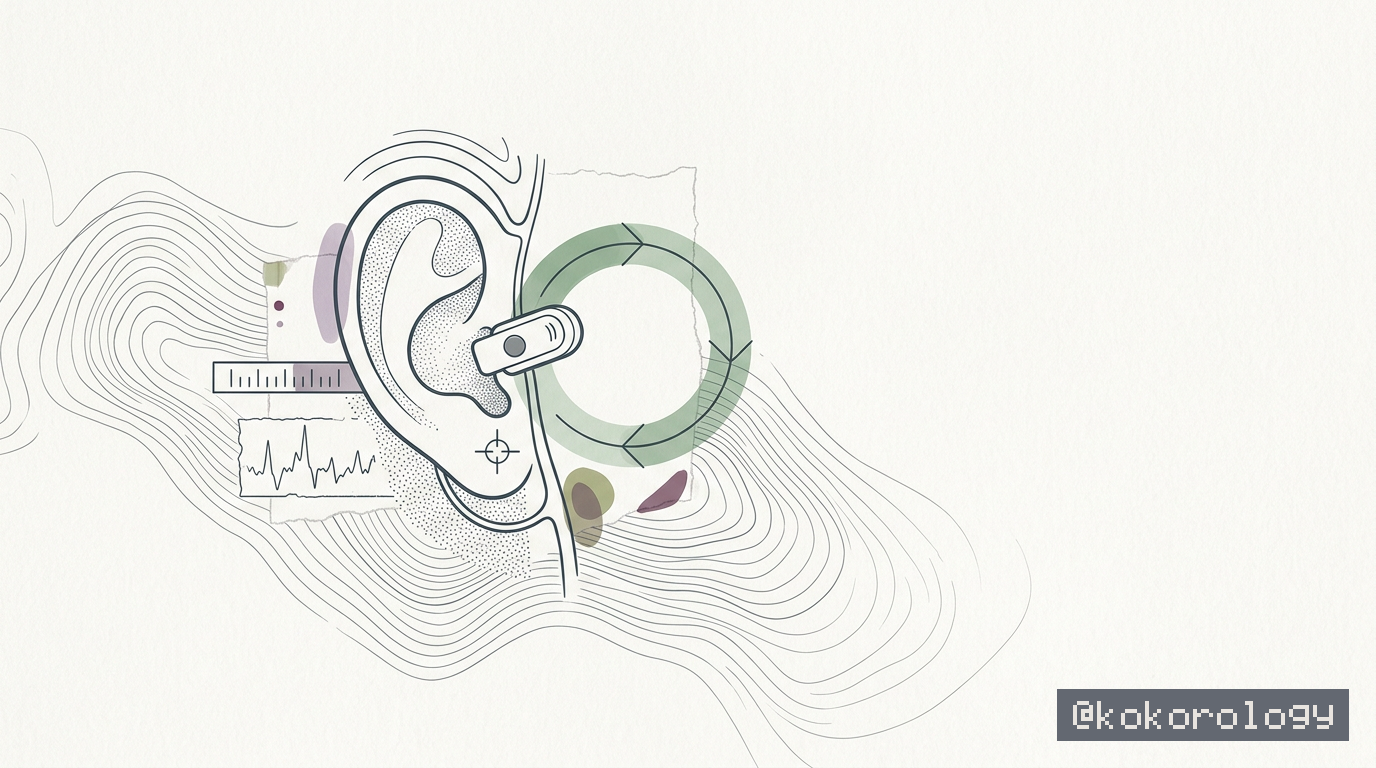
A client on a coaching call last week asked if she should buy one of the sleek, new vagus nerve stimulators that keep showing up in her feed. I told her the device probably works, which isn't the same as saying it will solve her problem. The sudden boom in wearable tech for the nervous system is built on a seductive, and mostly wrong, premise: that you can outsource the work of building capacity. The real question isn't whether to buy the gadget, but whether you want to rent a feeling of calm or own the architecture that produces it.
You know the feeling that gets you to that late-night product page. It’s the low-grade hum of anxiety for no reason, the feeling of being tired but wired as you stare at the ceiling at 2 a.m. It’s the shallow breath you only notice when you try to take a deep one and can’t. It’s the exhaustion that a third coffee can’t dent, the jaw that’s still clenched in the shower, the vague sense of being a brain in a jar, disconnected from your body. You can’t sleep even though you're exhausted, your heart races when you lie down, and the promise of a little device that just fixes it feels less like an expense and more like an emergency measure. I get it. That desperation is a symptom.
Common Questions
What is the vagus nerve?
Think of it as the superintendent of your body’s internal state. It’s the main nerve of the parasympathetic nervous system—your body’s brake pedal—running from the brainstem down into the chest and abdomen. It reports on the status of your organs back to your brain and sends signals from your brain back down to slow your heart rate, aid digestion, and generally signal that you are not, in fact, being chased by a bear. Yes, it's the vagus nerve again. No, I'm not sorry.
How does vagus nerve stimulation work?
The small, non-implanted devices you see online clip to your ear. They send a mild electrical current through the skin to stimulate a branch of the vagus nerve. This is an afferent signal, meaning it travels from the body up to the brain. It essentially tells your brain’s control centers that things are safe, which in turn helps trigger a system-wide downshift.
Are manual vagus nerve exercises better?
Better is the wrong frame. They do different jobs. Manual exercises like slow, nasal breathing, humming, or cold water exposure work on the same nerve but require your active participation. This engagement does more than just trigger a state change; it trains your brain’s ability to sense and influence your internal state, a skill called interoception. The device is a tool; the exercise is a workout.
A Device Changes Your State. Practice Changes Your Baseline.
The appeal of a stimulator is obvious. It requires no effort, no practice, no belief. You clip it on, and it does the work for you. It sends a signal your own body is currently too stressed or distracted to send. In a moment of high activation—panic before a presentation, a spiral of worry at 3 a.m.—this can be incredibly useful. Think of it as a circuit breaker.
The trouble with circuit breakers is they don’t rewire the house. A stimulator can absolutely move your heart rate variability (HRV) for the 30 minutes you’re wearing it. It can interrupt an anxiety loop. What it can’t do is change your system’s default setting. Lasting nervous system regulation isn’t about having a tool to make you calm. It’s about building a system that is calmer by default.
A device can change your state. Only practice can change your baseline.
This is the difference between renting a state and owning a trait. A stimulator rents you a parasympathetic state. Daily, intentional practice builds vagal tone as an intrinsic trait.
The Work You Can’t Outsource: Building the Architecture
This is where the less glamorous, non-electrical work comes in. When you consciously slow your breathing, you’re not just “relaxing.” You are performing a deliberate, mechanical intervention. By extending your exhale, you are manually engaging the vagus nerve, forcing your heart rate to slow down. It’s not magic. It’s physiology.
This is the part everyone wants to skip. Kokorology’d rather buy a subscription to the feature than do the calisthenics. I used to think of these exercises as woo-woo wellness until I saw the data. Each time you do a round of resonant breathing, you are running a rep. You are strengthening the feedback loop between your cortex (your thinking brain) and your brainstem (your survival brain). You are training your body’s own internal communication system. A device can’t do that for you, any more than watching a weightlifting video can build your biceps. The work is the point.
Meet Your Afferent Pathways
Here’s what’s actually happening. Your vagus nerve is mostly made of afferent fibers—about 80% of them. These fibers run one way: from the body to the brain. They are your internal surveillance network, constantly reporting on heart rate, breathing, gut sensations, and more. This information lands in a part of the brainstem called the nucleus of the solitary tract (NTS), which then relays it up to higher brain centers that generate feelings like anxiety or calm.
A stimulator hijacks this pathway, sending an artificial “all clear” signal directly to the NTS. Manual exercises, however, train the whole circuit. You learn to generate the “all clear” signal yourself, and more importantly, you improve your brain’s ability to listen to the subtle, real-time signals from your body. This skill, interoception, is the foundation of emotional granularity and self-regulation. Without it, you’re just a passenger.
Where to Use the Tool, Where to Do the Work
So, should you buy the device? Maybe. It's a tool, not a solution.
Use a stimulator like a powerful Hack: as a spot treatment for acute moments of overwhelm, to interrupt a panic cycle, or to help you get to sleep on a particularly wired night. Use it to give yourself a window of calm so you can then do the real work.
But the real work remains. The daily, unglamorous practice of five minutes of slow breathing, of noticing the tension in your jaw and releasing it, of tracking your state in the Journal. That’s not for getting calm right now. That’s for building the person who doesn’t get thrown so easily next month. One is a rescue raft. The other is learning to swim.
What to do this week
- Run the experiment. Forget relaxing. For the next five days, do two minutes of slow, nasal breathing with a longer exhale (e.g., inhale for 4, exhale for 6). Do it once in the morning and once in the afternoon. Don't wait until you're stressed. Treat it like taking a vitamin.
- Label, don't judge. The next time you feel that familiar hum of anxiety, just name it. Out loud, if you can: "Ah, there's that activation." The act of labeling engages the prefrontal cortex and ever-so-slightly pumps the brakes on the amygdala.
- Contrast your tools. If you have a stimulator, use it. But right after, take two minutes to write down what you felt before and what you feel after. The next day, do a breathing exercise instead and do the same. Get to know what each tool actually does for your specific system. Data, not dogma.
Where this fits in the Kokorology system
This entire debate sits at the intersection of the short-term Hacks and the foundational Regulation course. A stimulator is a potent hack. The manual exercises are how you build the architecture that makes hacks less necessary. The ultimate goal is to increase your capacity so you can handle more stress without tipping into a dysregulated state, which is the core work Kokorology do inside Performance L2.
Closing
The choice isn’t between a device and an exercise. It’s between being a passive recipient of a temporary state and becoming the architect of your own nervous system. The tool can help you find the front door, but you still have to walk through it and do the work of renovating the property. That work is slower, but the asset you build is your own.
- Start with the manual practice inside the Vagal Tone Anchor.
- Build your long-term capacity for stress inside Performance L2.
- Get the free guide to the five states of the nervous system.
TL;DR
Vagus nerve stimulators are a useful tool, not a solution. They work by sending an artificial electrical signal to the brain to create a temporary state of calm—a potent "hack" for acute stress. Manual exercises, like slow breathing, do something different: they train your brain's ability to sense and regulate your internal state, building lasting capacity and changing your nervous system's baseline over time. Use the device as a circuit breaker to escape an overwhelm loop, but commit to the daily, manual work of rebuilding your system’s architecture. One rents you a state; the other builds you a trait.
Sources
- Zaccaro, A. (2018). How breath-control can change your life: a systematic review on psycho-physiological correlates of slow breathing. Frontiers in Human Neuroscience.
- Lehrer, P. M. (2020). Heart rate variability biofeedback improves emotional and physical health and performance: A systematic review and meta-analysis. Applied Psychophysiology and Biofeedback.
- Terrie E. Moffitt (2011). A Gradient of Childhood Self-Control Predicts Health, Wealth, and Public Safety. PNAS (Proceedings of the National Academy of Sciences).
- Lieberman, M. D. (2023). Communication with others and oneself: language as a nervous-system intervention. Curated primary studies and meta-analyses (1994–2023).