Nervous System
Unpacking Real Self Care: Beyond the "I Have Therapy" Aesthetic
Real self care requires practices that measurably shift your nervous system toward a state of regulation and rebuild your physical capacity to handle stress.
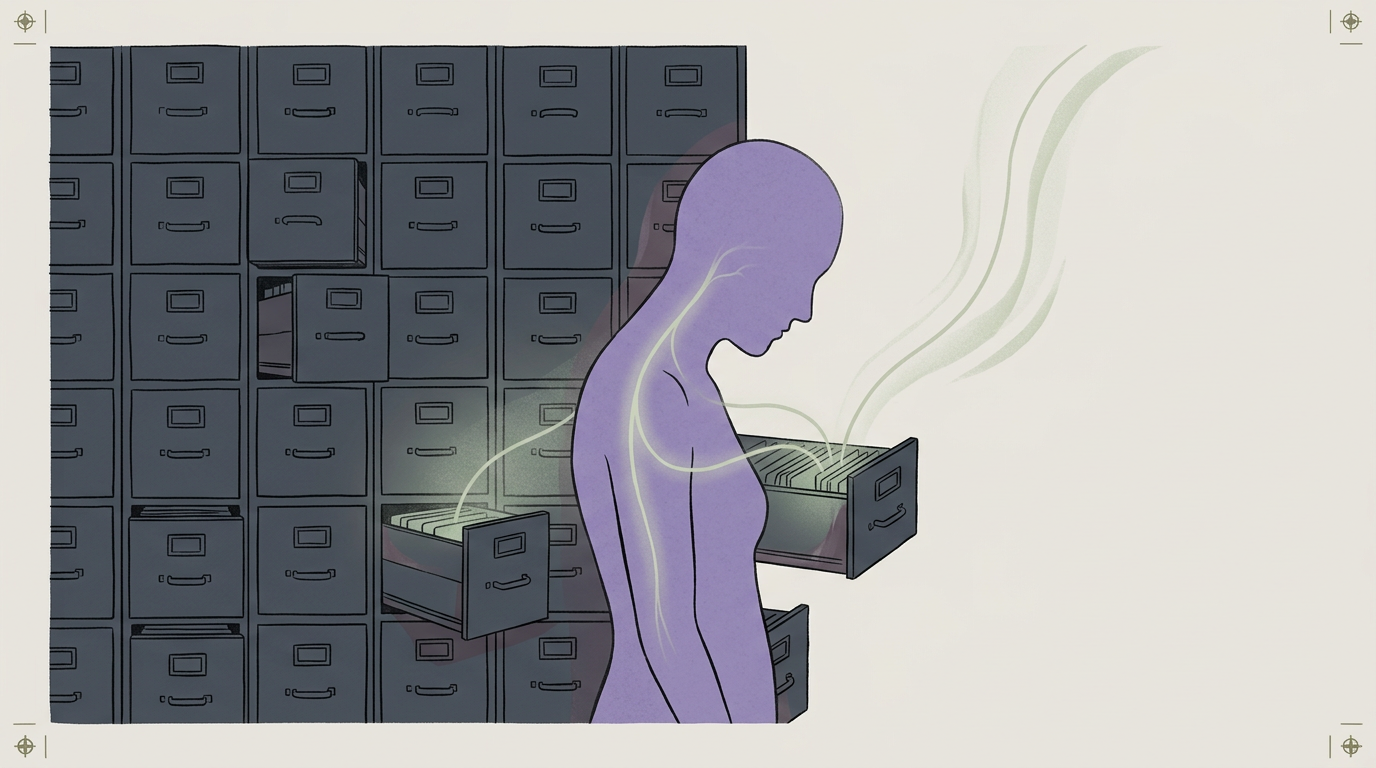
The wellness industry sells a version of self-care that requires a credit card, a matching loungewear set, and an aesthetically pleasing bathtub. I'm calling it on the lavender bath bombs and the push notifications reminding you to breathe. True regulation requires shifting the autonomic nervous system out of threat. You have to intervene at the level of the HPA axis to actually change the state.
You already know what it feels like when the machinery gets stuck. You're staring at the open fridge at 8pm with zero hunger, trying to decide what will make the buzzing behind your eyes stop. Your shoulders refuse to drop in the hot shower. You feel tired but wired, endlessly scrolling through your phone in bed because you are exhausted but can't rest. The 3pm brain fog rolls in, and you drink a second coffee that only tightens your jaw further. This is the raw data of a system running at maximum capacity with nowhere to dump the heat.
Common Questions
What drives chronic stress?
The HPA axis—the loop connecting your brain to your adrenal glands—gets stuck in the 'on' position. It continuously pumps out cortisol in response to mundane daily threats, keeping your body in a low-grade state of alarm that depletes your physical resources.
Why do relaxing activities fail to work?
Watching television or taking a bubble bath offers a momentary distraction, but neither sends a safety signal to the brainstem. If your biology still perceives an active threat, you're just sitting perfectly still while marinating in stress hormones.
How does the body communicate its state?
Through interoception. This is your biological data feed, constantly sending updates from your organs and tissues to your brain. It dictates your heart rate, digestion, and whether you feel physically safe in your environment.
The Consumer Distraction
I used to believe that if I just bought the right heavy blanket, my anxiety would miraculously evaporate. I bought the blanket. I was still tense, just slightly warmer. Modern wellness culture excels at turning biological imperatives into consumer goods. Kokorology swap a harsh environment for a softer one and wonder why the internal static remains loud.
A fleeting dopamine hit from an online purchase provides a brief distraction from the hum of a system in overdrive. It leaves the underlying physiological load completely untouched. The goal of somatic practice involves needing fewer soothing objects entirely. You have to learn how to clear the heat from the body, which starts with honest data collection in something as simple as the Journal.
Interoception and the Dashboard
The human body already possesses the most sophisticated biofeedback device available. Interoception is the internal sensing of your organs, tissues, and fluids. When this neural circuitry operates correctly, it tells you exactly what your capacity is at any given moment.
For most adults, the notification volume on this system is turned down to zero. Kokorology drink coffee to override fatigue and eat when the calendar dictates, actively bulldozing the subtle cues the body sends. Rebuilding that perceptual loop takes deliberate repetition. A simple 60-second pause to notice the tightness in your throat or the speed of your breath gives you the baseline data needed to intervene. A few targeted Hacks help you start tuning in to those signals.
The Aesthetic of Therapy
The cultural obsession with therapy as the ultimate fix leaves a massive gap in the process. Talking about your patterns gives you cognitive awareness. It does precisely nothing to clear the somatic tension stored in your tissues. I see people routinely who can articulate their childhood dynamics perfectly, yet their resting heart rate sits at ninety beats per minute. They understand the map, but their engine is running hot.
The wellness industry has somehow turned breathing—a thing you've been doing without instruction since the day you were born—into a paid course.
Giving those cognitive insights a stable place to land requires targeted, physical work between sessions. You have to signal safety to the brainstem directly. If your biology remains locked in hypervigilance, all the conversational processing in the world will just echo inside a rigid container.
Direct Biological Interventions
Let's talk about the vagus nerve. Yes, it's the vagus nerve again. No, I'm not sorry. It operates as the parking brake of your autonomic nervous system. Pull it, and the engine quiets. When its ventral branch is active, you feel physically safe and socially connected. When it drops offline, you default to a sympathetic state of hypervigilance.
Humming, cold exposure, and extended exhales directly stimulate the vagus nerve. A physiological sigh—two inhales through the nose followed by a long, slow exhale through the mouth—forces a mechanical downshift in your state in under a minute. It is free. It works faster than waiting for an expensive gummy to kick in. You can learn the mechanics of this and other foundational tools in the Anchors library.
What to do this week
- The 3-Minute Data Point. Three times today, stop typing and take three breaths. Notice where the air lands. Is it shallow in your chest or deep in your belly? Log the data mentally and keep moving.
- Swap a distraction for a tool. The next time you feel the urge to numb out with scrolling or sugar, try one minute of a physiological sigh or a wall sit. Notice the shift in your baseline.
- Audit your routine. Look at the things you do to relax. Cross one purely performative item off your list and use that time to sit quietly and track your physical sensations.
Where this fits in the Kokorology system
Understanding the difference between genuine regulation and mere distraction serves as the baseline for everything Kokorology teach. If you're running at maximum capacity and need a structured onramp, the 7-day Reset builds these exact tools into your daily rhythm. For deeper, targeted interventions, pull specific protocols from the Anchors.
Closing
Moving from performative wellness to actual regulation requires treating your biology with respect. It means choosing the unglamorous, repetitive work of signaling safety to your brainstem over the fleeting comfort of a quick fix. This approach remains the only reliable way to rebuild your physical resilience.
- Start with the tools inside the Anchors for immediate state shifts.
- Go deeper on the science in the foundational course, Regulation (L1).
- Get a simple framework for the week with the free guide to the nervous system.
TL;DR
True self-care requires consistent somatic practices that build your capacity to handle stress. Instead of buying products that offer temporary distraction, you must work directly with your body’s machinery. Intervening at the level of the HPA axis and the vagus nerve regulates your state from the bottom up. The goal is to get good at processing the sensory data of the present moment without becoming overwhelmed.
Sources
- Sahib S. Khalsa, Ralph Adolphs, et al. (2018). The O-ther-body: A model of neural circuitry for interoception of the extracorporeal self. Journal of Neurophysiology.
- Elissa S. Epel et al. (2024). Caregiver Load and Telomere Attrition: A 10-Year Longitudinal Study. Molecular Psychiatry.
- Hugo D. Critchley (2023). Interoception and Autonomic Regulation in Stress. Journal of Neuroscience.
- Matthew D. Lieberman (2023). Communication with others and oneself: language as a nervous-system intervention. Kokorology Press.