For Coaches
Tracking state without asking clients to narrate it
Stop asking clients to perform insight. Their state is a raw physiological readout, and forcing them to narrate it just burns through their remaining bandwidth.
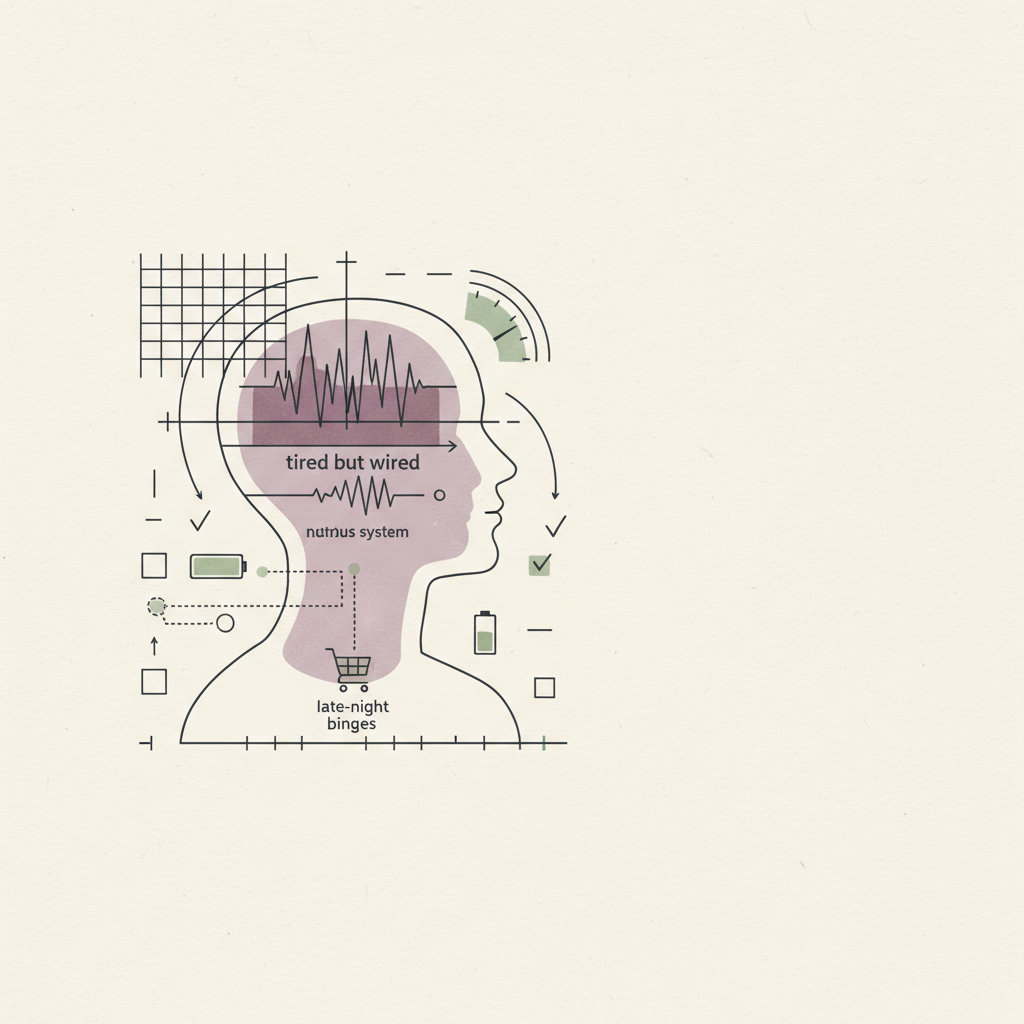
I used to hand every new client a beautifully formatted tracking sheet and ask them to reflect on their emotional state at the end of each day. I assumed that if they could just name their triggers, they'd effortlessly manage them. I was demanding cognitive output from a nervous system that barely had the resources to keep the lights on. The standard coaching practice of asking dysregulated people to write essays about their feelings ignores how the brain actually works. When the prefrontal cortex is offline, demanding a neatly packaged narrative forces a client to confabulate an answer to keep you happy.
You know what this looks like when you're sitting across from them. They arrive on Tuesday morning with a perfectly coherent story about their week that sounds suspiciously like a podcast they think you listen to. Meanwhile, their actual physiology is screaming. They complain of being perpetually tired but wired, pushing through the day on cold brew and adrenaline, only to wake up at 3am every night. They stare at an open fridge with no hunger. They tell you they feel anxious for no reason, battling brain fog after eating, their shoulders welded to their ears in the shower. They give you the homework you asked for, but their system remains entirely disconnected from the sensory reality of their own body.
Common Questions
Why do clients struggle to describe their state?
When a client carries a high allostatic load—the cumulative physical wear from chronic stress—their system perceives new cognitive demands as threats. The prefrontal cortex, responsible for language and reflection, dims down to conserve energy for immediate survival.
What happens when you ask for an anxiety rating?
Asking someone to rate their panic on a scale from one to ten forces an intellectual judgment onto a visceral reaction. A dysregulated nervous system only recognises two settings: numb or actively on fire. A numerical score bypasses the actual physical sensation entirely.
How does tracking data differ from journaling?
Most journal prompts demand a story about why something happened. Tracking data simply logs the location and texture of a sensation. Noting a tight jaw at 4pm develops interoception—the brain's ability to read its own physical signals—without triggering a rumination spiral.
The Demand for Unearned Insight
I've stopped recommending reflection prompts to people actively in burnout. The original goal of these tools was to cultivate awareness. The actual outcome is usually just another item on a to-do list they already feel they're failing. The nervous system runs a very simple threat-detection algorithm, and it views a blank journaling page demanding profound self-discovery exactly the same way it views an aggressive email from a manager. Both require energy the system currently lacks.
I see this constantly in sessions. A client will log their meals, their sleep, and their steps, turning their recovery into a competitive sport. Recently, I was reading reviews of new smart body fat scales that track a dozen metabolic metrics at once, promising total visibility. Kokorology love buying hardware to outsource the awareness. But a wearable can only tell you your heart rate dropped. It can't tell you that your jaw clenched because someone used a specific tone of voice in a meeting. Kokorology ask clients for insight, and they give the system data from their smartwatch or a rehearsed monologue. They perform the role of the compliant client, burning precious capacity to do it.
The View from the Insula
Let's look at the actual machinery. The feeling of insight is a top-down cognitive event, orchestrated by the prefrontal cortex. The raw material for that insight travels from the bottom up, via a process called interoception. This happens in the anterior insula, a region that acts as mission control for bodily signals: heart rate, lung inflation, temperature, the drop in your gut.
When a client is under chronic stress, systemic inflammation and a constant barrage of stress hormones add static to the line between the body and the insula. The brain receives fuzzy signals. Demanding a coherent thesis about their emotional state in that moment is physiologically impossible. They'll report feeling disconnected, or they'll invent a story to satisfy the prompt. If you want them to genuinely understand their state, you have to help them clear the static first. They can practice this directly inside the Journal.
Sensory Data Over Story
The pivot here is wonderfully simple. Stop asking for a narrative. Ask for raw data. When I work with a new cohort inside Performance (L2), I ban the word 'why' for the first three weeks. Kokorology log the physical texture of the moment: sharp, dull, buzzing, numb. Kokorology log the location: chest, throat, stomach. Kokorology log the time of day.
Your inbox has never once been impressed by your heart rate, and your journal doesn't need to be impressed by your insight.
That is the entire practice. The client notes a hollow stomach at 8pm. They note a buzzing behind the eyes at 3pm. They learn to track the state without attaching a morality tale to it. This low-lift tracking respects their current capacity limits while slowly bringing the anterior insula back online. It is the core practice Kokorology teach inside Regulation (L1), because without interoceptive accuracy, every other intervention is just guessing.
What to do this week
- Ban the 'how do you feel' question. For the next seven days, replace it with 'Where in your body is the data right now?' for every single client.
- Run a one-day sensory log for yourself. Open your phone's notes app. Just log the physical texture of moments: 'shoulders tight, 11am', 'jaw clenched, 3pm'. Notice your own desperate urge to add a story about why.
- Practice receiving, not fixing. When a client shares a sensation, your only job is to say 'chest is tight, got it'. Do not offer a breathing exercise. The practice is noticing, not solving.
Where this fits in the Kokorology system
This shift from performing insight to logging sensory data drives the Kokorology method. It is the primary skill Kokorology build for interoceptive accuracy inside Regulation (L1), and it sets the required starting point for expanding leadership capacity inside Performance (L2). Without this skill, most coaching tools simply add noise.
Closing
Your job as a coach is to help your client restore the physiological conditions that make insight possible.
- Start practising this skill with your clients inside the Coach Toolkit & Certification.
- Give your clients a structured, private space to log their data with the Kokorology Journal.
- Direct overwhelmed clients to the 7-day Reset to stabilise their baseline before asking for reflection.
TL;DR
Stop asking clients to perform insight they lack the physiological capacity to produce. Standard methods for tracking state add cognitive load and trigger a sense of failure. Teach clients to log raw sensory data without a story—what the sensation is, and where it sits in the body. This practice bypasses the overloaded prefrontal cortex, develops interoceptive accuracy directly, and creates the physiological conditions from which genuine, unforced insight can eventually emerge.
Sources
- Khalsa SS, et al. (2018). Interoception as a dimensional framework for understanding anxiety. Biological Psychiatry: Cognitive Neuroscience and Neuroimaging.
- Critchley HD, Garfinkel SN. (2017). Interoception and emotion. Current Opinion in Psychology.
- McEwen BS. (2017). Neurobiological and Systemic Effects of Chronic Stress. Chronic Stress.
- Yaman A, et al. (2023). Semantic knowledge guides innovation and drives cultural evolution. PNAS (Proceedings of the National Academy of Sciences).