Nervous System
The Unexpected Silence: How Language and Nervous System Regulation Intersect
Our language and nervous system regulation are intricately linked, illustrating how words can profoundly shape our internal states.
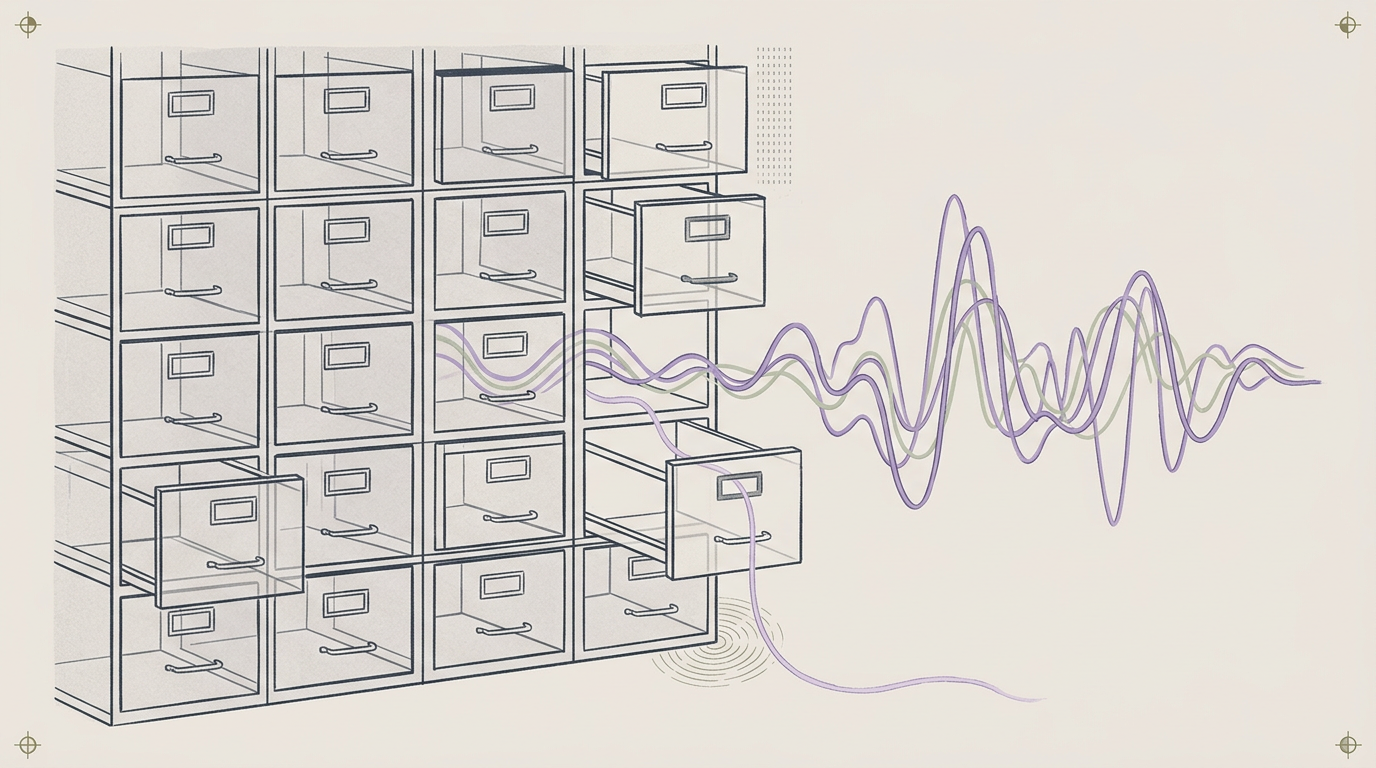
When your heart is hammering at 110 beats per minute, standing in front of a mirror reciting a positive affirmation creates a biological conflict. The wellness industry insists that changing your story changes your state. I stopped recommending this approach entirely after watching clients try to out-talk their own physiology. You can't logic your way out of a survival response. The words you use are a lagging indicator of your nervous system regulation. Forcing the language to shift while the body remains on high alert just teaches you to distrust your own signals.
You know what this discrepancy feels like in the tissue. It's the afternoon meeting where you nod and say everything is fine, while your throat tightens so much it actually hurts to swallow. You go to bed, and you can't sleep even though exhausted, scrolling on your phone at 11:47pm because the quiet feels too loud. You wake up at 3am every night with a chest full of dread and heavy brain fog, entirely unable to name a single thing that's wrong. You're anxious for no reason, pacing the kitchen, taking deep breaths that just get stuck high in your collarbones. Your brain offers up a stream of catastrophic absolute statements—"I am always going to feel like this"—and you believe them. The words feel completely real because they match the buzzing, electric urgency radiating through your limbs.
Common Questions
Why do positive affirmations sometimes feel like a lie?
Because they often are. If your physiological state is screaming threat, telling yourself you are completely serene creates a massive conflict between your cognitive mind and your biology. Your body responds exclusively to congruent physiological signals.
What is the link between language and the vagus nerve?
The vagus nerve is physically wired to the muscles in your larynx and pharynx that control your voice. The rhythm, pitch, and tone of your speech are direct inputs that can either soothe or agitate your internal state.
Why do I lose my words when I am stressed?
Extreme stress floods your system with cortisol and adrenaline, down-regulating the prefrontal cortex. This brain area handles complex thought and language. Your biology has simply deprioritized eloquent speech in favor of immediate survival.
The Special Hell of Positive Reframes
The mindset movement relies on a flawed premise: that language is the primary driver of change. Language is a consequence. When you enter a state of high alert, your vocabulary naturally shrinks. Your thinking becomes rigid. You default to catastrophic phrasing because your biology has narrowed your cognitive field to focus entirely on perceived danger. Forcing a positive reframe onto this state adds a massive layer of self-judgment when it inevitably fails. The body is sounding an alarm through muscle tension and a racing heart, and the brain is trying to override it with a motivational poster. I used to believe that catching and correcting these negative thoughts was the path forward. Now I see it as a fast track to dissociation. You lose the ability to give your system what it actually needs, leaving you entirely disconnected from your own physical reality while aggressively whispering affirmations in the bathroom.
Your Biology is Listening to the Music
This is where Kokorology go under the hood. The command loop managing your stress response is the HPA axis—the pathway running from your hypothalamus to your pituitary and adrenal glands. It manages cortisol production, and it does not speak English. It responds to physiological cues of safety and threat. The primary conduit for these cues is the vagus nerve, which wanders from the brainstem down into the torso.
The ventral branch of this nerve physically connects to the muscles of your face, middle ear, and throat. The tone of voice you use—your prosody—directly stimulates or soothes this nerve. A slow, melodic vocal pattern naturally activates the ventral vagal pathway, cueing the HPA axis to stand down. A sharp, high-pitched, or monotone voice does the exact opposite. You can literally tune your way into calm using sound. The nervous system registers the pitch and rhythm of your speech long before it parses the vocabulary. Fine-tuning that resonance is one of the fastest hacks you have for state change.
The Distance of Noticing
If reframing the content of your thoughts doesn't work, Kokorology need a different lever. When you say, "I am anxious," you declare an identity. The state has consumed you. You and the sensation are the same thing.
The mechanical shift is moving to, "I notice the feeling of anxiety in my chest." It sounds like semantics, but it's a functional change in brain activity. This phrasing recruits a "noticer"—a point of conscious awareness separate from the raw feeling. It turns a massive, overwhelming label into a localized object of observation. You engage the prefrontal cortex simply by using specific, descriptive language.
The language of regulation requires only accuracy.
This practice creates necessary distance from the sensation. You're no longer fused with the state. You can track these small linguistic shifts and their corresponding physical states inside the Kokorology Journal to build a clearer map of your own capacity.
The Contagion of Conversation
the nervous systems are exquisitely sensitive to the regulatory signals of others. The words someone uses matter, but the physical delivery of those words matters entirely more. You have likely felt your own shoulders drop just from being on the phone with a friend whose voice is slow, grounded, and warm. Their regulated state, expressing itself through vocal prosody, was lending your system a hand. Your biology borrowed their calm to find its own way back to baseline.
This is exactly why workplace arguments escalate so rapidly. One person's sharp tone and clipped speech trigger a threat response in the other. That person's system mirrors it back, creating a closed loop of mutual dysregulation. It's a physiological event long before it's an intellectual disagreement. Two dysregulated nervous systems in a meeting room will inevitably escalate conflict. True communication requires maintaining a regulated state so the words can actually land. Navigating this dynamic under pressure is a core competency Kokorology teach inside Performance.
What to do this week
- Audit your absolutes. For three days, notice every time you use words like "always," "never," "everything," or "nothing." Write them down without judgment. This is the language of a system in threat mode.
- Get descriptive with one sensation. Pick a physical feeling you usually label generically, like "stress." Take 60 seconds to describe its raw sensory components. Is it hot or cold? Sharp or dull? Vibrating or still? Use a physical notebook.
- Tune your vocal prosody. Spend two minutes humming. Start at a comfortable mid-range pitch and slowly let it drift down, feeling the vibration in your chest and throat. Do it before a difficult call or when you feel your shoulders creeping up.
Where this fits in the Kokorology system
Language is an advanced tool for interoception, sitting on top of baseline capacity work. The ability to use words as a precise diagnostic tool depends on having first established basic safety through the physical practices found in the Anchors. It is a key component of the self-awareness Kokorology map in the Regulation course, allowing you to move from blunt labels to a high-resolution understanding of your internal state.
Closing
The goal is simply to understand that your words are a vital data stream from the deepest parts of your physiology. Kokorology are not trying to police your vocabulary or force a cheerful spin on a miserable Tuesday. Learning to read this data accurately, and using the sound of your own voice as a regulatory tool, is one of the most practical moves you can make. You just have to stop arguing with the readout.
- Start with Regulation, the L1 course on the mechanics of your nervous system.
- Practice tracking your state daily inside the Kokorology Journal.
- Get the first principles in the free guide to nervous system regulation.
TL;DR
Stop trying to fix a dysregulated state with positive affirmations. Your language functions as a readout from your nervous system. It does not work as a command prompt. When you are stressed, your biology reallocates resources for survival, shrinking your vocabulary and defaulting to catastrophic absolutes. The key to regulation is using language with precision, shifting from identifying with a feeling ("I am anxious") to observing it ("I notice anxiety"). You can also use the pitch and rhythm of your voice—your prosody—to mechanically soothe your vagus nerve. Your biology responds directly to that physical rhythm.
Sources
- Lieberman, M. D. (2023). Communication with others and oneself: language as a nervous-system intervention. Curated primary studies and meta-analyses.
- Pennebaker, J. W. (2023). Journaling and the nervous system: from expressive writing to affect labeling. Curated primary studies.
- Balban, M. Y. (2023). Brief Structured Respiration Practices Enhance Mood and Reduce Physiological Arousal. Cell Reports Medicine.
- Moffitt, T. E. (2011). A Gradient of Childhood Self-Control Predicts Health, Wealth, and Public Safety. PNAS.