Nervous System
The Somatic Imperative: Why Completing the Stress Cycle is Non-Negotiable
Completing the stress cycle is a physical requirement to clear circulating hormones, signal safety to the brain, and return the nervous system to baseline.
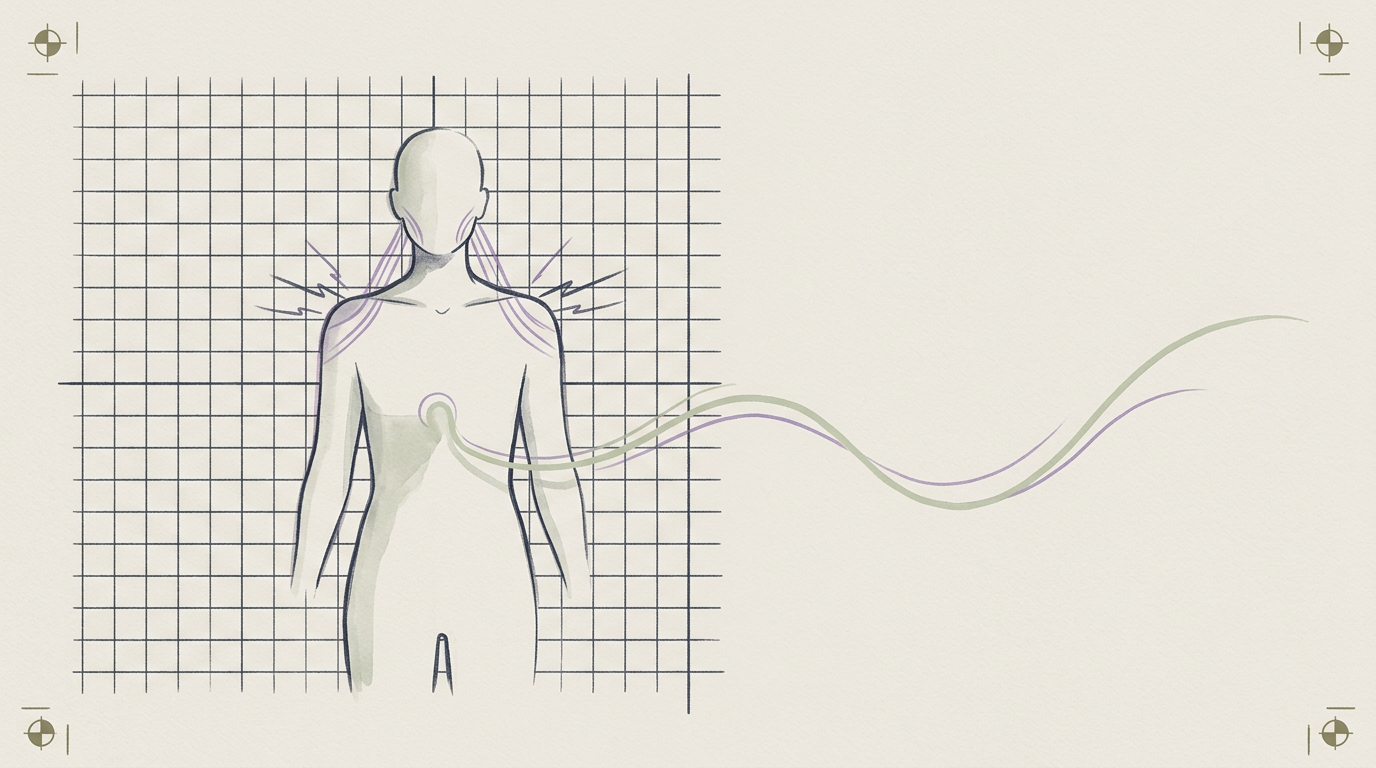
For years, I assumed my inability to calm down after a tense meeting meant I just needed more discipline. The prevailing advice insists that managing a high-pressure day requires better mindset framing and perhaps ten minutes of deep breathing. I tried that, and I stayed completely wired. The reality is that the stress response operates entirely below the neck. When an urgent email triggers the HPA axis, your brain floods the system with adrenaline to prepare for a sprint that never happens. You can't out-think a physiological cascade.
You know the texture of an open loop. You close the laptop and sit on the couch, but your shoulders remain pinned to your ears. You are exhausted but can't rest. The fridge opens and closes three times, though you have zero appetite. At 11:47pm, you're doom-scrolling through a feed you don't even like, feeling anxious for no reason. You wake up at 3am every night with a racing heart, mentally drafting replies to conversations that ended six hours ago. Your body is still fully convinced there is a predator in the room, and it is waiting for you to run. You feel tired but wired, trapped in a state of hypervigilance that a cup of chamomile tea is never going to touch.
Common Questions
What is the stress cycle?
It is the biological sequence your body runs when it detects a threat. The sequence starts with sympathetic activation to mobilize energy, prepares the body for intense movement, and concludes only when a physical signal confirms the danger has passed.
Why is completing the stress cycle important?
Leaving the cycle open keeps the body in a state of chronic alarm. Circulating stress hormones remain high, driving inflammation, disrupting sleep staging, and draining capacity. Closing the loop tells your physiology it is safe to down-regulate and begin repair.
Can cognitive reframing close the cycle?
Thinking happens in the prefrontal cortex, while the threat response originates deeper in the brain and nervous system. You can't reason with adrenaline. Clearing the physiological activation requires a physical shift in state through movement, temperature, or breath.
The Alert Without the Chase
The modern stress response is a brilliant piece of ancient machinery operating in the wrong century. When you get a message asking for a quick chat, your threat-detection centers light up exactly as they would for a physical attack. The sympathetic nervous system hits the gas. Your heart rate elevates, glucose mobilizes, and your pupils dilate.
The activation is functioning perfectly. The trouble is the aftermath. You get the biochemical surge required to outrun a bear, and then you sit completely still at a desk in Lisbon for another three hours. The mobilized energy has absolutely nowhere to go. Your body waits for the physical exertion that usually accompanies a threat. When you just sit there, it assumes the danger is still present and keeps the alarm ringing.
The Endocrinology of Stuckness
Let's look at the actual machinery. When the initial alarm sounds, the adrenal glands release catecholamines, primarily epinephrine. These fast-acting hormones jack up your heart rate and sharpen visual focus. They burn off rapidly when you actually move.
If you remain seated and keep ruminating on the problem, the HPA axis—the control loop connecting the hypothalamus, pituitary, and adrenal glands—shifts into a slower gear. It begins a steady drip of cortisol. Cortisol suppresses digestion, halts repair functions, and keeps blood sugar elevated. It is designed to manage a prolonged crisis. When these cycles never complete, that baseline of circulating cortisol never clears. The clinical term for this cumulative wear and tear is allostatic load. It is the physical weight of being perpetually ready for a disaster that never quite arrives.
Why Venting Fails
The most common strategy for a bad day is calling a friend to complain about it. I'm calling it. Talking about the infuriating deadline usually just reactivates the exact same HPA axis loop, dispensing a fresh hit of stress hormones.
Coregulation matters. Isolation is entirely counterproductive. But the act of reciting the problem doesn't discharge the physical tension. Your nervous system doesn't speak English. It speaks the language of breath, pressure, and movement. Ruminating on the event is equivalent to reading the menu when you're starving. To tell the command center to stand down, you must give the mobilized energy a physical exit ramp.
Pulling the Parking Brake
To shift out of sympathetic arousal, you have to engage the parasympathetic system. The primary lever here is the vagus nerve, the major neural pathway carrying information from your organs back to your brain.
You activate this brake through bottom-up signaling. A shift in the mechanics of your breath, the physical vibration of your vocal cords from a low hum, or the shock of cold water on your face—these are tangible cues. They force the physiology to change state. When the state changes, the brain receives the direct message that the threat is gone.
The inbox has never once been impressed by your heart rate.
What to do this week
- The 20-Second Shake. After a tense phone call, stand up and physically shake your limbs for 20 seconds. It looks ridiculous. It is also highly effective at discharging nervous energy before it settles into the tissues. Kokorology keep a guided version of this in the The Shake Anchor.
- The Transition Walk. Pick your most reliable daily stressor—perhaps the 3pm status meeting. Immediately after it ends, walk briskly for ten minutes. Leave the phone inside. Give the adrenaline a dedicated burn rate.
- The Physiological Sigh. Take two sharp inhales through the nose, followed by a long, slow exhale through the mouth. This mechanically expands the alveoli in the lungs and rapidly slows the heart rate. Do five of these before you open your laptop.
Where this fits in the Kokorology system
Clearing the residual static of the day is a core competency. Without this, you are just accumulating physiological tension until you crash. Learning to track these shifts is the essential work of nervous system regulation. Kokorology train this baseline response in The 7-Day the Reset, and use the the Journal to map exactly which physical inputs work best for your specific biology.
Closing
A stressed mind lives in a stressed body. Until you address the physical reality of the state you're in, trying to force focus or creativity is a waste of time. Do the physical thing first. Let the body know the chase is over.
- Start with the foundational program to clear chronic static inside The 7-Day the Reset.
- Work with a Kokorology-certified practitioner to map your stuck patterns inside 1:1 coaching.
- Build daily awareness of your state shifts using the Kokorology the Journal.
TL;DR
Modern life triggers the ancient fight-or-flight response but rarely requires the physical exertion needed to turn it off. This leaves the body stuck in an incomplete stress cycle, bathed in cortisol and adrenaline. You cannot clear this state through positive thinking or cognitive reframing. To discharge the activation and signal safety to the nervous system, you must use physical inputs like movement, shaking, or specific breath patterns. Completing the cycle protects baseline capacity and prevents chronic allostatic load.
Sources
- Nagoski, E. & Nagoski, A. (2019). Burnout: The Secret to opening the Stress Cycle. Ballantine Books.
- McEwen, B. S. (1998). Stress, Adaptation, and Disease: Allostasis and Allostatic Load. Annals of the New York Academy of Sciences.
- Critchley, H. (2023). Interoception and Autonomic Regulation in Stress. Journal of Neuroscience.
- Tracey, K. (2002). The Inflammatory Reflex. Nature.