Workplace & Leadership
The Perimenopause Paradox: Optimizing Workplace Design for Hormonal Shifts
Designing effective perimenopause workplace support is less about individual "fixes" and more about structural adaptations for sustained employee wellbeing.
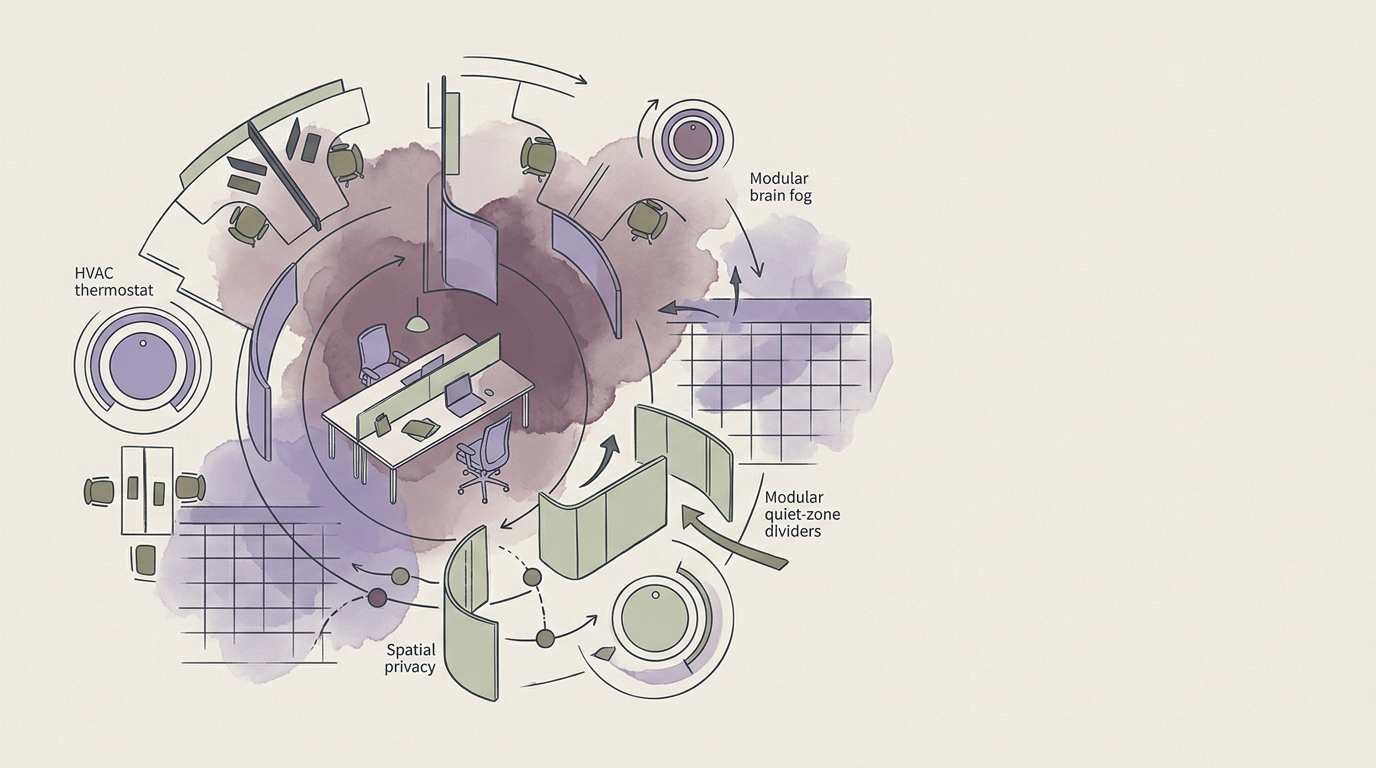
The standard corporate response to perimenopause involves a hushed chat with HR and a link to a mindfulness app. Kokorology treat a massive, predictable biological shift as a private crisis requiring individual accommodation. The modern workday relies on a nervous system that remains perfectly static. When a fluctuating physiological state meets a rigid environment, the environment is the thing that needs to yield.
You sit in the 3pm status meeting feeling a sudden, violent internal furnace blast, followed immediately by a clammy chill. The jaw won't unclench. You're waking up at 3am every night, heart racing when you lie down, exhausted but can't rest. You stare at a blinking cursor and hit a wall with brain fog after lunch, struggling to find a noun you've used every day for a decade. The shoulders stay pinned to your ears, even in the hot shower. You're entirely tired but wired, sensing a deep undercurrent of irritability at the familiar hum of the open-plan office. The calendar invites keep coming while you feel completely disconnected from your body, masking the static just to make it through to Friday.
Common Questions
What is perimenopause?
Perimenopause is the natural biological transition period leading up to menopause. It brings fluctuating hormone levels, primarily estrogen and progesterone, which can last several years. This phase marks the gradual winding down of ovarian function and alters how the body regulates temperature and stress.
How does perimenopause affect work?
Hormonal fluctuations directly alter sleep architecture, mood regulation, and cognitive function. This creates fatigue, heightened anxiety, and physical discomfort during the workday. These biological shifts lower the threshold for stress, making normal professional demands feel heavier and harder to process.
Is perimenopause a mental health issue?
No. Perimenopause is a physiological process. While the shifting hormones can create new experiences of anxiety or mood dysregulation, treating it purely as a psychological problem misses the underlying biological mechanism. The nervous system is reacting to real internal changes.
Why should workplaces address perimenopause?
Ignoring this transition pushes highly experienced talent out the door. Creating an environment that accommodates these predictable biological shifts retains valuable staff. It reduces presenteeism and builds a culture where human capacity is actually supported rather than ignored.
The autonomic shift nobody mentions
Kokorology talk endlessly about hot flashes. I used to think the temperature spikes were the whole story, back before I understood how hormones actually dictate state. Estrogen heavily modulates neurotransmitter systems. It influences serotonin pathways and keeps GABA receptors sensitive, which effectively keeps the nervous system regulated and calm.
As those hormone levels wildly fluctuate and begin to drop, the baseline shifts. The nervous system becomes highly sensitized. The HPA axis—the stress-hormone control loop running from your brain to your adrenal glands and back—starts working overtime to compensate. Inputs that used to register as minor annoyances suddenly trigger a massive autonomic shift.
Your biological threshold for stimulation has temporarily lowered. The volume knob on your threat detection system is stuck at eight. Most workplace flexibility policies simply grant permission to do the exact same amount of work at worse hours. That does absolutely nothing for a system constantly scanning for danger.
The open-plan threat response
When I look at the standard office environment through the lens of a sensitized nervous system, I see a continuous threat feed. Fluorescent lighting overhead. The unpredictable noise pollution of an open floor plan. Temperature controls locked in a basement server room.
These are concrete physiological stressors. For someone navigating hormonal volatility, this constant sensory static quickly pushes the system into overload. Hot flashes are biological, but environmental triggers absolutely exacerbate them. When your internal state is already buzzing, the sudden bark of a colleague's speakerphone acts as a high-alert signal that requires a massive metabolic response.
The corporate calendar has never once been impressed by your resting heart rate.
I've stopped recommending coping tools for people sitting inside sensory wind tunnels. The environment itself has to change. Start small. Put on noise-canceling headphones and sit facing a wall. True nervous system regulation begins with controlling the inputs you can actually reach.
Cognitive load and the missing white space
The most terrifying part of this transition for many high-performers is the cognitive squeeze. The working memory blips. The executive function delays.
Hormonal shifts directly alter prefrontal cortex activity. The front of your brain, responsible for organizing, planning, and emotional regulation, requires massive amounts of energy to run. When your HPA axis fires constantly due to internal physical changes, energy diverts away from the prefrontal cortex toward survival mechanisms.
Throwing an endless stream of complex, high-stakes tasks at an employee in this state without built-in recovery time guarantees total exhaustion. The capacity pipe is simply narrower, while the pressure remains exactly the same. The result is cumulative physical wear on the body, commonly measured as allostatic load. This physiological burden climbs rapidly when Kokorology force a sensitized body to perform as if nothing has changed.
If you manage a team, normalize the 45-minute meeting. The extra 15 minutes serves one purpose: letting the system settle before demanding more output.
Engineering the regulatory buffer
Real workplace wellbeing requires actual environmental engineering. Token wellness apps do not change the sensory reality of a Tuesday afternoon.
Kokorology need ambient room temperature controls and reliable access to natural light. Kokorology need clearly designated quiet zones for focused work that don't require booking a glass fishbowl three weeks in advance. Kokorology need to shift key decisions to written briefs ahead of time to reduce real-time cognitive strain during meetings.
These are baseline inclusive design principles that benefit the entire floor. A quiet room helps the 35-year-old introverted developer just as much as the 50-year-old director navigating a hot flash. When Kokorology design for the most sensitive nervous systems in the room, everyone's baseline improves.
Treat the physical environment as part of the nervous system, or it's just theatre.
What to do this week
- Audit the physical environment: Walk through your office space. Where are the temperature hotspots? Is there genuine quiet space available that isn't a phone booth?
- Shorten the default block: Change your calendar settings so meetings default to 45 or 25 minutes. Use the remaining time to step away from the screen and let your eyes focus on the horizon.
- Kill the pre-meeting ambush: Demand essential pre-reads 24 hours in advance. Reduce the in-the-moment cognitive processing load so you can actually participate in the decision.
- Establish the digital sunset: Set a hard boundary on Slack and email outside of core hours. A sensitized nervous system cannot prepare for sleep if it is still anticipating an urgent ping at 8pm.
Where this fits in the Kokorology system
Perimenopause reveals the real limits of an unregulated nervous system trying to navigate a demanding environment. Addressing this systemic design challenge aligns directly with the enterprise approach to leadership capacity. When you understand how these predictable physiological shifts impact the workforce, you can redesign the daily inputs to support real human function. Dive into the mechanics of this with the Library or bring these environmental shifts to your team through the Performance curriculum.
Closing
Stop treating an inevitable biological shift like a secret you have to manage alone. Change the environment so the body can finally drop its guard.
- Sit with this in the Journal
- Work with these concepts in Kokorology Anchors
- Continue inside the Performance L2 course
TL;DR
Effective perimenopause workplace support requires proactively redesigning the work environment. Hormonal fluctuations lower the nervous system's threshold for stress, directly impacting cognition, mood, and physical regulation, which drives up allostatic load. Companies must shift toward inclusive physical design principles, adapting physical spaces, meeting lengths, and communication norms to create a regulatory buffer. This approach retains valuable talent and builds a workforce capable of sustained capacity.
Sources
- McEwen, Bruce S. (2000). Allostasis and Allostatic Load: Implications for Neuropsychopharmacology. Neuropsychopharmacology.
- Craig, A. D. Bud (2009). How do you feel? An interoceptive moment with A.D. (Bud) Craig. Interview with the Journal of Neurophysiology.
- Critchley, Hugo D. (2005). Neural Mechanisms of Autonomic Control with Special Reference to the Human Insular Cortex. Journal of Physiology.
- Sapolsky, Robert M. (2004). Why Zebras Don't Get Ulcers: The Acclaimed Guide to Stress, Stress-Related Diseases, and Coping. Henry Holt and Company.
- Lupien, Sonia J., et al. (2009). The effects of estrogens on memory and the hippocampus in the Context of Healthy Ageing and Alzheimer's Disease. Journal of Steroid Biochemistry and Molecular Biology.