Nervous System
The Over-Optimization Backlash: When Wellness Gets Out of Hand
The over-optimization backlash reframes wellness as felt experience rather than a relentless pursuit of metrics.
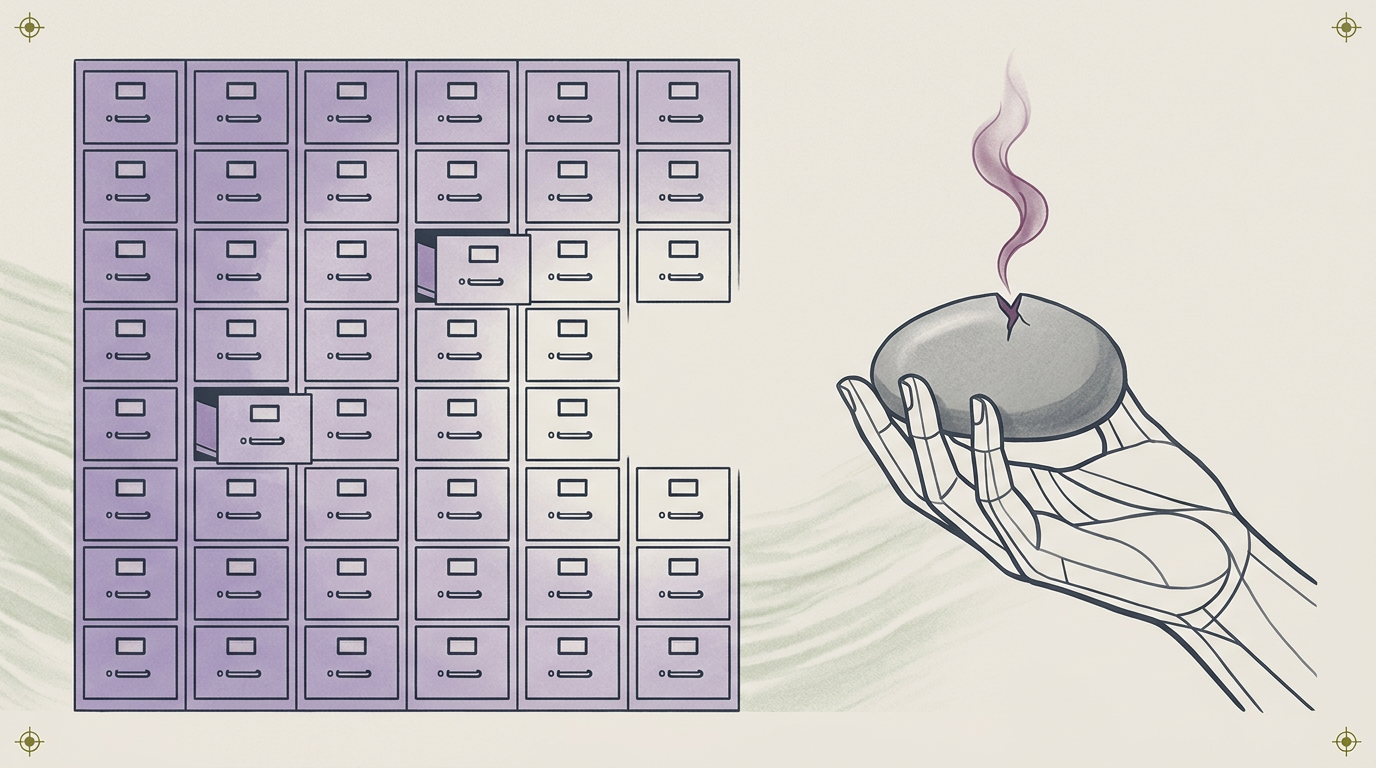
I used to think the perfect sleep score was the secret to regulating a nervous system. The standard wellness advice still aggressively pushes this narrative: track your recovery, optimize your glucose, monitor your heart rate variability, and you will eventually engineer your way to peace. I'm calling it. The relentless tracking of physiological data simply hands an anxious brain a shiny new set of threats to monitor.
You know exactly what this loop feels like. It is the specific frustration of waking up feeling rested, opening an app on your phone, seeing a low recovery score, and suddenly deciding you are exhausted. You spend the day tired but wired, dragging yourself through a 3pm caffeine crash with a jaw that won't unclench, obsessing over whether your lunch spiked your blood sugar. You go to bed early to fix the metrics, but you can't sleep even though exhausted, your heart racing when you lie down because you are actively worrying about your resting heart rate. The data was supposed to make you feel in control. Instead, you are stuck in a hypervigilant loop, treating your own body like a suspicious employee who needs micromanaging.
Common Questions
What is the over-optimization backlash?
It is the physiological stress response triggered by obsessively tracking health metrics like sleep stages, glucose, and heart rate variability. Instead of improving your state, the constant monitoring creates a new stream of anxiety that keeps your nervous system on high alert.
Why do wearables make me anxious?
Your brain interprets the constant influx of granular physiological data as a series of problems to solve. When you feed a threat-detection system daily notifications about sub-optimal recovery scores, it responds by escalating vigilance, keeping you locked in an agitated state.
What is the alternative to health tracking?
The alternative is rebuilding interoception—the brain's capacity to directly sense the internal state of the body without a device acting as a middleman. It requires learning to read your own fatigue and hunger signals, which naturally supports deeper nervous system regulation.
The over-optimization backlash and your locus coeruleus
Your brain is wired to pay attention to novelty, largely through a cluster of neurons in the brainstem called the locus coeruleus. This is the central hub that snaps your head up when a floorboard creaks at 2am. It acts as a filter, asking the rest of the machinery if a new piece of information matters for survival.
Now, imagine feeding that ancient alarm system a constant, vibrating stream of data about your own physiology. Every minor dip in HRV and every minute of lost deep sleep is handed to the locus coeruleus as a fresh variable. For a nervous system already running hot, this constant surveillance is disastrous. Kokorology are asking the brains to run urgent threat assessments on whether Kokorology got enough REM sleep. The very tool you bought to measure your recovery is actively triggering your sympathetic nervous system.
Outsourcing your sensations
There is a unique modern absurdity to needing a device to tell you if you are hungry, tired, or stressed. Kokorology have outsourced the physical sensations to silicon.
The clinical term for feeling your own internal landscape is interoception. It is the biological capacity to notice the drop in your stomach, the shallowness of your breath, or the heavy ache behind your eyes. Every time you defer to a wearable's score over your own felt sense, that internal signaling pathway gets a little weaker. I used to recommend sleep trackers to every client who walked through my door. Now, I practically beg them to take the watches off. True capacity requires repairing the communication loop between your brain and your tissue, a skill you can deliberately practice inside the Journal.
The goal is to build a body you can actually feel, not a dashboard you can brag about.
The illusion of perfect sleep
Deep sleep is the body's overnight maintenance window for the nervous system, clearing metabolic waste and repairing cellular damage. It is a brilliant, automatic process. But when you stare at a graph that tells you your REM cycle was fourteen minutes short, you fundamentally alter your physiological state for the day.
The nervous system cannot distinguish between the stress of an impending work deadline and the stress of a sub-optimal sleep score. It just registers a threat. The gap between your actual, lived reality and the perfect data on the screen becomes a problem your brain tries to solve. You end up lying awake at night, actively stressed about your inability to achieve a perfect resting state. It is a game you can't win because the goalposts are entirely fabricated by a tech company in California.
The weight of constant adjustment
The body manages spikes in demand through the HPA axis—the communication loop running from your hypothalamus and pituitary down to your adrenal glands. It releases cortisol to get you through a sprint, then ideally shuts the machinery down so you can rest.
When you're chronically worried about your physiological metrics, that axis never fully powers down. You just start accumulating allostatic load. Allostatic load is the clinical term for the cumulative wear and tear on your tissues from being stuck in a state of chronic physiological alert. I've watched people eat incredibly clean diets and meditate daily, yet still carry massive allostatic load simply because they are obsessively monitoring their own perfection. The energy your brain spends analyzing and worrying about your metrics requires massive physiological resources. The relentless pursuit of a perfect state is actively degrading your baseline capacity. You can read deeper into the mechanisms driving this inside the Library.
Tolerance for the messy Tuesday
The nervous system is an adaptable, resilient ecosystem that expects variance. It doesn't require a perfectly flat glucose curve to function. It needs a metabolic engine that can handle a slice of cake on a Tuesday without a panic attack. It doesn't demand perfect sleep staging; it needs mostly good sleep, combined with the capacity to shake off a rough night.
A truly regulated state means you can absorb stress, deviate from your routine, and return to baseline without shattering. If your wellness routine requires you to control every variable of your day, you haven't built resilience. You've just built a very fragile cage. When the system is overloaded, pulling a simple tool from the Anchors to manually shift gears is far more effective than staring at a graph of your heart rate.
What to do this week
- Go dark for a day. Take your wearable off for 24 hours. No sleep score, no step count, no recovery metric. At the end of the day, write down three words describing your actual physical state.
- Downgrade the detail. If you can't bear to ditch the tracker entirely, stop looking at the granular data. Give your sleep a subjective score from 1 to 5 based solely on how your eyes and jaw feel when you wake up.
- Execute a blind reset. Do a 5-minute breathing practice or grab a quick tool from the Hacks without measuring your heart rate before and after. Let the felt shift in your body be the only metric that matters.
Where this fits in the Kokorology system
Stepping off the optimization treadmill is foundational to the Kokorology approach. True capacity comes from trusting your internal signals rather than micromanaging them, which is exactly why the Regulation course focuses heavily on rebuilding interoceptive awareness. When Kokorology do Coaching with high-performers, the first intervention is almost always taking data streams away to give the nervous system room to breathe.
Closing
Reclaiming your biology from a dashboard is an uncomfortable, necessary shift. It takes real nerve to trust your own physical sensations more than you trust an algorithmic score, but that is the only way to rebuild a sustainable baseline.
- Start with the foundational skills inside Regulation L1.
- Practice feeling your state daily with the interoceptive prompts inside the Journal.
- Understand the underlying mechanics with the free guide to the nervous system.
TL;DR
The relentless pursuit of wellness through data tracking is creating a new kind of stress, a phenomenon known as the over-optimization backlash. Instead of making the system healthier, the constant analysis of metrics like HRV and sleep scores adds significant allostatic load to the nervous system. The antidote is shifting your focus away from external devices and back toward interoception—the ability to feel your body's internal signals directly. True physiological regulation comes from trusting your lived experience, not from micromanaging a dashboard.
Sources
- Bruce S. McEwen (2017). Allostatic load: a theoretical framework for the effects of chronic stress on the brain and body. Nature Reviews Neuroscience.
- Norman A. S. Farb, et al. (2015). Interoception, contemplative practice, and health. Frontiers in Psychology.
- Robert M. Sapolsky (2004). Why Zebras Don't Get Ulcers. Holt Paperbacks.
- Gina Neff & Dawn Nafus (2016). Self-Tracking. The MIT Press.
- Hugo D. Critchley & Sarah N. Garfinkel (2017). Interoception and emotion: a new synthesis. Nature Reviews Neuroscience.