Nervous System
The New Wellness Intake: Why Safe, Connected, Alive Beats Every Metric
Feeling safe connected alive is a more accurate gauge of your nervous system's health than any wearable metric or bio-hacking protocol could ever be.
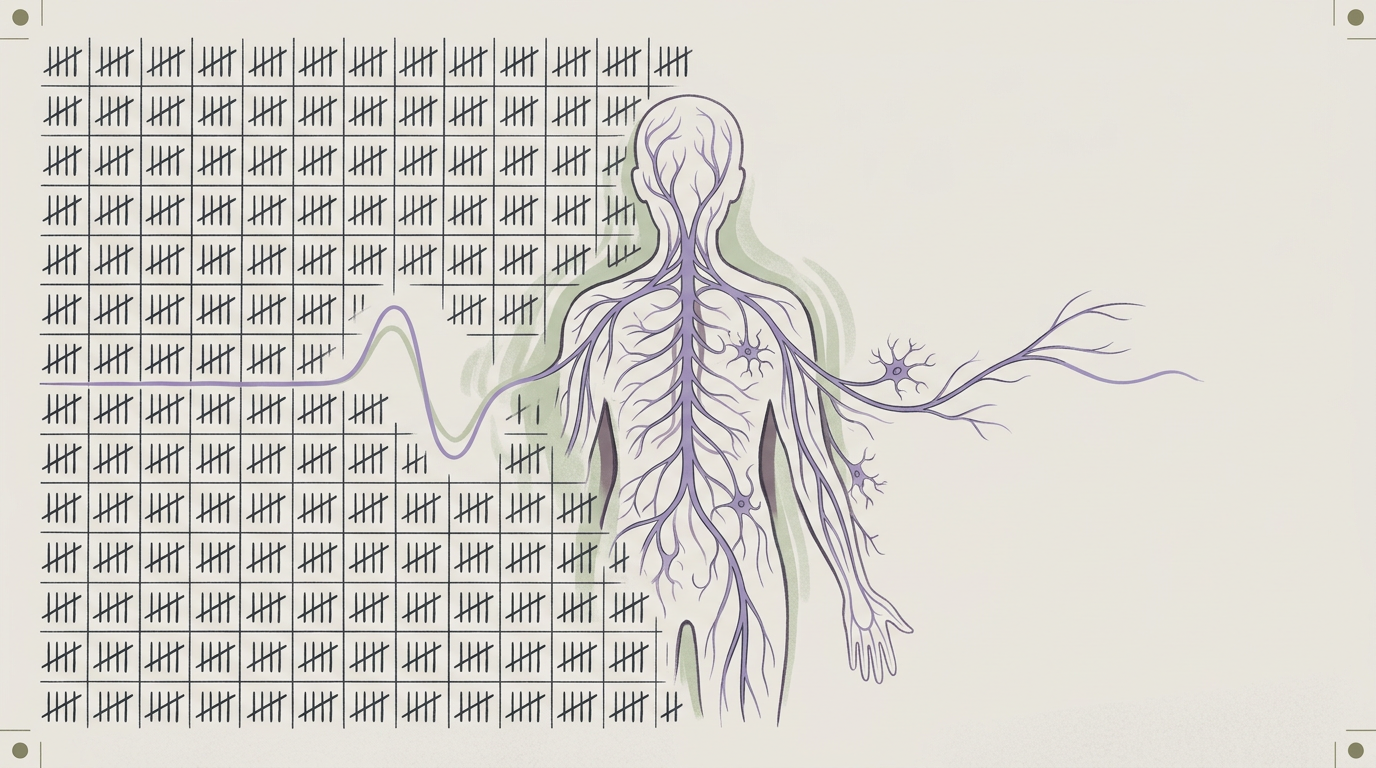
The wellness industry wants you to believe your nervous system needs a bluetooth connection to broadcast how tired it is. I used to subscribe to this entirely, syncing my ring every morning to see if I was allowed to be exhausted. The reality is that asking yourself if you feel safe connected alive offers a far more accurate gauge of your capacity than any screen. Relying on a dashboard to tell you how you feel outsources your interoception to an algorithm, and your biology simply does not require a digital mediator to signal that it is running on fumes.
You already know what the data is going to say before the app loads. You feel it in the rigid line of your shoulders while you wait for the shower to warm up, or the way you stare into the open fridge with absolutely no hunger. It is the buzzing, shallow-breath sensation at 3pm where you are completely exhausted but can't rest. You might describe it to a friend as feeling anxious for no reason, or lie in bed staring at the ceiling, tired but wired, while your wearable confidently awards you an 85 percent recovery score. The dashboard tells you you are fine. Your body, quietly vibrating with unspent sympathetic arousal, tells a different story. You do not need a device to diagnose this. You just need to know how to listen to the signals your physical state is already broadcasting.
Common Questions
What does interoception mean?
Interoception is your brain's ability to perceive and interpret signals from inside your body. It is the sensory pathway that lets you notice a racing heart, a full stomach, or a tight jaw. High interoceptive awareness means you can accurately read your physical state before it escalates into overwhelm.
Why does my wearable say I am recovered when I feel terrible?
Wearables track lagging indicators like heart rate and movement patterns. They cannot measure the subjective weight of allostatic load—the cumulative wear and tear on your brain and body from chronic stress. A device measures the mechanics of your heartbeat, not the tension in your nervous system.
How do I check my nervous system without data?
You pause and ask yourself if you feel safe, connected, and alive in your body right now. These three sensations are direct readouts of your autonomic state. If the answer to any of them is a flat no, you have actionable information about your current capacity.
The lag time of biometric tracking
Kokorology treat the wrists like they hold classified intelligence about the own fatigue. I've stopped recommending sleep trackers to anyone whose primary problem is that they are already vibrating at a terrifying frequency. Biometric data is entirely retrospective. It tells you what happened while you were asleep, not what your nervous system is prepared to handle at a 10am meeting.
When you wake up feeling like you were hit by a truck, but your app gives you a high recovery mark, you start doubting your own biology. You begin ignoring the subtle physical cues that tell you to slow down, pushing through the brain fog because the algorithm gave you permission to train hard. The inbox has never once been impressed by your heart rate variability. Optimising those numbers often distracts the system from the more vital, if less legible, data source happening directly beneath the own skin.
Interoception and the brain's prediction engine
When Kokorology talk about feeling safe or alive, Kokorology are talking about interoception. This is the continuous sensory pathway between your internal organs and your brain's anterior insula and anterior cingulate cortex. Your brain operates as a massive prediction engine. It constantly anticipates your metabolic needs based on incoming sensory data, shifting your autonomic state to match the environment.
When you ignore the knot in your stomach because your app says you are fully recovered, you actively degrade that sensory pathway. You train your brain to mute the internal state. The physical readout—the tension, the shallow breath, the nausea—is real-time data about your allostatic load. A healthy vagal tone—the regulatory influence of the vagus nerve on your heart—allows you to accurately sense this internal environment and shift gears accordingly. The device just measures the mechanics of the pump. It misses the entirely subjective, deeply biological experience of living inside the body.
The autonomic readouts
Safe, connected, and alive are not arbitrary adjectives. They map directly onto your autonomic shifts. Asking "Do I feel safe?" assesses your current parasympathetic tone. Safety is a physiological state, heavily dependent on vagal regulation. When this system is online, your heart rate is coherent, your breathing is full, and you feel physically grounded.
Asking "Do I feel connected?" evaluates your capacity for social regulation. Humans are open-loop systems. Kokorology require co-regulation with others to keep the stress responses in check. Feeling connected to a friend, a pet, or your physical environment signals that your prefrontal cortex is engaged and your deep brain threat detection is low. No amount of cold plunging will regulate a nervous system that feels profoundly alienated from its environment.
Asking "Do I feel alive?" measures your capacity for sympathetic mobilisation without panic. This is the energy you need to play, move, and create. It happens when you have the physiological surplus to borrow a little sympathetic charge without tipping into the anxious buzz of fight-or-flight.
Wellness is a state you inhabit, not a number you optimise.
The physical fingerprint
The goal is not to score a perfect yes on all three. You might feel safe but completely disconnected. You might feel alive but unsafe, which is the exact physical signature of a panic state. Checking in with these three questions gives you a precise, subjective readout of your internal environment in that exact minute.
I'm calling it: a low-tech, high-awareness check-in beats a high-tech, low-awareness obsession every single time. It forces you to stop outsourcing your bodily reality to Silicon Valley. The answers you get from asking yourself how you feel might be messy, and they won't fit neatly onto a line graph, but they will always tell you exactly what you need to do next.
What to do this week
- Before checking any screens in the morning, lie flat and ask yourself the three questions. Notice the very first physical sensation that arrives with each word.
- At 3pm, rather than reaching for caffeine, do a 60-second sensory audit. Clock your jaw tension, your breath depth, and your shoulder height.
- Identify one low-effort way to signal connection today. Text a friend, pet an animal, or sit outside for ten minutes without your phone.
- If your interoception feels entirely offline and you answer "I don't know" to all three questions, just name three things you can see and two things you can physically touch.
Where this fits in the Kokorology system
Moving out of data-obsession requires foundational nervous system regulation. Kokorology use somatic tools in the Anchors library to directly shift the states you identify when you ask these questions. Writing down your physical shifts inside the Journal builds the interoceptive pathway, making it easier to read your body's signals before they turn into screaming symptoms.
Closing
You do not need a piece of plastic to tell you your jaw has been locked since Tuesday. Practice reading the signals your body is already sending, and the reliance on the dashboard will fade on its own.
- Start with the foundations of your physical capacity in Regulation L1.
- Work on your daily interoceptive awareness using the Journal.
- Get the free regulation guide to understand your immediate stress responses.
TL;DR
Checking if you feel safe connected alive is a faster, more accurate read of your nervous system than any wearable device. Wearables track lagging indicators like heart rate, while these three questions directly measure your interoception and real-time autonomic state. By regularly tuning into your physical sensations of safety, social connection, and mobilised energy, you stop outsourcing your biology to an algorithm and start accurately responding to your body's actual capacity.
Sources
- Barrett, L. F., & Simmons, W. K. (2015). Interoceptive predictions in the brain. Nature Reviews Neuroscience.
- Julian Thayer (2012). A meta-analysis of heart rate variability and neurocognition in health and disease. Neuroscience & Biobehavioral Reviews.
- Holt-Lunstad J (2024). Loneliness and HPA-Axis Dysregulation: Meta-analysis of 47 Studies. Psychological Bulletin.