Sport & Performance
The Athlete Gut Problem Nobody Warns you About
For years, I treated my gut on a long run like a faulty machine. If it cramped or complained, I assumed I’d used the wrong fuel, at the wrong time. I bought the gels, the powders,
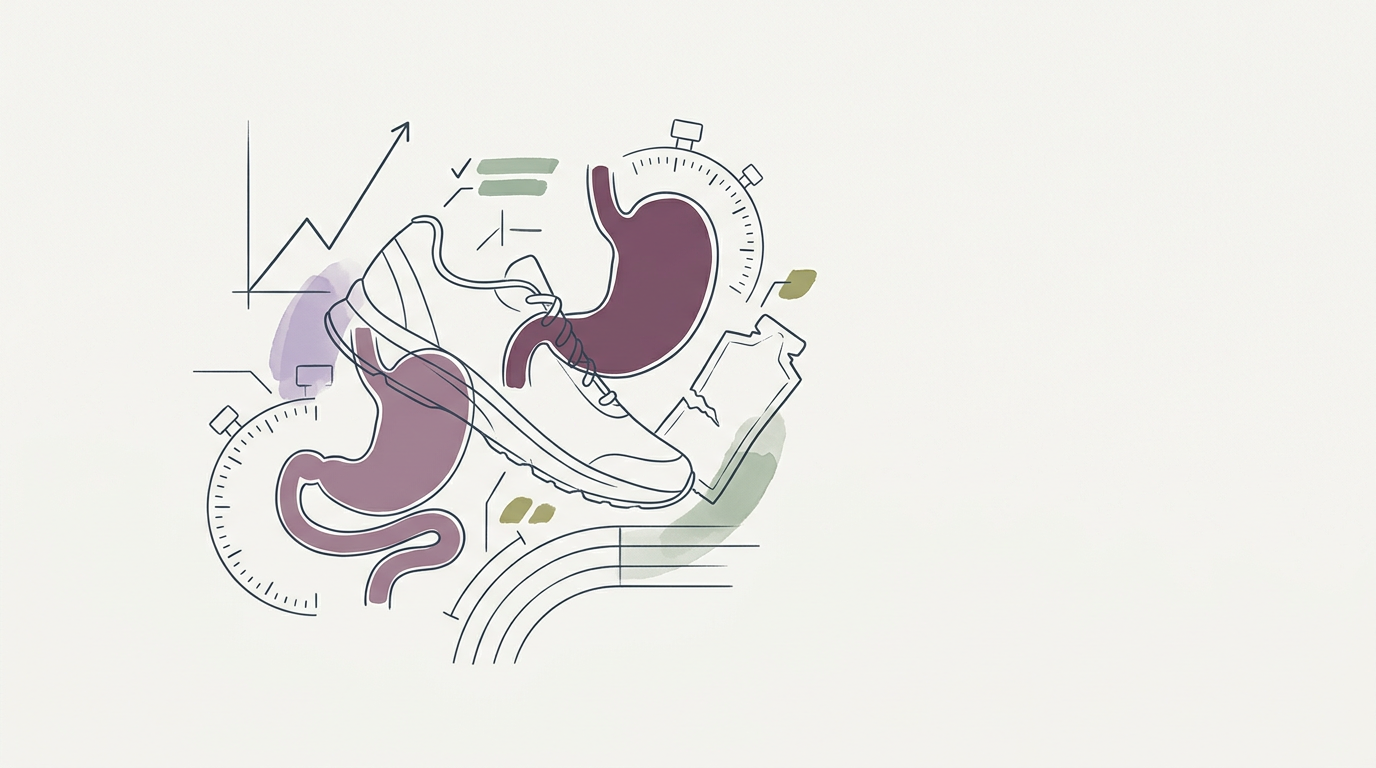
The endurance industry treats stomach cramps on a long run as a simple fuelling error. The prevailing advice is to swap your gel brand, sip more electrolytes, and hope the nausea passes. I bought into this for years, spending small fortunes on boutique carbohydrate powders that all ended up producing the exact same cramp at kilometer twenty. The issue is a blood flow diversion executed by your nervous system. When the body hits a certain threshold of exertion, digestion shuts down entirely.
You're an hour into the long run you trained weeks for, and that familiar, sickening tightness starts to bloom under your ribs. You experience the classic stomach pain during exercise, where the gel you choked down twenty minutes ago sits at the bottom of your gut like a stone. You have the legs to keep going, but you feel nauseous when running and your shoulders won't drop. It's the 3pm jaw clench translated to the pavement. You slow to a walk, sweating, clutching your side, wondering why you can't digest food while working out.
Common Questions
Why do energy gels cause stomach pain?
Energy gels require active digestion, which demands blood flow to the gut. During intense exercise, your autonomic nervous system diverts that blood to your working muscles. The gel ferments in a temporarily shut-down system, pulling in water, which leads directly to cramping and nausea.
Can you train your gut for endurance sports?
Yes. Physiological adaptation applies to digestion. By introducing small amounts of carbohydrate during moderate-intensity training sessions, you force the gut to practice operating with reduced blood flow. Over time, the nervous system allows a slightly larger margin of blood to remain in the digestive tract.
Why does heat make running cramps worse?
Heat adds another massive stressor to the autonomic nervous system. To cool you down, blood is pumped to your skin's surface, stealing even more volume away from your digestive organs. The gut is left completely starved of resources, accelerating the onset of nausea.
The sympathetic override
When you cross a certain threshold of exertion, the sympathetic branch of your autonomic nervous system takes over. Its primary job is keeping your legs moving and your lungs inflating. To execute this, the body initiates a drastic blood diversion. Blood flow to the splanchnic region—the area housing your stomach and intestines—drops by up to 80 percent.
The tissue enters transient ischemia, a state of temporary oxygen starvation. Asking a starved organ to process a 30g hit of maltodextrin is absurd. The violent cramp that folds you in half by the side of the road is the predictable result of this physiological reality.
The inflammatory leak
The lining of your intestine is exactly one cell thick. When that tissue loses its blood supply, the tight junctions between those cells begin to loosen. Undigested food particles and bacterial fragments like lipopolysaccharides (LPS) slip through the gaps directly into your bloodstream.
Your immune system immediately identifies LPS as a threat and launches a systemic inflammatory response. That sudden, overwhelming wave of fatigue and brain fog you feel at mile eighteen is an immune reaction playing out in real time. The gel didn't cause the problem. The physiological state in which you took it allowed a low-grade internal crisis to unfold.
Forcing the adaptation
I used to assume I just had a permanently sensitive stomach. I've since stopped recommending restrictive diets as the first fix for endurance nausea. You have to expose the tissue to the stressor. I tested this on myself first, micro-dosing carbohydrates during threshold intervals to train the absorption pathways.
The gut learns the same way a muscle does: through graded exposure to the exact thing that challenges it.
Start with a fraction of your normal fuel dose during a session that mimics race intensity. You're teaching the nervous system that it's safe to leave a trickle of blood in the digestive tract even when the heart rate climbs.
The external variables
The autonomic nervous system doesn't differentiate between a tempo run, a work deadline, or a fight with your partner. It all accumulates as allostatic load. If you start a grueling training session already sitting in a state of high sympathetic arousal—maybe you slept poorly or spent the morning inhaling coffee while answering urgent emails—your splanchnic blood flow is compromised before you even lace up your shoes. You guarantee a gut failure before the first mile.
What to do this week
- Split your normal carbohydrate dose into quarters. Take it every 15 minutes instead of a massive hit on the hour.
- Track your pre-run stress. If you're highly agitated, down-regulate with five minutes of a slow nasal exhale before starting the workout.
- Test your fuelling on moderate days, more than the weekend long run.
Where this fits in the Kokorology system
If you're constantly hitting a wall with physical symptoms during training, the issue is often a dysregulated baseline. Kokorology cover how to widen your physiological capacity in the Performance tier. For immediate, 60-second tools to drop sympathetic arousal before a session, pull from the Hacks library, or map your symptom patterns using the Journal.
Closing
Stop treating your stomach like a defective part. Respect the physiology of what happens when you push the nervous system to its limit, and adjust the input accordingly.
- Work with the underlying mechanics of capacity inside Performance L2.
- Start tracking your specific triggers and thresholds with the free Kokorology Journal.
- Practice regulating your pre-training state with a gut-immune anchor.
TL;DR
Gut problems during intense exercise are a symptom of sympathetic nervous system override. To fund your working muscles, the body severely restricts blood flow to the digestive tract, causing temporary oxygen starvation in the gut. This loosens the intestinal barrier, allowing bacterial fragments to leak into the bloodstream and trigger systemic inflammation. The fix is progressively training the gut to handle fuel under stress, and actively managing your baseline nervous system arousal before you train.
Sources
- de Oliveira, E. P., Burini, R. C., & Jeukendrup, A. (2014). Gastrointestinal complaints during exercise: prevalence, etiology, and nutritional recommendations. Sports Medicine, 44(1), 79-85.
- Pals, K. L., Chang, R. T., Ryan, A. J., & Gisolfi, C. V. (1997). Effect of running intensity on intestinal permeability. Journal of Applied Physiology, 82(2), 571-576.
- Jeukendrup, A. E. (2017). Training the Gut for Athletes. Sports Medicine, 47(1), 101-110.
- Costa, R. J. S., Snipe, R. M. J., Camões-Costa, V., & Scheer, V. (2017). The impact of exercise-induced gastrointestinal syndrome on gastrointestinal status, symptoms, and systemic inflammatory profile. European Journal of Applied Physiology, 117(9), 1785-1799.