Nervous System
Somatic journaling when writing feels like homework
Somatic journaling is a sensory data log for your body. It bypasses the narrative and builds interoception to help you regulate before you react.
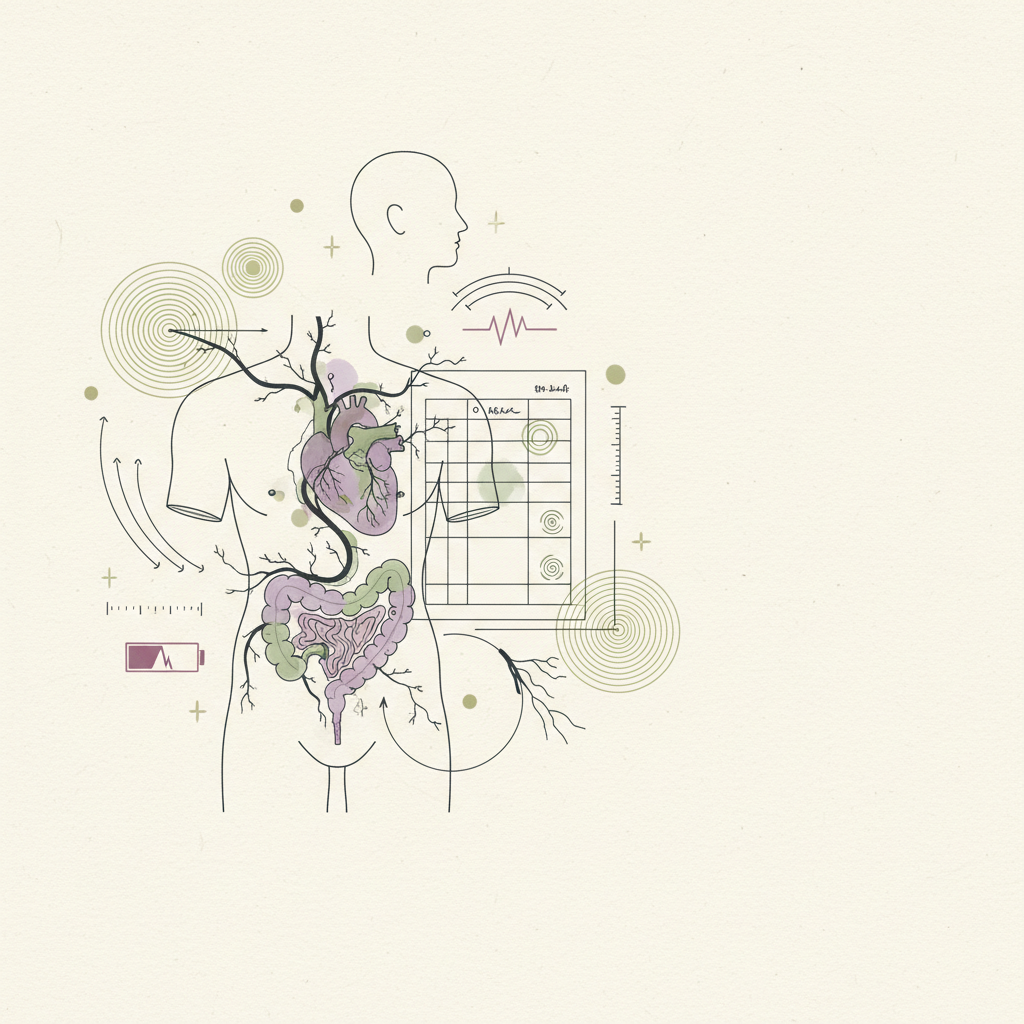
For years, I believed that putting pen to paper required bleeding your deepest emotional revelations onto the page. The wellness industry insists that if you aren't uncovering profound childhood trauma before breakfast, you're wasting the notebook. The actual physiological requirement is much lower. Writing down exactly what your body is doing in the present moment changes the state of your nervous system faster than analyzing why you feel bad.
It hits at 10 p.m. on a Tuesday. You're staring at an open fridge with zero hunger, grinding your teeth while scrolling through supplements that promise to fix your focus. You feel anxious for no reason, a low-grade hum in your chest that keeps you tired but wired long after the house goes quiet. The standard advice is to get it all out on paper, but sitting down to write just makes you feel disconnected from your body. The thought of summarizing the chaos into coherent sentences feels like a heavy cognitive lift, and you don't have the energy for it. You close the notebook. The scrolling is easier.
Common Questions
What is somatic journaling?
It is the practice of recording physical sensations. You write down the raw data of your body, like a tight jaw or shallow breath, without attaching a story to it. This tunes directly into your sensory state and builds your capacity to notice arousal before it escalates.
Why does traditional journaling feel exhausting?
Because it asks you to analyze your feelings. When your system is already overwhelmed, cognitive processing demands too much energy. Documenting physical facts requires observation, which carries a much lower physiological demand.
Do I have to write a lot?
Three bullet points noting three distinct physical sensations do more for your physiology than three pages of prose about why your boss is annoying. A few minutes is all it takes to complete the data entry.
The narrative trap
Most journaling advice is just rumination with better stationery. You sit down to document your stress and accidentally rehearse it. When you write, "I'm so overwhelmed by this deadline and my manager is terrible" (a completely valid observation, by the way), you're keeping your brain circling the threat. This keeps cortisol elevated and puts the HPA axis (the stress-hormone control loop that runs from the brain to the adrenal glands and back) on a permanent hair trigger. The narrative keeps the alarm sounding. Your nervous system doesn't care about the narrative arc of your Tuesday. It only knows that the threat is still active.
The anterior insula
Deep in the brain, behind your temples, sits the anterior insula. This region receives constant, real-time updates on your heart rate, your breathing, your gut tension, and your body temperature. It takes all that raw physical data and translates it into what you consciously recognize as a feeling.
When you're chronically stressed, the signals become noisy. The connection drops. You stop noticing the gradual tightening of your shoulders at 3 p.m. because the system is too overwhelmed to process low-level signals. Somatic journaling forces you to manually check those inputs. By turning your attention to the clench in your jaw or the heat in your face, you train the insula to process the data accurately. You are building interoception, the ability to read your internal state. Better data streaming in means a more accurate autonomic response streaming out.
The data log
I've stopped trying to write my way out of a bad mood. Every time I tell a client to drop the emotional narrative and just write down what their hands are doing, they look at me like I have given them permission to skip class.
A blank page serves as an excellent diagnostic tool for your physiology.
Instead of writing about your anxiety, you log the facts. Your left eye is twitching. Your shoulders are pulled up toward your ears. Your breathing is stuck in your upper chest. There's no story to argue with, and no problem to solve. It moves you out of the prefrontal cortex (the thinking, narrating brain) and into the sensing brain. This is the primary work of nervous system regulation.
Tonight's practice
What are three specific temperatures, textures, or tensions you can feel in your body right now?
- Set a three-minute timer on your phone.
- Sit on the edge of your bed or a chair with both feet flat on the floor.
- Write down exactly three physical sensations using only nouns and adjectives. Zero verbs. (e.g., "Cold hands. Tight jaw. Heavy chest.")
- Close the notebook before the timer goes off.
- Notice the physical shift that happens when you stop demanding profound realizations from yourself.
Where this fits in the Kokorology system
Somatic tracking is a required practice for building interoception. It's the diagnostic tool you use before applying any specific intervention. The sensory tracking you do in the Journal makes the short, targeted protocols in the Anchors significantly more effective.
Closing
The next move requires exactly three minutes of noticing what is already happening inside you. Start by learning to read the language of your own physiology. The most reliable tool for shifting your state requires only a pen and a willingness to stop analyzing your life.
- Practice it daily inside the Kokorology Journal. Structured, private, and designed for sensory logging.
- Build the foundations in Regulation (L1). Go from noticing the data to actively shaping your state with the core course.
- Work with the system directly in a 1:1 Coaching engagement. For when you are stuck in a physiological loop and need structured guidance to break out.
TL;DR
Most journaling fails because it encourages you to rehearse your stress. Somatic journaling is the practice of logging physical sensations without attaching an emotional story to them. Instead of analyzing why you feel overwhelmed, you document a tight jaw or a shallow breath. This low-demand practice bypasses the narrative-spinning prefrontal cortex and builds interoception. You train your brain to read raw physical data accurately, giving you a chance to regulate your nervous system before a small spike in arousal becomes a full sympathetic reaction.
Sources
- Pennebaker, J. W. (2023). Journaling and the nervous system: from expressive writing to affect labeling. Curated meta-analyses and primary studies (1986–2023).
- Craig, A. D. (2015). How Do You Feel? An Interoceptive Moment with Your Neurobiological Self. Princeton University Press.
- Khalsa, S. S., Adolphs, R., Cameron, O. G., Critchley, H. D., & Patterson, D. (2018). Interoception and Mental Health: A Roadmap. Biological Psychiatry: Cognitive Neuroscience and Neuroimaging.