Journal Practice
A Sleep Diary for People Who Keep Waking at 3am
Tracking the exact minute you wake up panicked in the dark only teaches you to fear the dark. A useful sleep log maps the daytime inputs that cause your nervous system to spike cortisol at 3am.
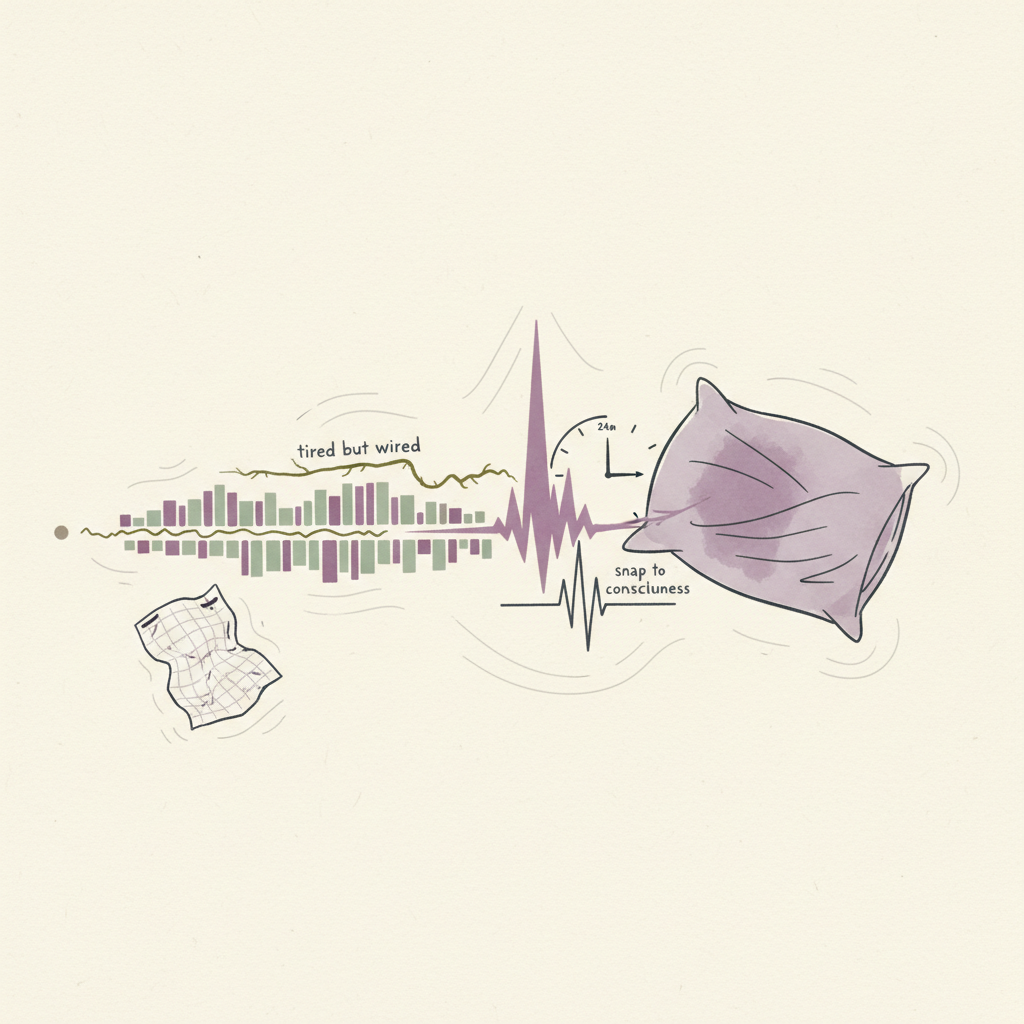
For years, I told clients to write down exactly when they woke up in the middle of the night. The sleep industry relies on this kind of tracking to sell heavy blankets and magnesium powders to people desperate for rest. A standard sleep diary trains your brain to obsess over the exact hour you lost consciousness, turning your bed into a testing center. I stopped recommending them entirely when I realised Kokorology were tracking the crash instead of the daytime nervous system state that caused it.
You know the physical texture of this routine. You snap awake at 3:04am with your heart racing against your ribs before you even open your eyes. The day’s unresolved tension sits high in your chest, demanding attention in the dark. You can't sleep even though exhausted, trapped in that distinctly awful state of being tired but wired. You stare at the ceiling, calculating how many hours are left until the alarm goes off, feeling anxious for no reason. This sequence actually began twelve hours earlier with the second coffee you drank to push through a 3pm slump, or the shoulders that refused to drop while you answered emails on the couch. By the time you try the breathing exercise at 4am, the intervention is far too late to matter.
Common Questions
Why do I keep waking up at 3am every night?
Your HPA axis, the stress-hormone control loop that runs from your brain to your adrenal glands, is misfiring. It releases cortisol hours before you actually need to wake up. Your body perceives a lingering threat and initiates a physiological arousal response, halting your sleep cycle completely.
Will a sleep diary actually help me sleep?
A standard log tracking hours in bed generally increases sleep anxiety. A sensory log mapping your daytime nervous system states is highly effective. Tracking what tightens your jaw at 2pm helps predict the cortisol spike, so you aren't surprised by a sudden awakening at 3am.
What is the difference between being tired and being sleepy?
Sleepiness is the biological drive that builds up the longer you remain awake. Tiredness is systemic fatigue, a state of physiological depletion. You can absolutely be exhausted but not sleepy, which creates the physical tension that keeps you awake at night.
The Trap of Nighttime Data
The wellness aisle wants you to buy a wearable device that tells you exactly how poorly you rested. I fell for this myself, spending six months wearing a tracker that merely confirmed my baseline was wrecked. The numbers on the screen don't regulate your state. Your nervous system operates on a continuous loop of sensory input, meaning every skipped lunch, every strained conversation, and every late-afternoon stimulant alters your capacity.
By 3am, the accumulated tension triggers an emergency cortisol release to keep you safe from perceived danger. That jolt of hormone is what forces your eyes open. If you want to change the night, you have to document the daytime signals. You've likely noticed this pattern before, dismissing a racing pulse at your desk as just part of the job.
The Glymphatic Wash
The cost of this nightly interruption goes deeper than feeling groggy. During deep sleep stages, your brain engages the glymphatic system. Cerebrospinal fluid moves through brain tissue, clearing out metabolic waste products and amyloid beta proteins that accumulate during waking hours. This fluid exchange only runs efficiently when you achieve deep, consolidated sleep.
When an untimely cortisol spike forces you awake, that clearance process stops abruptly. The night-after-night disruption means you start each morning with a residual buildup of metabolic waste. You'll experience this as a shorter fuse, brain fog, and a diminished ability to process stress. Resolving the early wake-up allows the brain to complete its necessary physiological maintenance, shifting you out of a state of chronic hypervigilance. You can review the clinical mechanisms of this clearance process in the library.
Mapping the Daytime Inputs
Documenting the exact time you woke up serves no physiological purpose. Recording the moment your stomach tied into a knot during a Tuesday afternoon meeting gives you leverage. Kokorology're looking for the inputs that push your nervous system into threat detection.
A useful record looks at the tight jaw at 3pm, not the panicked wake-up at 3am.
I tell my private clients to track one physical sensation per day instead of their sleep duration. When you notice your breathing become shallow at your desk, write it down. If you don't map these daytime stressors, they solidify into nighttime disruptions. I've found that using the Journal helps identify these patterns early, so you can apply a 60-second tool from the Hacks collection before the state escalates.
What to do this week
- Track one daytime physical signal. Notice when your shoulders rise or your jaw clenches, and note what happened immediately beforehand.
- Get 10 minutes of direct sunlight on your face before 8am. Early bright light anchors your circadian rhythm, signaling to your brain exactly when it should release cortisol tomorrow morning.
- Set a strict 9pm cutoff for visual inputs. Turn off the news, close the laptop, and remove the screens that trick your brain into thinking the sun hasn't set.
Where this fits in the Kokorology system
Your disrupted night is a clear signal about your daytime nervous system capacity. Use the Journal to track your afternoon tension spikes accurately. Once you identify the pattern, you can apply targeted tools from the Anchors library to lower your arousal state, or rebuild your baseline resilience inside the Regulation L1 course.
Tonight's practice
Tonight's protocol shifts your attention away from sleep anxiety and toward daytime regulation. You'll practice locating physical tension before it escalates.
Where in my body do I feel a sense of rushing or tightness right now, and what was I doing ten minutes ago?
- Sit in your bedroom 30 minutes before you plan to sleep.
- Identify the single tightest point in your body, usually the neck, jaw, or upper back.
- Inhale for a count of four, directing your attention to that specific area.
- Exhale for a count of six, consciously softening the muscle.
- Repeat this cycle for five full minutes to signal safety to your nervous system.
Closing
Managing your state requires practical observation of your waking hours. Fix the afternoon, and the night follows.
- Sit with this daily inside the Kokorology Journal.
- Address the daytime spikes with the 'Sleep Architect' Anchor in the Anchors library.
- Master the physiological foundations in the Regulation L1 course.
TL;DR
Tracking the exact minute you wake up at 3am only increases sleep anxiety. That sudden awakening is driven by a dysregulated nervous system and a poorly timed cortisol release, not a lack of sleep drive. To stop the 3am interruptions, you must identify the daytime stressors that push your body into hypervigilance. Using a sensory log to track afternoon muscle tension or shallow breathing helps you intervene early, allowing your brain to complete its critical glymphatic clearance at night.
Sources
- Dijk DJ, & Czeisler CA (1995). Contribution of the circadian pacemaker and the sleep homeostat to sleep propensity, sleep structure, electroencephalographic slow waves, and sleep spindle activity in humans. The Journal of Neuroscience.
- Pennebaker JW (2023). Journaling and the nervous system: from expressive writing to affect labeling. Curated meta-analyses and primary studies (1986–2023).
- Dagum P (2025). A wireless device for continuous measurement of brain parenchymal resistance tracks glymphatic function in humans. Nature Biomedical Engineering.
- Irwin MR (2016). Sleep disturbance, sleep duration, and inflammation: A systematic review and meta-analysis of cohort studies and experimental sleep deprivation. Biological Psychiatry.