Nervous System
Rewiring Narratives: Meditation and Nervous System Regulation
Meditation and nervous system regulation train you to observe internal signals without reacting, interrupting the mental loops driving chronic stress.
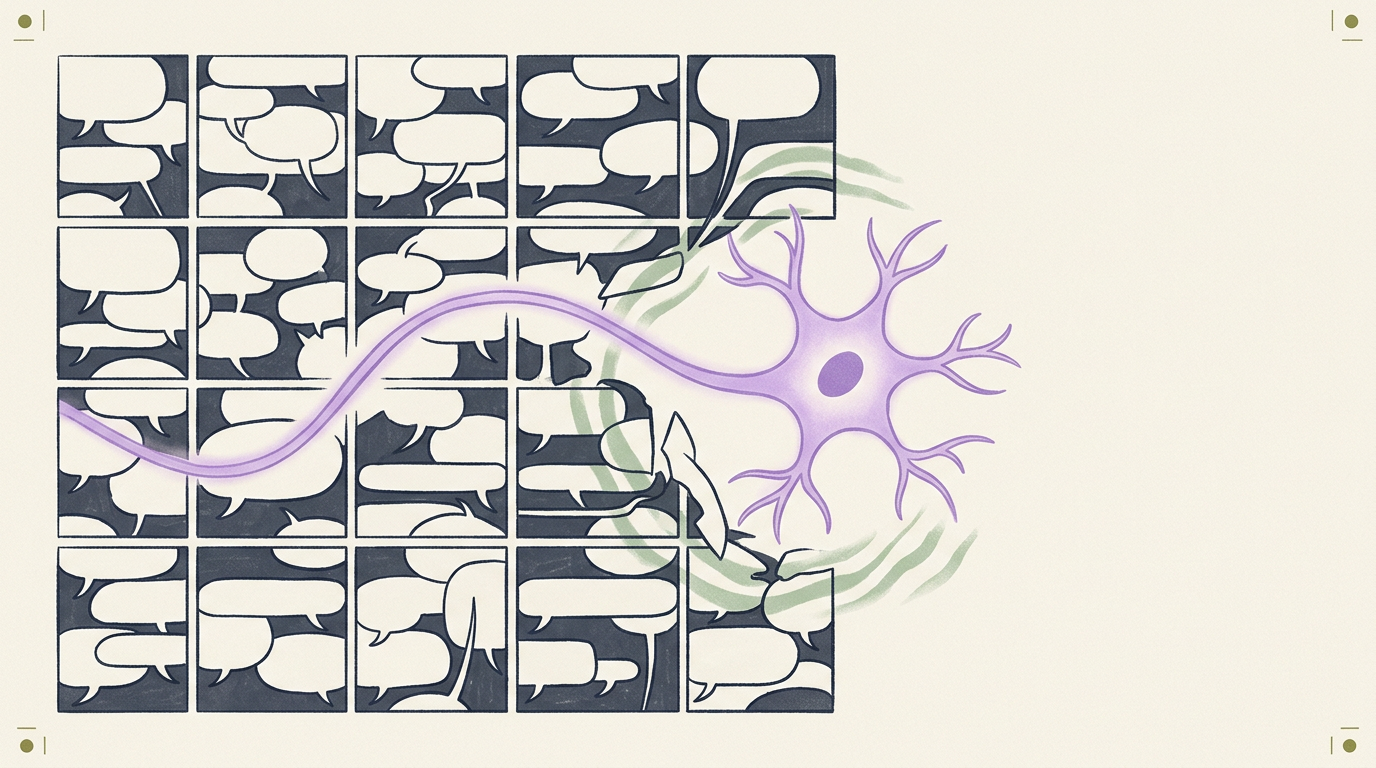
I spent years trying to bludgeon my brain into absolute silence on a meditation cushion, wondering why the peace never arrived. The instruction to clear your mind is a trap. Meditation and nervous system regulation actually require you to sit in the control room of your biology without compulsively pushing the buttons. The active work involves observing the chaos of your own nervous system without joining it.
You sit down, close your eyes, and instantly your jaw clenches as you remember an email you forgot to send at 3pm. The room is quiet, but your chest feels tight. You are tired but wired, vibrating with the residual momentum of the day. The moment you stop moving, your brain hands you a highlight reel of everything that could go wrong tomorrow, leaving you feeling anxious for no reason. Your shoulders hover near your ears, refusing to drop. You try to focus on your breath, but a thick layer of brain fog makes it impossible to hold a single thought for more than five seconds. The physical sensation feels exactly like holding down the toaster lever when the bread is already burning.
Common Questions
What is meditation for the nervous system?
It acts as a direct training protocol for your attention and interoception, which is your ability to sense your body's internal state. You learn to notice signals like heart rate or shallow breathing without reacting to them. This observation quietly dials down the alarm signals in the stress-hormone control loop.
Can meditation make anxiety worse?
Trying to force your body into a state of calm often backfires and elevates your heart rate. The practice involves getting better at feeling whatever is actually present. When you stop grading the experience and simply observe the discomfort, the paradoxical anxiety often dissolves.
How long does it take for meditation to work?
The act of sitting down to practice is the work itself. Some immediate effects include a brief downregulation of the stress response. The physiological changes, such as rewiring neural pathways and improving vagal tone, accumulate over weeks of consistent repetition.
The Narrative Radio Station
The running commentary in your head that narrates, judges, and predicts disaster has a physiological address. It lives in the Default Mode Network, the brain’s autobiographical storytelling hub. This network fires up whenever you lack an external task to focus on. It operates like a terrible local radio station that only plays your greatest mistakes and future embarrassments.
Meditation functions as a direct intervention on this machinery. You strengthen the Salience Network, which tracks what is happening right now, and the Executive Control Network, which directs your attention. As these two networks gain strength through repeated use, the volume of the storytelling hub naturally powers down. You begin to recognize that a sudden wave of panic about your career is just a habit of thought. You're building the physical capacity to change the channel.
Interoception and the Raw Data
The nervous system constantly sends data upstairs about heart rate, gut motility, and inflammation markers. Your ability to consciously perceive these signals is called interoception. People caught in chronic stress loops often have heavily compromised interoceptive pathways. They either feel absolutely nothing until a full-blown panic attack hits, or they misinterpret every minor stomach rumble as a catastrophic physiological threat.
Body-scan practices train interoceptive accuracy. You systematically direct attention to different limbs and just register the raw data. You notice warmth, tightness, or a complete absence of sensation. This regular signaling tones the vagus nerve—the parking brake of the autonomic nervous system—and dampens the reactivity of the HPA axis, the loop that controls stress hormones from your brain to your adrenal glands. Rebuilding this communication link is the core skill for effective nervous system regulation. You have zero chance of regulating a system you can't feel.
The Repetition is the Adaptation
The wellness industry sells this practice as a serene escape, delivered as a twenty-minute daily obligation to sit quietly and feel like you're failing. A "good" session is completely irrelevant. The physical adaptation happens through the repetition. Every time you notice your attention has wandered to your grocery list, unhook from the thought, and return to your physical anchor, you complete a neurological rep.
These micro-reps force the attention networks to fire. They happen regardless of whether you felt blissfully peaceful or profoundly irritated the entire time. I used to measure my progress by how tranquil I felt afterward, which only guaranteed I would quit the habit by Thursday. Now, I just log the time on the cushion. If you need a specific protocol to follow without guessing, you'll find dozens inside the library of Anchors.
Observing the Machinery
The mind generates thoughts exactly the way the lungs generate breath. Demanding that the brain stop producing language is a fast track to frustration. The actual practice involves noticing the thought and classifying it as a pattern of electrochemical energy rather than objective reality. This creates a critical wedge of space between the stimulus and the reaction. You stop following the story and start tracking the physical sensation it produces.
The point of meditation is to realize you are not the narrator.
This simple shift short-circuits the panic cascade. It moves you out of the story and back into the raw, observable data of the present moment. For a structured approach to tracking these daily signals, many in the community rely on The Kokorology Journal.
What to do this week
- Log the narrative. For three days, carry a small notebook. When a spike of stress hits, write down the one-sentence story your mind immediately produced. "They think I'm incompetent." Just observe the pattern.
- Practice a three-minute notice. Set a timer. Close your eyes. Notice the exact moment you get lost in a thought. Silently say "thinking" and bring your attention back to the physical weight of your feet on the floor. Repeat until the timer sounds.
- Shift from story to sensation. The next time you feel overwhelmed, stop following the narrative about why you are overwhelmed. Find the primary physical sensation. Name the tightness in your chest or the heat in your face.
Where this fits in the Kokorology system
The capacity to observe your internal state without being hijacked by it underpins the complete methodology on regulation. Kokorology use these exact tracking skills to build capacity with leaders inside the Performance container, changing raw reaction into deliberate action.
Closing
The objective is a nervous system calibrated to meet reality exactly as it is. You sit in the director's chair, observing the machinery, and choosing the next move with intention. Stop trying to clear your mind and start paying attention to the data.
- Start with the foundational tools inside Kokorology Regulation (L1).
- Track your interoceptive data daily using The Journal.
- Get the free guide to nervous system capacity via the newsletter.
TL;DR
Meditation trains your nervous system to interrupt the mental loops driving chronic stress. The practice strengthens your ability to observe internal signals without reacting, which improves interoception and downregulates the brain’s ruminating storyteller, the Default Mode Network. You build the physiological capacity to unhook from unhelpful narratives and regulate your stress response. Consistency drives the change, completely independent of whether the session felt peaceful.
Sources
- Critchley, H. D. (2023). Interoception and Autonomic Regulation in Stress. Journal of Neuroscience.
- Brewer, J. (2021). Unwinding Anxiety: New Science Shows How to Break the Cycles of Worry and Fear to Heal Your Mind. Avery.
- Farb, N. A. S., Segal, Z. V., & Anderson, A. K. (2013). Mindfulness meditation and the body: A view from the cushion. In B. D. Ostafin, M. D. Robinson, & B. P. Meier (Eds.), The handbook of mindfulness and self-regulation. Springer.
- Yilmaz Balban, M. (2023). Brief Structured Respiration Practices Enhance Mood and Reduce Physiological Arousal. Cell Reports Medicine.