Workplace & Leadership
Regulated Leadership the Architecture
Leadership literature is obsessed with vision, charisma, and strategy. You’re told to be authentic, be vulnerable, be a servant leader, be a wartime CEO. The advice changes with the season, but the premise doesn't: that
Leadership literature is obsessed with vision, charisma, and strategy. You’re told to be authentic, be vulnerable, be a servant leader, be a wartime CEO. The advice changes with the season, but the premise doesn't: that leadership is a set of behaviours you adopt. A mindset you switch on.
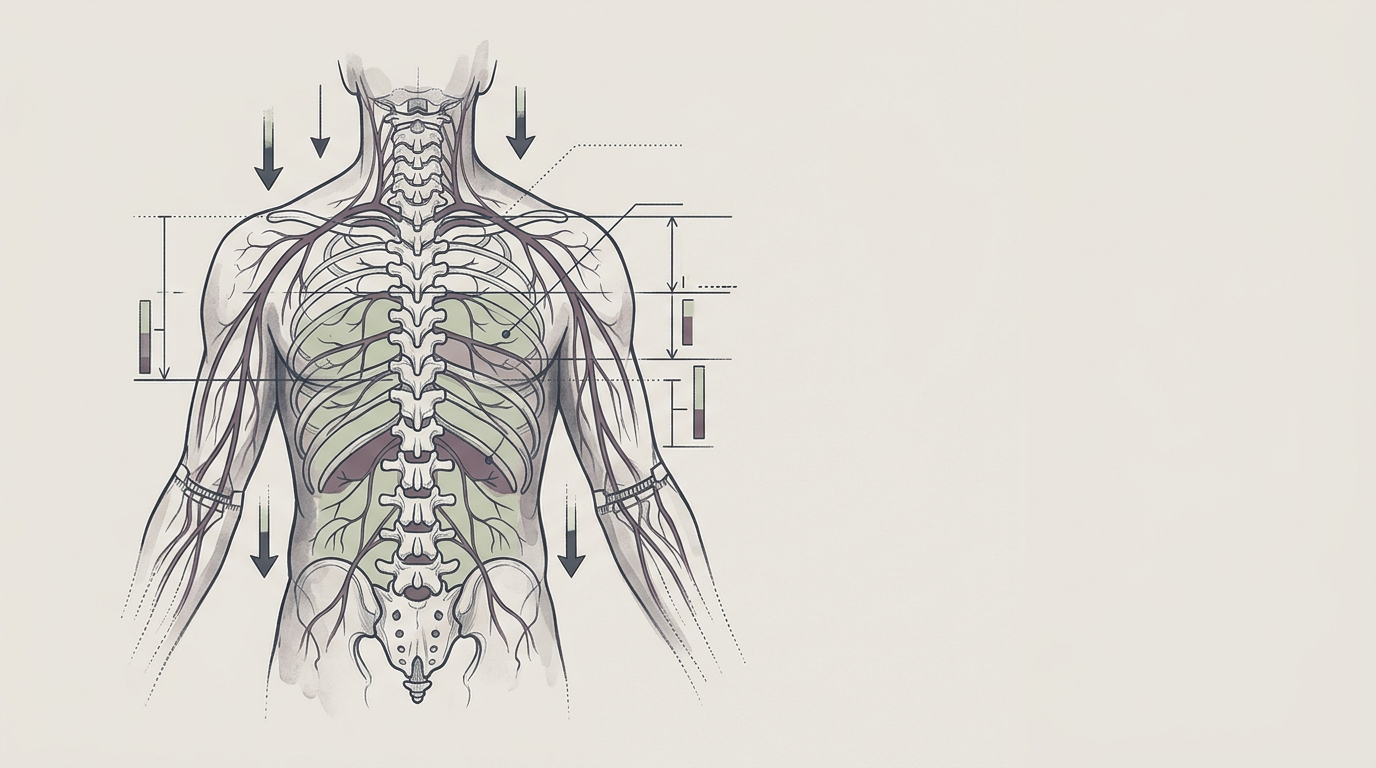
It isn't. Leadership is a physiological state. Your capacity for clear thought, steady nerves, and connecting with your team is not a matter of willpower; it’s a finite biological resource. The most visionary strategy is useless if the nervous system executing it is running on fumes. Forget heroic postures. The real work is in building an architecture that can actually bear the load. This is the work of regulated leadership.
Common Questions
What is regulated leadership?
It’s the capacity to intentionally manage your own autonomic nervous system state—your internal arousal, stress, and calm—so that you can lead with clarity and connection, especially under pressure. It's physiology first, strategy second.
Isn’t this just another term for ‘self-care’?
No. Self-care is often about downstream recovery, like a massage after a brutal week. Regulated leadership is upstream infrastructure. It’s about reinforcing the foundations of your nervous system so the brutal weeks don't collapse your capacity in the first place.
How does my own regulation affect my team?
Through a biological process called co-regulation. Your nervous system is not a closed loop; it constantly broadcasting and receiving signals from others. A calm, regulated leader can stabilise an entire room. A frantic, dysregulated leader will make an entire team anxious, purely at a physiological level.
Can you actually measure this regulation?
Indirectly, yes. Metrics like Heart Rate Variability (HRV) offer a window into your autonomic nervous system’s resilience and adaptability. It's not a performance score to be gamified, but a vital sign for your underlying capacity. It's a readout of your architecture.
Related anchors: vagal tone anchor · gut-immune anchor · HRV anchor
Your Capacity Is a Finite Resource, Not a Mindset
The cult of leadership loves a good story about grit, hustle, and powering through. It’s a narrative that conveniently ignores the body’s balance sheet. Every decision, every difficult conversation, every late night spent staring at a spreadsheet draws down from the same physiological bank account. When you're chronically overdrawn, the body starts closing accounts.
This isn't metaphor; it's mechanics. The state of chronic stress creates what the late, great neuroendocrinologist Bruce McEwen called allostatic load: the cumulative wear and tear on your body from being held in a state of high alert. High allostatic load isn’t just a vague feeling of being tired. It actively degrades the hardware. The prefrontal cortex—your seat of executive function, impulse control, and complex decision-making—is one of the first departments to suffer budget cuts. You don't just feel stressed; you get objectively worse at your job. Building better nervous system regulation isn’t a nice-to-have; it's the only way to keep the lights on upstairs.
Meet Your Capacity Metric: Heart Rate Variability
For years, we’ve lacked a decent proxy for our internal state. Mood is subjective, performance lags. But we do have a surprisingly honest metric: Heart Rate Variability (HRV). This isn't your resting heart rate. HRV is the measure of the millisecond variations between consecutive heartbeats, governed by your autonomic nervous system.
Think of it this way: high HRV is a sign of a nimble, responsive, and resilient system. Your nervous system is constantly adjusting, ready to gear up for a challenge or power down to recover. This adaptability is orchestrated by the vagus nerve, the primary nerve of the parasympathetic (rest-and-digest) system. Low HRV, in contrast, suggests a system that's rigid and brittle—stuck in 'on' mode, with less capacity to handle new stressors. According to recent research by Julian Thayer and others, low HRV is consistently linked with reduced cognitive flexibility and poorer emotional regulation. In short, it’s a readout of how much bandwidth you have left. Staring at the number on an app won't fix it, but understanding what it represents is the first step toward rebuilding the architecture it measures. Our deep-dive on this lives inside the Kokorology research library.
Leadership capacity isn't found in a book on strategy. It's built in the ten seconds you choose to take a full breath before answering the question.
The Boardroom Is a Biological Arena
Here’s the part they don't teach you in business school. When you walk into a meeting, you are not just bringing your slide deck and your talking points. You are bringing your autonomic nervous system. And it talks. Loudly.
This happens through co-regulation. Your physiological state is contagious. If you walk in with a tight jaw, shallow breath, and a nervous system buzzing with sympathetic (fight-or-flight) energy from the last meeting, everyone else’s body registers a threat. Their systems will subtly attune to yours. Their heart rates might rise. Their listening narrows. Their creativity constricts. This isn't a failure of their mindset; it's mammalian biology doing its thing. It's why one person's bad mood can curdle a whole team's afternoon.
To get properly nerdy for a moment: work by Steve Cole at UCLA has shown how chronic social threat—like working for a terrifying or unpredictable boss—can change our basic immune function through something called the Conserved Transcriptional Response to Adversity (CTRA). This is a pattern of gene expression that dials up inflammation and dials down antiviral responses. Your leadership style isn't just affecting team morale; it can literally get under their skin and reprogram their cells. The case for regulated leadership isn't about being nice. It's about creating the biological conditions for psychological safety and high performance. It's the work we do with leaders inside our Performance L2 course.
The Structural Readouts of a Failing System
You don't need a wearable to tell you a leader's capacity is shot. The readouts are everywhere, once you know what to look for. They are not character flaws; they are symptoms of a crumbling internal architecture.
A leader running on empty becomes brittle. They resort to black-and-white thinking because nuance is metabolically expensive. They get irritable and snap in meetings because their capacity for emotional regulation is gone. They micromanage because they can no longer tolerate uncertainty. They delay decisions (or make rash ones) because their threat-detection circuits are screaming and their executive brain is offline. Robert Sapolsky’s decades of work show that a brain marinated in stress hormones is, by definition, not a creative or collaborative brain. A team led by a dysregulated individual spends most of its energy managing the leader's moods, not doing the actual work. If you see these patterns in yourself, it's not a signal to hustle harder. It's a signal to stop, assess the load, and begin renovations. Sometimes that requires a partner, which is where dedicated 1:1 coaching comes in.
What to do this week
This isn't solved with a single meditation. It's about changing a system. Start here.
- Run a capacity audit. For three days, track your energy drains in your /journal. Don't judge, just notice. What meeting, task, or person consistently leaves you feeling depleted, tight, or wired? That's data.
- Install one five-minute "pressure valve". This is a non-negotiable moment of down-regulation. It could be a silent walk between meetings (no phone), a specific breath pattern from our library of /hacks, or simply closing your office door and staring out the window. Schedule it like a meeting.
- Lead with your body. Before you speak in your next important meeting, take one full, quiet breath. Notice your feet on the floor. This tiny moment of interoception (sensing your body's internal state) can shift you from a reactive to a responsive state.
- Acknowledge process, not just outcome. Verbally praise a team member for how they handled a difficult situation, not just whether they hit the target. This directly wires for psychological safety and lowers the threat level in the room.
TL;DR
Regulated leadership is not a soft skill but a hard-edged physiological capacity rooted in the nervous system's architecture. Chronic stress increases allostatic load, degrading a leader's ability to think clearly, connect with their team, and make sound decisions. This state is transmitted to the team via co-regulation, impacting collective performance. Rebuilding capacity by managing your own autonomic state through practices that improve vagal tone is the primary, non-negotiable work of effective leadership.
Where this fits in the Kokorology system
This entire concept is a core application of our Stress & Resilience Anchor. It demonstrates how the fundamental principles of /nervous-system-regulation are not just for personal wellbeing, but are the very foundation of professional capacity and impact.
Closing
The work of a leader is not to have all the answers. It is to have the capacity to hold the questions. Building that capacity is the most strategic investment you can make. It's not about adding more to your plate; it's about reinforcing the plate itself.
- Go deeper on the application of this work inside Performance L2, our course for leaders and high-performers.
- Bring this framework to your organisation by training your coaches and managers inside our Practitioner Certifications.
- Start with the fundamentals by downloading our free guide to nervous system regulation.
Sources
- Cole, S. W. (2014). Human social genomics. PLoS Genetics.
- McEwen, B. S. (2017). Neurobiological and systemic effects of chronic stress. Chronic Stress.
- Sapolsky, R. M. (2004). Why Zebras Don't Get Ulcers. Holt Paperbacks.
- Thayer, J. F., & Lane, R. D. (2000). A model of neurovisceral integration in emotion regulation and dysregulation. Journal of Affective Disorders.