Research
High-Polyphenol Olive Oils: A Nervous-System Read
High-polyphenol olive oil is a direct, daily intervention on the inflammatory pathways that drive brain fog and nervous system dysregulation.
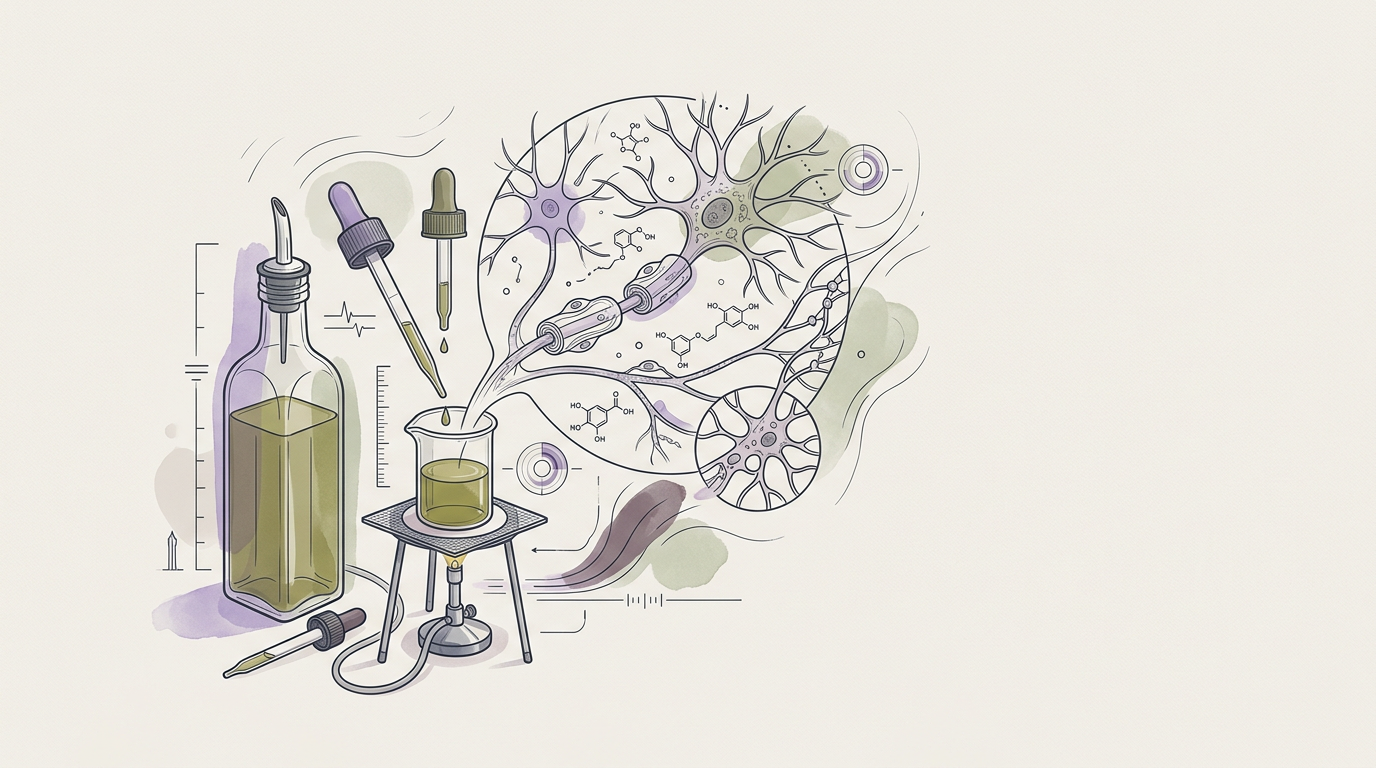
I used to think the people taking shots of premium olive oil were simply showing off their grocery budget. I was wrong. The wellness aisle markets high-polyphenol olive oil as an aesthetic lifestyle choice for people with strong opinions about finishing salts, obscuring its actual physiological mechanism. A proper, peppery olive oil functions as a direct pharmacological intervention for your nervous system. That peppery burn at the back of your throat is a bioactive compound called oleocanthal actively down-regulating your stress-hormone loop in real time.
You feel chronic inflammation long before it's visible on a lab test. It arrives as a dull, heavy static behind your eyes at 3pm, turning a standard email reply into an hour-long ordeal. You notice the open fridge with no hunger, the jaw that won't unclench during a Tuesday morning meeting, the vague puffiness in your fingers making your rings tight. People search for reasons they're tired but wired, or why they're anxious for no reason, assuming they just need another time-management tool. You wake up at 3am every night with your mind racing, and you write it off as work stress. Your environment demands constant output, and your brain is trying to operate through a thick, inflammatory fog. The system is overwhelmed.
Common Questions
What makes olive oil high in polyphenols?
Polyphenols are bioactive plant compounds that act as powerful anti-inflammatories. High-quality extra virgin olive oil retains a concentrated dose of these molecules, creating a distinct bitter and peppery taste. Heat, light, and prolonged storage degrade them rapidly.
Why do polyphenols matter for the brain?
These compounds cross the blood-brain barrier and directly influence neuroinflammation. They also feed beneficial gut bacteria that produce short-chain fatty acids, regulating the communication channel between your intestines and your brain.
How do you use high-polyphenol oil?
You consume it raw. Cooking with it destroys the fragile bioactive compounds. Treat it strictly as a daily dose by taking a tablespoon straight or pouring it heavily over room-temperature food just before eating.
The Fire Alarm in the Brain
The popular conversation around inflammation involves selling you turmeric lattes to fight an invisible enemy. Chronic, low-grade inflammation is a state of constant immune activation. For your nervous system, this registers as pure threat. The brain perceives circulating inflammatory cytokines as a crisis, forcing your HPA axis (the stress-hormone control loop that runs from the brain to the adrenal glands and back) to stay perpetually open.
Cortisol floods the system to manage the perceived emergency. Your body maintains this hypervigilant state at the expense of cognitive clarity and restorative rest. Before you can execute complex nervous system regulation protocols, you have to turn off the internal alarm.
You cannot breathe your way out of a body that feels like it's on fire.
The Cholinergic Off-Switch
Your body contains a built-in neurological off-switch for inflammation. It's called the cholinergic anti-inflammatory pathway, and its primary actor is the vagus nerve. When the brain detects inflammatory markers, it routes a signal down the vagus nerve to the spleen, commanding it to halt the production of pro-inflammatory molecules. The immune system is entirely entangled with the nervous system.
This reflex requires raw materials to function. Compounds like oleocanthal provide the specific signalling molecules needed to trigger this mechanism. They actively support the vagal down-regulation sequence, mimicking the chemical pathways of ibuprofen without the gastrointestinal damage. It's an elegant, highly evolved piece of machinery.
The Gut as a Manufacturing Plant
The second intervention site lives in your gut. Your microbiome operates as a chemical manufacturing plant, sending hourly status reports directly to your brain via the vagus nerve. The standard modern diet feeds microbes that churn out inflammatory waste products.
Polyphenols act as potent prebiotics. They selectively feed the bacterial strains responsible for producing anti-inflammatory compounds and maintaining the integrity of the gut barrier. By dropping a high-polyphenol oil into this environment every morning, you change the raw inputs of your physiology. A cleaner input signal drastically changes the output. I track these shifts constantly with clients. Kokorology log food and mood in the Journal, and within a week, the systemic noise reliably begins to drop.
The Cough Test
I've stopped recommending supermarket oils entirely. Most of them have been sitting in a clear glass bottle under fluorescent lights for a year, quietly dying. If your oil tastes like smooth, buttery nothing, you have purchased a very expensive lubricant for your tomatoes.
A functional, high-polyphenol oil must make you cough. When you take a sip and let it sit at the back of your throat, the oleocanthal triggers a highly specific receptor, causing a peppery tickle and an involuntary cough. I look for a robust, aggressive burn. That discomfort is the exact mechanism of action doing its job.
What to do this week
- Secure a recent harvest date. Polyphenols degrade continuously. Look for an oil harvested within the last twelve months, sold in an opaque bottle or tin.
- Do the cough test. Take a small sip of your current oil raw. If it doesn't make you cough or burn the back of your throat, demote it to a cooking fat.
- Take a daily dose. Consume one tablespoon of the high-polyphenol oil neat, first thing in the morning.
- Track the 3pm static. Monitor your cognitive clarity in the afternoon. Watch for the absence of the usual slump.
Where this fits in the Kokorology system
Food is a primary lever for nervous system regulation. Dropping systemic inflammation gives your physiology the capacity to handle everything else Kokorology teach. This intervention forms the basis of the Food Anchor and is exactly where I start clients who arrive completely overwhelmed and need the structured Reset path.
Closing
Kokorology have to stop treating functional compounds as gourmet trends. Taking a high-polyphenol oil daily is a precise, deliberate intervention on the inflammatory processes driving your fatigue and brain fog. You change the physical state, and the mental capacity follows.
- Practice this daily with the Food Anchor.
- Go deeper on the mechanisms inside the Regulation (L1) course.
- Start with the basics in the free guide to the nervous system.
TL;DR
High-polyphenol olive oil is a direct, daily intervention for your nervous system. The peppery compound oleocanthal acts on the exact same physiological pathways as over-the-counter pain medication, down-regulating chronic inflammation and quieting your stress-hormone loop. Taking a daily dose of this oil provides your vagus nerve with the signalling molecules it needs to apply the brakes to systemic noise, resolving brain fog and restoring your cognitive capacity.
Sources
- Beauchamp, G. K. et al. (2005). Phytochemistry: ibuprofen-like activity in extra-virgin olive oil. Nature.
- Tracey, K. J. (2002). The inflammatory reflex. Nature.
- Ridker PM, Everett BM, Thuren T, et al. (2017). Antiinflammatory Therapy with Canakinumab for Atherosclerotic Disease. The New England Journal of Medicine.
- Costanzo, M. et al. (2021). Polyphenols: A Plausible Modifier of the Gut-Brain Axis. Foods.
- Lucas, L. et al. (2011). Molecular mechanisms of inflammation. Anti-inflammatory benefits of virgin olive oil and the phenolic compound oleocanthal. Current Pharmaceutical Design.