Workplace & Leadership
Portugal's quiet bid for your burnt-out HPA axis
The urge to flee to Lisbon is a physiological distress signal from a nervous system that has run out of options.
I've heard the same exit strategy from exhausted founders at least twice a month. The plan is to move to Portugal, secure a golden visa, and let the sunshine regulate a system fried by years of over-extension. The tech-expat fantasy treats a dysregulated HPA axis as a geographical problem that a lighter calendar will automatically resolve. You can't outrun a physiological state.
You've made the move. Your laptop is open on a balcony in Graça, and the schedule is finally clear, but your jaw is locked in the exact same position it held in London. You stare at the fridge without hunger. You're completely tired but wired, doom-scrolling at 11:47pm because your brain doesn't know how to downshift. When you finally drift off, you wake up at 3am with a racing heart, panicking about a funding round that closed six months ago. You've successfully imported your dysregulated state to a prettier location. The brain fog rolling in by mid-afternoon proves the crisis protocol is still running on a loop.
The biology comes with you
I used to believe a month off in a warm climate was a legitimate recovery strategy. That was before I understood how deeply survival patterns embed themselves in the tissues. Burnout is a state of severe physiological depletion, driven by the chronic misfiring of your Hypothalamic-Pituitary-Adrenal (HPA) axis. For years, you've trained this system to flood your body with cortisol to meet impossible demands, blunting its own recovery signals in the process.
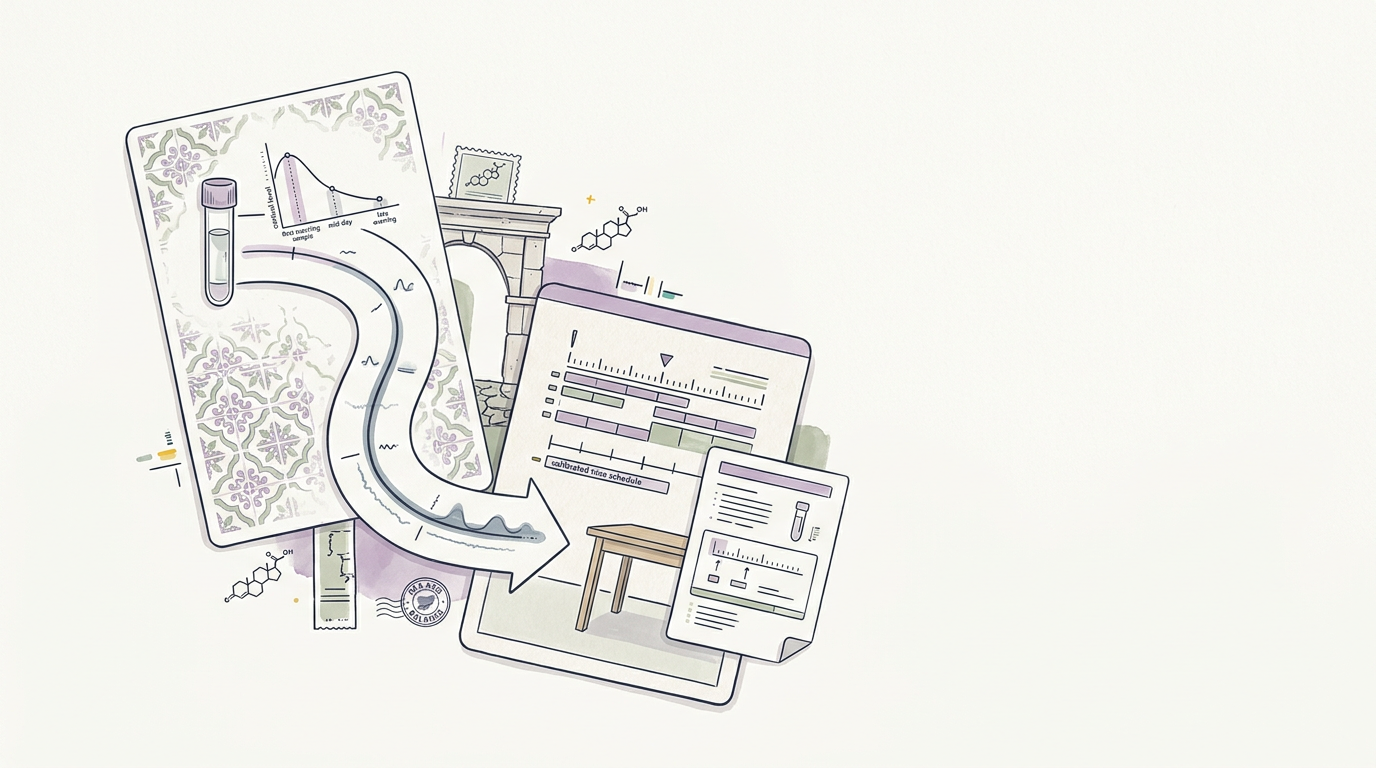
This accumulation of allostatic load flattens your diurnal cortisol curve. A regulated system spikes cortisol in the morning to wake you up and tapers it at night to allow for sleep. A burnt-out system produces a blunted morning response and elevated evening levels. The internal hormonal signal stays identical whether you look at a grey office block or the Tagus river.
Borrowed relief
The initial relief of arriving in a new place feels entirely real. Novel sights, sounds, and a slower culture provide non-threatening sensory input, which gently increases vagal tone. The body downshifts. I watched a client do exactly this last year, declaring herself cured by week three. But this relief relies entirely on external novelty. The brain is a prediction machine that habituates to new environments quickly.
Once the charm of the pastel de nata fades into a Tuesday routine, the external down-regulation vanishes. If the underlying physiological capacity remains depleted, the system reverts to its dysregulated baseline.
The inbox has never once been impressed by your heart rate.
You have to actively practice nervous-system regulation to teach the body to tolerate stillness without panicking. This involves using physical cues—temperature, breath, and specific movement—to signal safety directly to the brainstem. Kokorology want the system to repair faster than you burn out.
It takes time. You're going to need more than sunshine.
Common Questions
Will a slower pace of life cure burnout?
Reducing external demands stops further depletion, but it doesn't automatically restore a damaged stress response. The nervous system requires active, targeted regulation practices to learn how to rest again after prolonged periods of high alert.
What does the HPA axis actually do?
The Hypothalamic-Pituitary-Adrenal axis is the primary control loop running from your brain to your adrenal glands. It manages your stress response and dictates exactly when cortisol floods your system.
Why do I feel worse when I finally take time off?
When the constant pressure drops, your system no longer has the adrenaline it was using to mask your exhaustion. This drop in survival chemicals forces you to feel the actual deficit you've been carrying for months.
What to do this week
- Track your morning cortisol wake-up window. Note if you feel groggy at 7am but hyper-vigilant at 10pm.
- Introduce a five-minute physiological down-shift practice between tasks, using a lengthened exhalation to signal safety to the vagus nerve.
- Stop relying on a Friday night or a future holiday to handle your recovery.
Where this fits in the Kokorology system
Escaping to a new city without changing your physiology just relocates the problem. True recovery starts by understanding your current baseline inside the Reset program. For a deeper understanding of the mechanisms behind allostatic load, the Library holds the literature, and Performance maps out how to sustain leadership capacity without flattening your HPA axis.
Closing
Moving your body across a border changes the view, but the real work happens inside your own skin.
- Rebuild your leadership capacity with one-on-one Coaching.
- Map your daily baseline with the Journal.
- Access micro-practices for real-time regulation in Hacks.
TL;DR
Relocating to a sunny tech hub to cure burnout ignores the biological reality of the condition. Chronic stress dysregulates the HPA axis and flattens the natural cortisol curve, creating a state of physiological depletion that travels with you. While a new environment offers a temporary bump in vagal tone through novelty, the relief fades as the brain habituates. Sustainable recovery requires active, daily practices to restore autonomic flexibility and signal safety to a nervous system stuck in a continuous crisis loop.
Sources
- Adam, E. K., et al. (2017). Diurnal cortisol slopes and mental and physical health outcomes: A systematic review and meta-analysis. Psychoneuroendocrinology.
- Danhof-Pont, M. B., et al. (2011). Biomarkers in burnout: A systematic review. Journal of Psychosomatic Research.
- Grünewald, B., et al. (2024). Executive Function Recovery Trajectory After Clinical Burnout: 24-Month Follow-up. Journal of Occupational Health Psychology.
- Lehrer, P., et al. (2020). Heart rate variability biofeedback improves emotional and physical health and performance: A systematic review and meta-analysis. Applied Psychophysiology and Biofeedback.