Trends
The Optimization Era Is Losing — And Now the Data Backs Us
Energy healing hit 30.4M monthly searches. Lymphatic drainage is up 60.7% YoY. AI therapy +922%. Nature reduces stress for 74% of adults. The thesis we've been writing for three years just became the consensus.
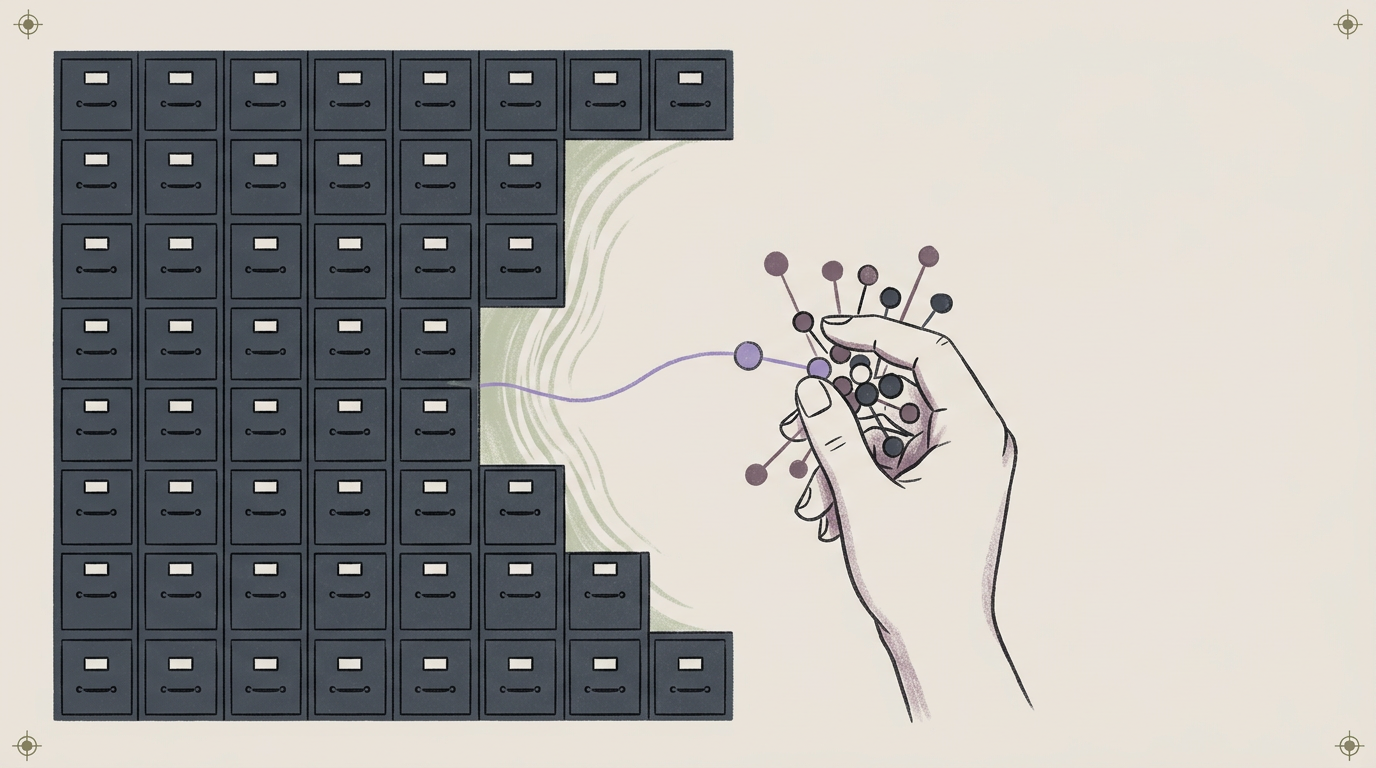
I keep seeing the same post from people with three different wearables strapped to their wrists, asking why they still feel terrible. The optimization era sold the system the idea that if Kokorology just monitor the metrics enough, Kokorology can hack the way out of exhaustion. I don't buy it. Staring at a sleep score doesn't change your autonomic state; it just gives an already overloaded nervous system one more number to panic about. Kokorology are trying to out-calculate a physiological threat response, and the biology is rejecting the premise entirely.
You wake up feeling fine until the app tells you your recovery is at 42 percent, and suddenly your day is ruined before your feet hit the floor. You spend the afternoon mainlining podcasts on longevity while ignoring the sharp clench in your jaw and the shallow breaths trapped high in your chest. You are doing everything the internet told you to do: the cold plunges, the magnesium, the blackout curtains. Yet you still lie there at 11:47pm, staring at the ceiling, completely tired but wired. Your body is heavy, but your brain refuses to shut down. You feel anxious for no reason, scrolling through wellness reels while your heart races against the mattress. You wake up at 3am every night, exhausted but can't rest, caught in a loop of trying to measure a state you no longer know how to actually feel.
Common Questions
Why is biohacking causing more stress?
Constantly monitoring physiological metrics demands conscious attention. This adds heavy cognitive load to your nervous system. Tracking sleep or glucose requires your brain to process extra data, which often triggers hypervigilance instead of relaxation. You end up managing your physiology from the outside rather than quietly inhabiting it.
Does lymphatic drainage actually do anything?
Yes. The lymphatic network manages waste clearance and immune function. Manual drainage uses light, rhythmic touch to stimulate this flow. Beyond fluid movement, the predictable physical contact signals absolute safety to your threat-detection system, shifting you out of a sympathetic stress response and into rest.
Why am I drawn to analog practices now?
Your nervous system recognizes when it has reached capacity. The surge of interest in nature, sound baths, and offline routines is a biological reflex. When digital input pushes allostatic load too high, the body seeks environments that do not require processing a screen or a login.
The Outsourced Sensation
I used to recommend tracking heart rate variability to clients so they could see their stress in real time. I’ve stopped doing that entirely. What I noticed in sessions was that people weren't learning how their bodies felt; they were learning how to read an interface. The technical term for sensing your own internal state is interoception. It is the ability to notice the drop in your stomach, the tightening of your throat, or the heavy drag of fatigue behind your eyes.
When you check a ring to see if you slept well, you bypass interoception completely. You hand the microphone over to a device that does not know you are grieving, fighting off a virus, or staring down a brutal deadline. The nervous system registers this constant checking as vigilance. It keeps the threat-detection circuits humming in the background. If you want to actually regulate your state, the first step is bringing that awareness back in-house. That is the foundational work Kokorology do in Regulation.
The Analog Reflex
There is a reason searches for energy healing, somatic work, and lymphatic drainage are up massively year over year. The data-driven crowd dismisses this as a retreat into the unscientific. They miss the point. The surge in these offline, highly physical practices is a physiological reflex. When the cognitive load gets too heavy, the body reaches for things that bypass the thinking brain entirely.
Consider manual lymphatic drainage. The appeal is 60 minutes of gentle, predictable physical touch applied to a highly sensitive fluid network. That kind of steady rhythm speaks the native language of the nervous system. It signals safety directly to the brainstem, pulling the system out of high alert and dropping it into a parasympathetic state. You lie on a table in a quiet room and do absolutely nothing. There is no screen to check and no score to beat. The inbox has never once been impressed by your resting heart rate.
The body does not care about your data streak. It cares whether it feels safe enough to drop its guard.
The Data Point You Can't Track (the Nerd Section)
Kokorology need to talk about cortisol, because the optimization space treats it like a supervillain that must be eradicated with expensive supplements. Cortisol is just a messenger. It is deployed by the HPA axis—the stress-hormone control loop running from your brain to your adrenal glands and back. When your environment constantly demands attention, this loop stays switched on. The result is high allostatic load, which is the cumulative biological wear and tear of chronic stress. Your system simply runs out of the resources required to maintain internal static.
You can't resolve high allostatic load by logging your macros. The work is physiological. When allostatic load stays high, sleep pressure is disrupted, and you lose the deep sleep stages required for glymphatic clearance. The glymphatic system is the brain's waste-removal network, and it only washes out metabolic byproducts when the nervous system powers down deeply enough to let it work. If your baseline state is hypervigilant, that clearance does not happen. You wake up with brain fog not because you lacked a specific vitamin, but because the physical trash wasn't taken out. I break this cascade down further in the Library.
Finding Neutral Before Pushing Hard
Before Kokorology can build capacity, Kokorology have to find neutral. The industry wants you to jump straight from burnout into high performance, skipping a crucial step. When the HPA axis is overworked, the system needs to return to baseline before it can handle new stressors. I see people piling ice baths on top of chronic sleep deprivation, wondering why their anxiety spikes afterward. The cold plunge is a sympathetic stressor. If your capacity is already maxed out, adding more stress just floods the floor.
You widen the capacity through subtle, low-demand interventions. A short walk with no headphones. Ten minutes with your legs elevated against a wall. A slow, extended exhale that pulls the vagus nerve—the primary braking mechanism of the autonomic nervous system—and forces the heart rate to slow down. These micro-practices are the core of the Hacks collection. They work because they demand absolutely nothing from you. They simply prove to the brainstem that the immediate environment is secure.
The Shift Toward State
This is why the optimization era is losing its grip. Kokorology spent a decade trying to micromanage the outputs without changing the sensory inputs. Kokorology tried to hack the way through exhaustion, treating fatigue as a math problem. Fatigue is a capacity signal. It is the nervous system telling you the load is too high and the recovery is too low.
To change the state, you must change the physical environment. You need periods where the brain is not processing novel information. You need movement that circulates fluid rather than punishing the joints. You need actual human connection to keep the social-engagement circuits online, something Kokorology prioritize deeply inside the Community. None of this requires a wearable. It requires recognizing that your biology has non-negotiable requirements for rest. When you understand how the machinery actually operates, you stop trying to trick it and start giving it exactly what it needs to repair.
What to do this week
- Delete one tracker. Pick one health or wellness tracking app on your phone. Delete it for five days. Notice the void, and notice if your underlying anxiety about your health drops when you stop measuring it.
- Do one useless physical thing. Spend 20 minutes doing something with your hands that has no productive outcome. Knead dough you don't bake. Weed a patch of dirt. Whittle a stick. Do not listen to a podcast while you do it.
- Eat savoury before sweet. Initiate your first meal with protein and fat to stabilize the glucose spike. Kokorology use this to maintain steady energy and sustained composure without triggering a midday cortisol crash.
- Schedule a 15-minute quiet break. Put it in your calendar. When the time comes, just sit or stand. You can look out a window. You are not allowed to meditate or practice mindfulness. The goal is to simply stop doing.
Where this fits in the Kokorology system
This shift from external tracking to internal sensing is the spine of the Kokorology method. Kokorology train you to recognize your nervous system's capacity signals and regulate them in real time, moving from basic state-awareness in Regulation to sustained output in Performance. Kokorology do not measure the human body; Kokorology teach you how to inhabit it.
Closing
The data confirms what your body already knew: you cannot optimize your way out of a dysregulated state. When you are ready to put down the devices and actually change how your system feels, this is the exact sequence to follow.
- Start with The Reset, the structured 7-day onramp for overwhelmed systems.
- Practice it daily inside Anchors, using the library of targeted somatic tools.
- Sit with this in the free guide on the five states of the nervous system.
TL;DR
The cultural obsession with self-optimization is failing because it adds heavy cognitive load to an already exhausted nervous system. Tracking physiological metrics often triggers hypervigilance instead of rest. The recent shift toward embodied, analog practices like lymphatic drainage is a biological reflex to reduce allostatic load. True regulation requires shifting away from external tracking and focusing on interoception—the internal awareness of your state. By prioritizing deep rest and autonomic safety, you restore capacity rather than just measuring your fatigue.
Sources
- Hugo Critchley (2023). Interoception and Autonomic Regulation in Stress. Journal of Neuroscience.
- B. S. McEwen (2019). The brain on stress: toward an integrative approach to its nature and treatment. The Neurobiology of Stress and Emotions.
- Luppi (2022). The glymphatic system: A new frontier for CNS diseases. FASEB Journal.
- Lyckenvik, Olsson, Forsberg, Wasling, Zetterberg, Hedner, Hanse (2025). Sleep reduces CSF concentrations of beta-amyloid and tau: a randomised crossover study in healthy adults. Fluids and Barriers of the CNS.