Workplace & Leadership
Why your best people snap over nothing
Your ops lead snapped at someone over a completely reasonable message today. Her nervous system simply had zero capacity left to process another demand.
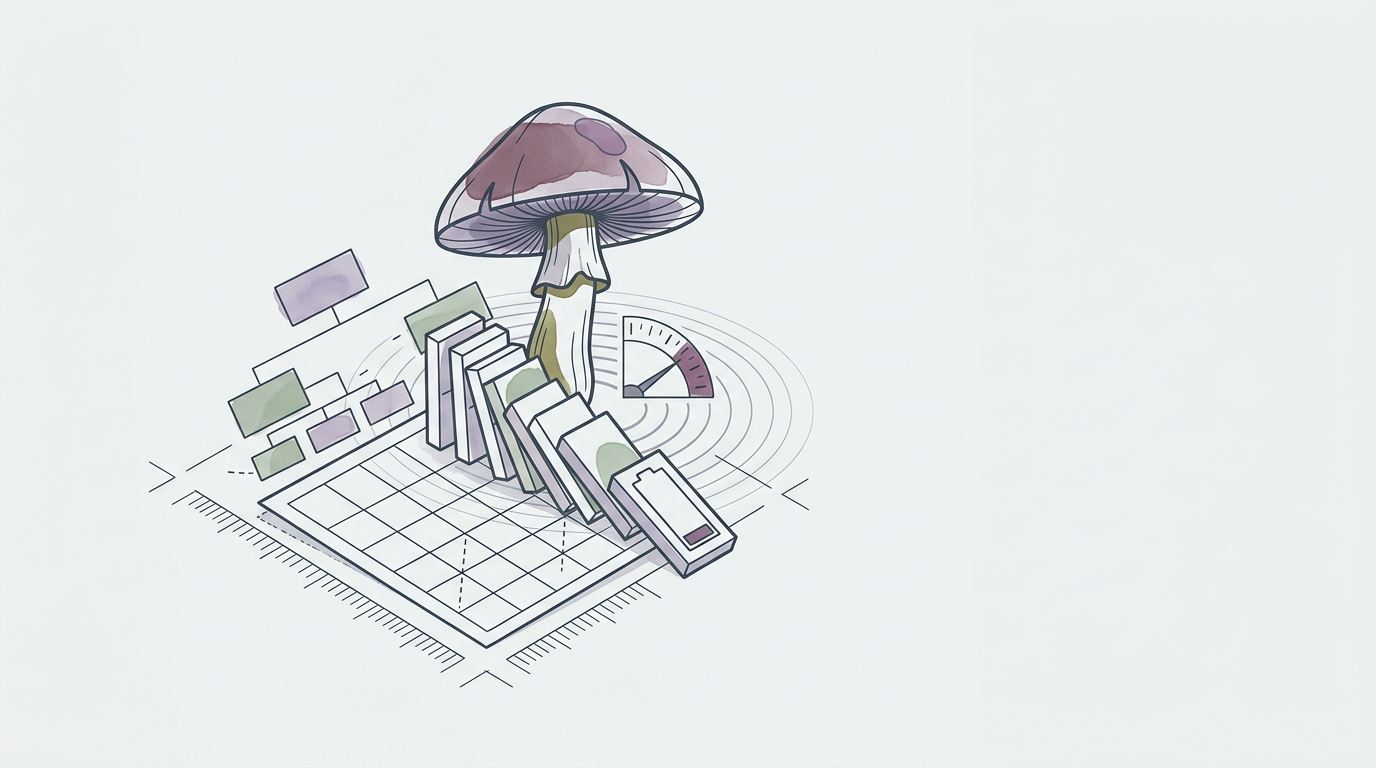
I sat in a meeting on Tuesday where a director suggested her team needed resilience training because they kept snapping at each other over Slack. She had a room full of people running on severely depleted autonomic capacity. When an employee blows up over a perfectly polite request at 3pm, the system simply lacks the biological resources to maintain prefrontal control. Kokorology keep sending exhausted teams to workshops on emotional intelligence when they actually need fewer demands on their threat-detection machinery.
You know exactly what this state feels like before it boils over. It is the stiff neck that won't release in a hot shower, the open fridge you stare into with absolutely no hunger, and the way you have to reread the same sentence four times because the words just slide off the page. You feel completely exhausted but can't rest, lying awake at 11:47pm doing a mental inventory of everything you failed to complete. You spend the whole weekend anxious for no reason, dreading the inbox, noticing that the second coffee just makes your chest tight instead of waking you up. You are tired but wired, running entirely on stress chemistry because the normal resting state is temporarily unavailable.
Common Questions
How do I measure team capacity without tracking tools?
Notice whether people actually eat lunch away from their desk. Watch for the complete absence of spontaneous laughter on calls. Pay attention when top performers start taking time off and heavily apologising for it. Those behaviors reveal exactly how much threat detection is running in the background.
Why do minor things trigger the biggest reactions?
The nervous system processes every single demand using the same underlying biological machinery. When the capacity to regulate is already drained by chronic daily friction, the final tiny request bypasses the prefrontal cortex entirely. The system reacts to an email as if it were a physical threat.
Does one dysregulated person affect the group?
Absolutely. Humans constantly mirror each other's physiological states through voice pitch, facial tension, and breath rate. A single highly agitated person entering a room shifts the autonomic state of everyone else present, forcing them to expend extra energy remaining calm.
The physiology of the snap
Every demand on your attention requires a biological shift. The HPA axis—the loop connecting your brain to your adrenal glands—spikes cortisol to mobilize glucose so you can handle a sudden deadline. Your heart rate variability drops. Your pupils actually dilate to take in more information. That is a brilliant evolutionary adaptation for acute survival. The problem happens when the demand never stops. You answer a 9pm ping. You sit through a meeting that runs twenty minutes over. You process six overlapping Slack threads while trying to eat a sandwich.
When you do this constantly without a parasympathetic cooldown, the wear and tear accumulates. The clinical term is allostatic load. It means the body is chronically expending energy to adapt to constant stressors, and the baseline resting state starts to drift upward. The prefrontal cortex goes completely offline because the older parts of the brain are convinced you are under attack. Your best manager loses her mind over a typo because she is entirely out of biological resources.
The exhaustion of performing calm
I used to believe that projecting confidence was just part of the job description. I would sit in tense boardrooms, carefully modulating my voice, keeping my face perfectly neutral while everyone else panicked. I thought I was being a good leader. What I didn't realise was how much biological energy it requires to manually override your own autonomic state.
Suppressing a natural stress response forces your nervous system to work twice as hard. You are simultaneously experiencing the threat and clamping down on the physical reaction to it. By 5pm, the fatigue is profound. You stare blindly at the supermarket shelf unable to decide what to cook for dinner. Kokorology treat emotional regulation like a personality trait you can just summon on demand, completely ignoring the massive caloric and neurochemical requirements of keeping a lid on things.
State travels across the room
There is a reason the whole team feels off when one director is having a bad day. Kokorology are biological creatures, constantly scanning the environment for safety cues. This happens below the level of conscious thought via neuroception. When someone walks in with a tight jaw, shallow breathing, and clipped speech, your own nervous system immediately registers that the environment is unsafe.
I see this pattern constantly inside the Kokorology performance course. A dysregulated leader inevitably creates a dysregulated team. You can't out-logic a threat response. If the person running the meeting is radiating low-grade panic, every other nervous system in the room will instinctively match that frequency. You are asking your staff to do their regular jobs while simultaneously processing a biological alarm bell.
The physical reality of chronic friction
I was reading some recent MRI research on burnout this week, and the imaging is staggering. When a human spends months operating in a state of high friction, the physical structure of the brain begins to alter. The amygdala becomes hyper-responsive. The connections to the prefrontal cortex thin out. The system essentially gets stuck in a hypervigilant loop, constantly scanning for the next emergency.
The inbox has never once been impressed by your heart rate.
Kokorology keep treating exhaustion as a temporary glitch in an otherwise healthy worker, usually solvable with a subscription to a meditation app. The reality is that chronic workplace friction fundamentally alters how the brain processes information. You have to change what the nervous system is actually dealing with: meetings that end on time, clear boundaries around communication, and leaders who are regulated enough that their calm is felt rather than loudly announced. If you want to study how chronic arousal shifts brain architecture, the library has the mechanics.
Rebuilding baseline capacity
I've stopped recommending resilience workshops to executives. It is entirely pointless to teach a drowning person how to swim better if you refuse to pull them out of the water. Kokorology have to start protecting the physiological capacity of the people doing the work.
This requires treating recovery as a non-negotiable biological necessity. It means noticing when your own breathing has gone shallow and actively intervening before you open your mouth in a one-on-one. When you start managing the autonomic state of your team instead of just their output, the snapping stops. The daily friction drops. The people you hired can actually use the brains you pay them for. If things have already boiled over, pulling them into a structured reset gives the nervous system a chance to finally pull the parking brake.
What to do this week
- Price your recurring meetings. Look at the calendar and calculate the actual biological cost. Prep time, the meeting itself, and the twenty minutes of recovery time afterward. Cancel one that doesn't justify the expenditure.
- Declare a hard stop. Tell your team, "I'm offline at 6pm," and then actually shut the laptop. They will copy what you do, completely ignoring what you say.
- Lengthen your exhale before speaking. Before you reply to the message that annoyed you, take one breath where the exhale is twice as long as the inhale. It forces the vagus nerve to signal safety to your heart rate.
Where this fits in the Kokorology system
How a company performs cannot be separated from the physical state of the people running it. This is a core principle of nervous system regulation in the workplace. If you need a targeted tool for a high-stress moment, grab a protocol from the anchors. The goal is a team that can take a bad week without the biological machinery falling apart.
Closing
The next move means fixing the environment instead of trying to optimize the person's tolerance for it.
- Ready to handle your own nervous system before it bleeds into the team? Work with me directly in 1:1 Coaching.
- Bring these mechanisms into your organization with the Performance L2 leadership curriculum.
- Start with my free guide on recognizing the signs of autonomic overload at work.
TL;DR
A team doesn't collapse from one single bad event. The snapping and the blow-ups happen because people are operating entirely out of autonomic capacity, and the minor inconvenience just demanded more resources than the system had left. Stop trying to train employees to be more resilient to a chaotic environment. Fix the chronic daily friction that keeps their threat-detection machinery running on high.
Sources
- Chmiel A (2025). Burnout and the brain: a mechanistic review of MRI studies. International Journal of Molecular Sciences.
- Epel, E. S., et al. (2024). Caregiver Load and Telomere Attrition: A 10-Year Longitudinal Study. Molecular Psychiatry.
- Critchley (2023). Interoception and Autonomic Regulation in Stress. Journal of Neuroscience.
- McEwen, B. S., & Stellar, E. (1993). Stress and the Individual: Mechanisms Leading to Disease. Archives of Internal Medicine.