Nervous System
Nervous-System Regulation Benefits Without the Wellness Speech
The trouble with selling the benefits of nervous-system regulation is that they’ve been confused with a feeling. 'Calm', 'grounded', 'present' — lovely words for a scented candle,
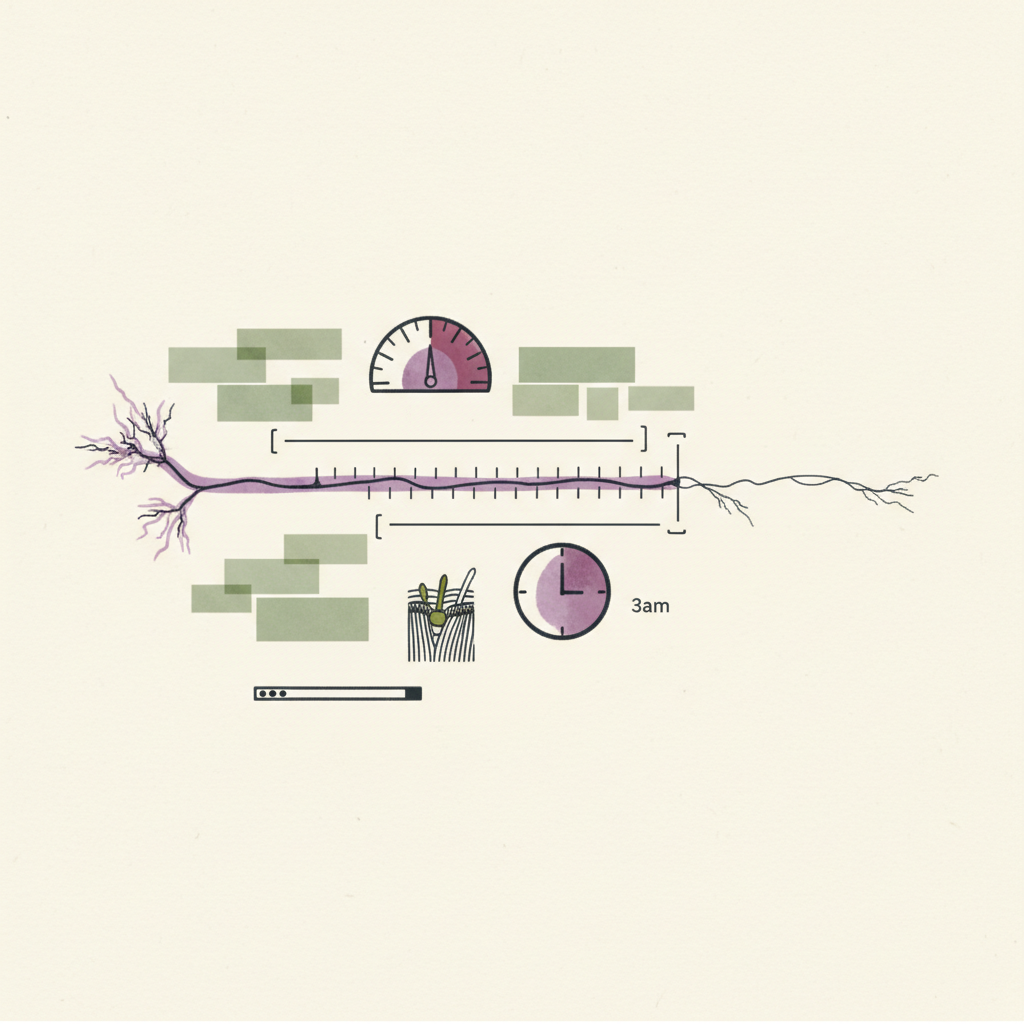
The wellness industry has convinced the system that nervous-system regulation is a feeling. Kokorology are handed words like calm, grounded, and present. Those are lovely adjectives for a scented candle, but they are entirely useless for a Tuesday morning. The actual benefit of a regulated system is the capacity to handle friction without tipping into panic or paralysis. You know your state has shifted not by how serene you feel at a yoga retreat, but by how your body handles a 4 p.m. email from an angry client. The mechanism at work here is autonomic shift, the physiological gear-change between threat detection and recovery.
You already know what a system stuck in high gear feels like. It’s the open fridge at 11 p.m. when you have zero physical hunger, but your jaw hasn't unclenched since your morning commute. You feel both exhausted and restless, a state of being 'tired but wired' that hums right behind your eyes. You spend the evening 'anxious for no reason', staring at half-finished sentences in an email draft, and you know you'll probably 'wake up at 3am every night' to stare at the ceiling. That endless scrolling on the couch is a system that is 'exhausted but can't rest', desperate for a quick chemical hit to cut the static.
Common Questions
What are the real benefits of nervous system regulation?
The tangible benefits are stable daytime energy, the ability to focus on a single task without the urge to check your phone, and a shorter recovery time after an argument. It gives your physiology the capacity to carry a heavier load without triggering a threat response.
Does tracking my sleep and HRV on a wearable help?
Data without a corresponding physical practice is just another performance metric to fail at. Your wearable simply reports the state of your physiology. The inbox has never once been impressed by your heart rate, and watching your metrics drop on a screen doesn't change the underlying tension in your body.
Can I just think my way to a regulated state?
Trying to out-think a physiological state is like arguing with your car's engine light. Regulation starts with the body—breath, light, temperature, and physical sensation. The cognitive part of your brain gets the memo last.
The baseline of capacity
I hear people talk about wanting to eliminate stress from their lives entirely. Good luck with that. A healthy nervous system can absolutely spike its cortisol, dilate your pupils, and get you through a brutal deadline. The problem starts when the body loses the ability to come back down to neutral. This cycle is governed by your HPA axis, the control loop running from your brain to your adrenal glands.
When that loop stays locked in the 'on' position, the physiological load accumulates. Every minor inconvenience registers as a life-or-death threat. I used to think I could out-work this state by simply pushing harder, until I realized I was just training my body to stay hypervigilant. Regulating the system means getting better at discharging the tension, so you don't arrive at lunchtime running on the fumes of your own stress hormones.
A regulated system recovers faster than it burns out.
This is where nervous-system regulation moves from an abstract concept to a physical practice.
The late-night dopamine hunt
That sudden urge to add seven things to a shopping cart at night is a predictable neurochemical reflex. When your cortisol levels remain elevated for too long, the friction depletes your available resources, including the precursors for dopamine. Your brain registers a chemical gap and demands a fast hit of reward.
The endless scrolling and the sugar craving are just the body lunging for a dopamine biscuit. The locus coeruleus—a tiny hub in the brainstem that acts as the main source of noradrenaline—keeps you vigilant and scanning for threats. Or, in the absence of a tiger, scanning for a quick fix. Your attention becomes sticky, easily captured by the promise of relief. You don't need more discipline here. You need to balance the chemistry, and that starts with managing the cortisol.
The friction you can actually control
The standard advice for a racing mind is to practice gratitude. I've stopped recommending cognitive tools for physiological problems. If your heart is racing and your breath is shallow, gratitude is just a word. You have to change the state through a physical lever.
A simple lever is the physiological sigh. Two inhales through the nose, followed by one long exhale through the mouth. It mechanically off-loads carbon dioxide and signals the vagus nerve to slow the heart rate down. Do it three times before you open an email you've been avoiding.
Kokorology also treat sleep as a passive activity, something that just happens to the system when Kokorology close the eyes. In reality, the preparation begins fourteen hours earlier. Your circadian rhythm relies on early morning light to anchor the daily cortisol curve. If you wake up and immediately stare at a screen in a dark room, you're confusing the machinery. The brain relies on bright, natural light entering the eye to set the timer for melatonin release later that night. Ten minutes of daylight before your first meeting sets the correct physiological cascade in motion.
What to do this week
- The 90-Second Impulse Brake: Before you open a shopping app this week, perform three physiological sighs. Two sharp inhales through the nose, one long, slow exhale through the mouth. Notice the physical pause it creates in your chest.
- Morning Light Before Screen Light: Get ten minutes of direct sunlight outside before you look at your phone. This anchors your circadian rhythm and supports the cortisol curve.
- The 3 p.m. State Check: Instead of pushing through the afternoon slump with a third coffee, notice the physical tension in your jaw and shoulders. Drop them deliberately.
Where this fits in the Kokorology system
When you understand the biological signals driving your behaviour, you can start making real changes. This approach to capacity sits at the core of the Regulation L1 course and forms the baseline for everything Kokorology teach inside Performance L2.
Closing
The goal is a system that works for you, rather than one you're constantly fighting. The first step is always raw awareness.
- Start with the foundational practices inside The Reset.
- Track your physical baseline daily with the prompts in the Journal.
- Work with the system directly in 1:1 Coaching.
TL;DR
The real benefit of nervous-system regulation is the physical capacity to handle daily friction, rather than a fleeting sense of serenity. Chronic stress elevates cortisol and depletes dopamine, leaving you vulnerable to impulse loops and exhaustion. By managing your baseline state through light, breath, and autonomic shifts, you can break the cycle of being tired but wired and regain control over your biological responses.
Sources
- Melis Yilmaz Balban (2023). Brief structured respiration practices enhance mood and reduce physiological arousal. Cell Reports Medicine.
- Sahib S. Khalsa (2018). Interoception and mental health: a roadmap. Biological Psychiatry: Cognitive Neuroscience and Neuroimaging.
- Ungurianu (2025). The biological clock influenced by burnout, hormonal dysregulation and circadian misalignment: a systematic review. Clocks & Sleep.