Nervous System
Nervous System Journal App Launch: Your Well-Being Companion
A nervous system journal acts as a physiological logbook. Tracking your physical sensations provides the exact data needed to regulate your state.
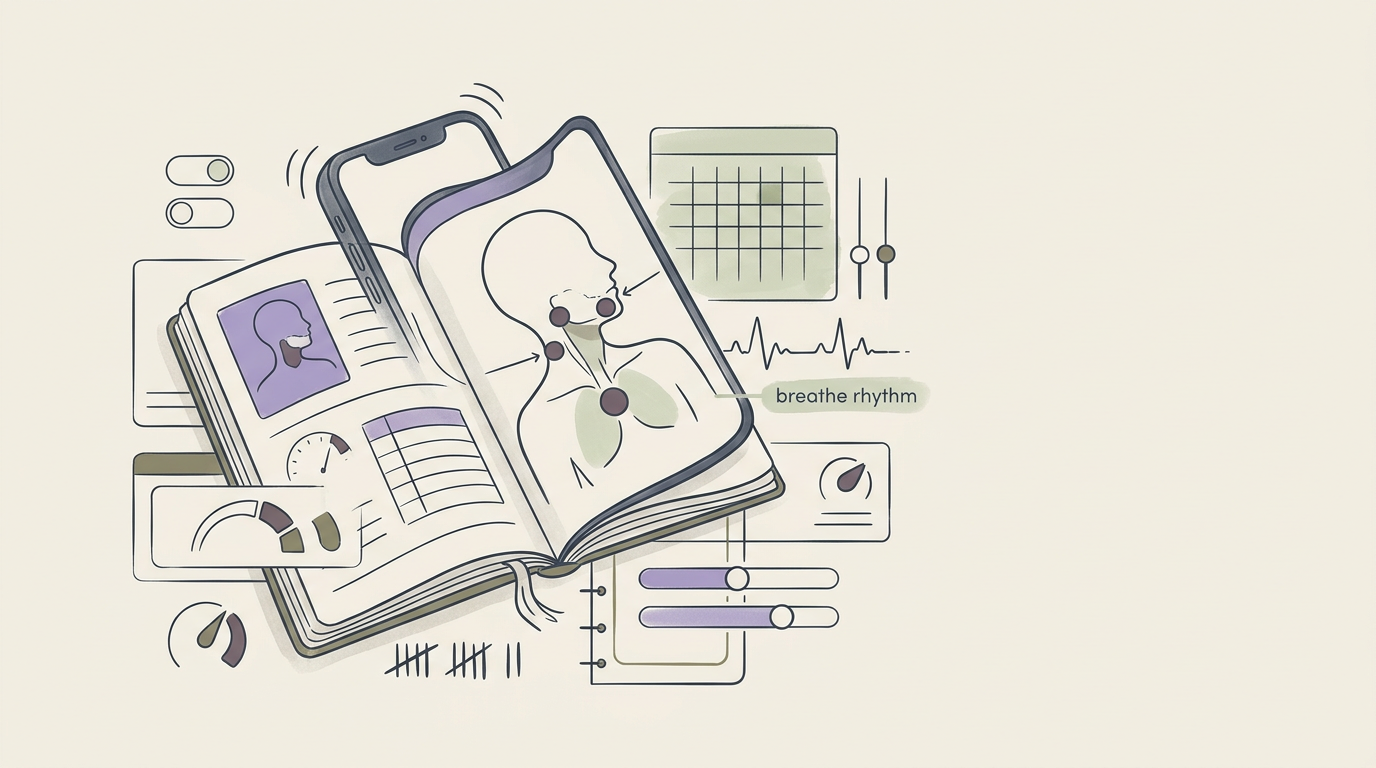
I used to believe journaling required long pages of emotional processing. I'd tell clients to write out their feelings until they felt a sense of relief. I stopped giving that advice three years ago when I realised how often it just amplifies the panic. A nervous system journal tracks your physical hardware directly. You write down the exact sensation in your body, the time of day, and what you were doing right before it happened. Tracking this physiological data is what actually quiets the alarm loop.
You know the hum. It's 2:15pm, you've got a dozen small tasks to clear, and instead you're staring into an open fridge with absolutely no hunger. There's a low-grade buzz behind your eyes and you feel anxious for no reason. Your jaw refuses to unclench. You try to force your way through the afternoon, only to hit sudden brain fog after eating. When midnight finally arrives, the physical exhaustion is total but your eyes are wide open in the dark. You're tired but wired, endlessly doom-scrolling while your shoulders sit pinned to your ears. Your body is braced for an impact that never arrives, responding to a quiet inbox as if it were a predator in the room.
Common Questions
What is a nervous system journal?
It's a daily tracking tool for your physical state. You note specific body sensations like a tight chest or racing heart alongside the time of day and the immediate context. This process gathers the exact baseline data you need for self-regulation.
How does this practice work?
Writing down a precise physical sensation shifts the brain out of the immediate experience of the threat. Labelling the state activates your prefrontal cortex, which subsequently signals your survival machinery to stand down and quiet the physical alarm.
Why track the body instead of feelings?
Your threat response speaks in physical sensations rather than narratives. Recording a clenched jaw or shallow breath isolates the mechanical signal your system is generating. This concrete tracking prevents you from getting lost in a spiralling emotional story.
The trap of emotional processing
The wellness industry sells journaling as an emotional spa day. The standard advice instructs you to sit with your feelings and let them flow onto the page. For a dysregulated system, sitting with intense agitation just feels like sitting in a burning room. Your body doesn't speak in mood-board affirmations. It speaks in a racing heart, cold hands, and a heavy pit in the stomach. Wallowing in the narrative keeps the alarm ringing. This is a trap. Kokorology have to name the physical sensation directly to halt the cycle.
The prefrontal brake
Let's look at the actual machinery. Your brain relies on the amygdala to detect threats, and it's a highly reactive piece of hardware. It treats a terse email from your boss with the exact same urgency as a physical attack. When it fires, it triggers the HPA axis—the loop running from your brain to your adrenal glands—flooding you with cortisol and adrenaline over a misplaced document. Your prefrontal cortex handles logic and executive function, acting as the adult in the room.
When you use the Journal to label a physical sensation, you force the prefrontal cortex to activate. Naming the state—writing "shallow breath" or "buzzing chest"—sends a measurable signal down to the amygdala to stand down. You're using plain language to pull the parking brake on your nervous system.
Affect labeling and interoception
This cognitive mechanism is known as affect labeling. Moving from a chaotic internal hum to a single observed word changes your relationship to the physical state. Stepping out of the weather lets you simply read the weather report. I constantly see people trying to write a masterpiece when a three-word bullet point works better.
Naming your physical sensation is a physiological kill-switch for the panic response.
Over a few weeks, tracking these boring data points builds interoception—the ability to accurately sense your internal landscape. You map the exact time of day and context that spikes your heart rate, turning a mysterious dread into a predictable afternoon slump.
Data drives the intervention
Once you gather the data, you can intervene accurately. You stop fighting a vague monster called stress. If your log shows your breathing goes shallow every Monday morning after a specific meeting, you can deploy a 60-second breathing Hack right at that moment. You learn to read the controls. Every protocol I teach relies on this visibility. I tested this on myself first, mapping my own invisible triggers until the daily crashes stopped. A reliable log provides the consistent feedback you need to adjust your routine before your capacity bottoms out.
What to do this week
- Write one word. Open a note on your phone. Record your dominant physical sensation right now, like "tight," "heavy," or "buzzy."
- Log the time. Add a timestamp next to your sensation. Do this morning, midday, and evening.
- Note the trigger. Add three words about what was happening right before you noticed the feeling, such as "after a call" or "making coffee."
- Skip the analysis. Your only job this week is collecting the data. Don't try to fix the state. Just observe it.
Where this fits in the Kokorology system
Tracking your baseline state informs exactly which Anchors you need to deploy and when. It takes the broad concept of nervous system regulation and translates it into a precise, targeted daily practice.
Tonight's practice
What is one physical sensation present in your body right now, and what were you doing five minutes ago?
- Sit on the edge of your bed with both feet flat on the floor.
- Inhale quietly through your nose for a count of four.
- Exhale through your mouth for a count of six, letting your shoulders drop.
- Repeat this breathing rhythm for exactly two minutes.
- Write down your one-word physical sensation before you turn off the light.
Closing
The goal is to build a dashboard for your own physiological hardware. Gathering this feedback is the most direct path to understanding how your body actually operates under pressure. Take the data, apply the appropriate intervention, and watch the static clear.
- Practice it daily inside the Journal.
- Start your reset in the seven-day Reset.
- Master the physiological tools inside Regulation L1.
TL;DR
The standard advice to journal your feelings often keeps your threat response active. A nervous system journal tracks physical sensations instead of emotional narratives. Labelling an exact bodily state—like a tight jaw or racing heart—forces the prefrontal cortex online, which sends a direct signal to quiet the amygdala’s alarm. Tracking these small data points builds interoceptive awareness and gives you the precise information needed to regulate your physiology before you burn out.
Sources
- Pennebaker, J.W. (2023). Journaling and the nervous system: from expressive writing to affect labeling. Curated meta-analyses and primary studies (1986–2023).
- Lieberman, M.D., et al. (2007). Putting Feelings Into Words: Affect Labeling Disrupts Amygdala Activity in Response to Affective Stimuli. Psychological Science, 18(5), 421-428.
- Moffitt, T.E., et al. (2011). A gradient of childhood self-control predicts health, wealth, and public safety. PNAS, 108(7), 2693-2698.
- Khalsa, S. S., & Lapidus, R. C. (2016). The pros and cons of interoception (awareness of the internal state of the body). Frontiers in Psychology, 7, 1024.