Research
Mindbodygreen Ranks Nootropics for Focus and Memory
The search for the perfect nootropic is mostly a search for a more elegant way to run on empty.
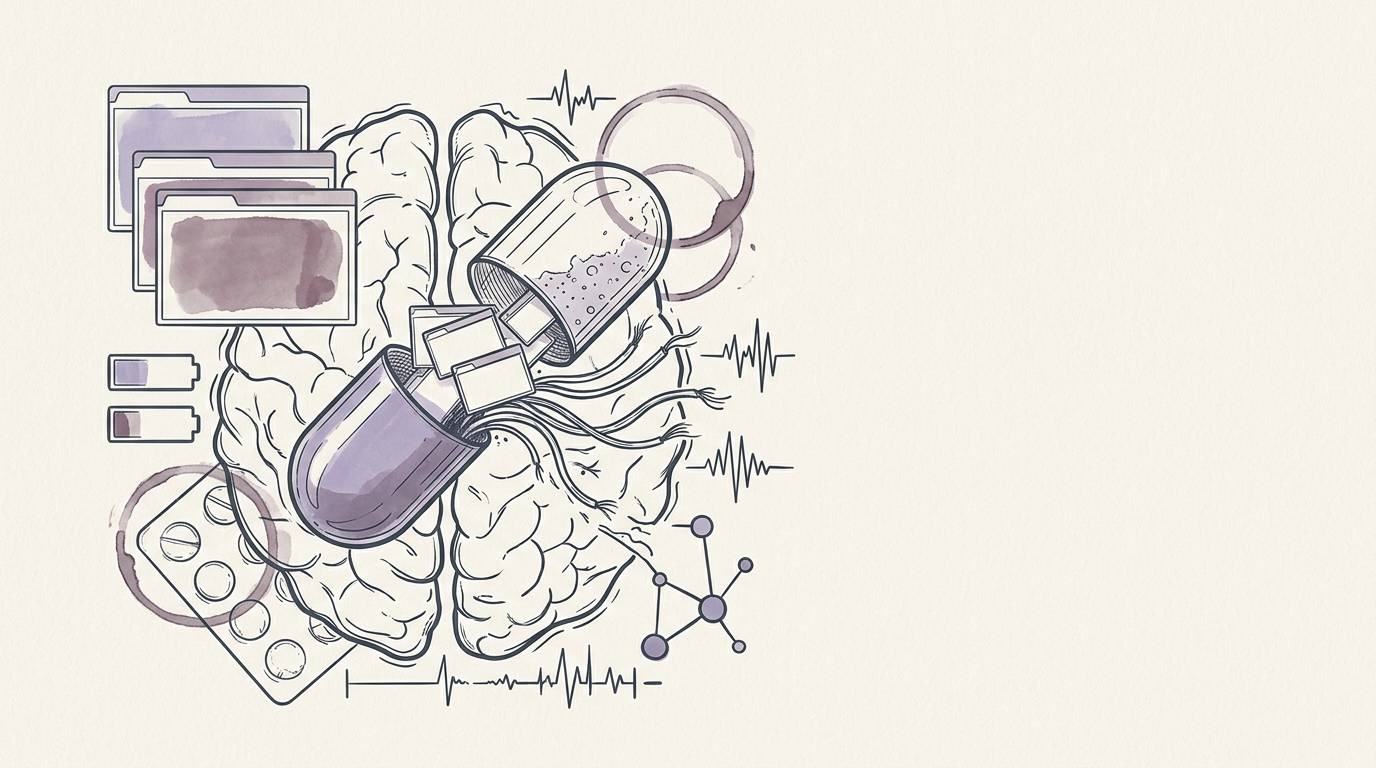
The supplement aisle promises that nootropics for focus and memory will open latent cognitive horsepower. The pitch treats your nervous system like a slow smartphone that just needs a patch. I'm calling it. You cannot hack your way out of a physiological deficit with a green tea extract. Those capsules merely sever the communication line between your deep exhaustion and your conscious awareness.
You already know the felt state of running on fumes. It’s 11 am, you’ve just inhaled your second coffee, and your jaw is clamped so tight your teeth ache. You sit at your desk staring at an email you’ve re-read three times, the words simply sliding off the screen. There’s a persistent, low-grade hum of feeling anxious for no reason, combined with a heavy brain fog that makes a basic reply feel like moving through wet sand. By 3 pm, you just want to lay your head on the keyboard. When you finally get to bed, you're tired but wired, scrolling until 12:47 am because your mind refuses to power down. The fridge keeps getting opened even though you have zero hunger. The whole system is vibrating, yet completely flat.
Common Questions
What are nootropics?
Nootropics are substances intended to alter cognitive function, specifically targeting memory, attention, or motivation. The category covers everything from prescription stimulants to dietary supplements like caffeine and various herbal extracts. They're an unregulated class of compounds with highly variable biological effects.
Do nootropics for focus and memory actually work?
Some compounds produce measurable effects on specific neurotransmitter systems. Caffeine is the most obvious example. Their capacity to create meaningful, long-term cognitive improvements in a healthy but exhausted person is wildly overstated. They simply mask the underlying fatigue.
Are nootropics safe?
The safety profile varies enormously depending on the compound. A cup of tea containing L-theanine carries minimal risk, while a cocktail of unregulated synthetic compounds bought online introduces significant unknowns. The primary danger is the long-term biological consequence of chronically ignoring your body's fatigue signals.
The forced sprint
Most focus supplements are just stimulants wearing better branding. They work by poking the HPA axis—the stress-hormone loop running from your brain to your adrenal glands—to flood your bloodstream with cortisol and adrenaline. That spike feels like sharp attention for about forty minutes. What you actually created was a state of managed panic. The body forces a short-term cognitive sprint by pulling energy away from digestion and immune repair. The consequence arrives later as a lowered stress threshold, a tight chest, and severe irritability.
The demand for a brake
I used to believe I could out-optimise a bad night of sleep with the right stack of powders. I spent a year testing various amino acids before I finally looked at what my body was actually doing. Take L-theanine, a compound found in green tea and highly prized in the focus-hacking space. The nervous system constantly balances glutamate, the accelerator, and GABA, the brake. A modern, screen-heavy Tuesday delivers a firehose of glutamate. L-theanine gently increases GABA activity. It presses the brake pedal. It feels good because taking your foot off the accelerator on a busy motorway always feels good. You are probably just desperate for more down-regulation, which you can get from five minutes of quiet or a specific tool from the Hacks library, rather than a $40 jar of capsules.
The alarm hub
Deep in your brainstem sits a tiny cluster of neurons called the locus coeruleus. This is the brain's primary alarm and alertness centre, controlling the release of norepinephrine. It evolved to fire when you perceive a threat, let you deal with it, and then stand down. When you swallow a handful of synthetic alertness compounds, you force the locus coeruleus into a state of chronic activation. The inbox hasn't once been impressed by your elevated heart rate. That constant artificial stimulation exhausts your norepinephrine supply and flat-lines your motivation entirely.
Memory as a cleaning cycle
The pitch for memory-boosting supplements ignores the biology of how memory actually forms. Consolidation happens while you sleep. During deep, non-REM sleep, your brain’s glymphatic system kicks into high gear. This pathway physically clears out metabolic waste products that accumulated during your waking hours. Simultaneously, the neural pathways for things you learned that day are strengthened, a process heavily reliant on acetylcholine during REM sleep.
If your sleep architecture is fragmented because your nervous system is too jacked up on midday stimulants, that entire cleaning cycle fails. A better memory requires defending your sleep, a core skill Kokorology teach inside nervous system regulation.
The most reliable focus tool Kokorology have is a nervous system that knows how to power down.
What to do this week
- Impose a caffeine curfew. No caffeine after 2pm. The half-life of caffeine is roughly five to six hours. A 3pm espresso is still interfering with your sleep architecture at 9pm. Switch to water or a caffeine-free tea.
- Schedule a neutral anchor. Find exactly five minutes in your day where the only goal is to stare out of a window. No phone, no music. Let the locus coeruleus stand down. One of the simplest ways to start is with the Box Breathing Anchor.
- Implement a glymphatic wind-down. For the last sixty minutes before bed, dim the lights and kill the screens. The blue light from your phone suppresses melatonin, the hormone that signals night-time to your brain. Read a paper book. Let the system cool off.
Where this fits in the Kokorology system
The conversation about nootropics is fundamentally a conversation about capacity. When you feel you need a supplement to keep up, it is a clear signal that your system's load exceeds its ability to recover. Rebuilding that capacity begins with the baseline protocols inside the 7-day Reset programme or the deeper work of the Regulation (L1) course.
Closing
Your cognitive capacity is an output of your entire physiological state. The path to sustained focus and clear memory requires the boring, non-negotiable work of getting enough rest and turning down the alarm.
- Start with the 7-day nervous system Reset to build a baseline of recovery.
- Work with one of the certified coaches to address the patterns keeping you stuck in burnout through Kokorology Coaching.
- Practice the fundamentals in the free guide to regulation.
TL;DR
The wellness market sells nootropics for focus and memory as a brain upgrade, but these supplements often act as simple stimulants. They force an already exhausted nervous system to work harder, pulling energy from basic functions like digestion and immune response. True cognitive capacity comes from addressing baseline physiological deficits: protecting your sleep architecture to enable glymphatic waste clearance, balancing your brain's excitatory and inhibitory signals, and giving your alertness centres a chance to power down.
Sources
- Balban MY (2023). Brief structured respiration practices enhance mood and reduce physiological arousal. Cell Reports Medicine.
- Examine.com (2026). Caffeine + theanine (or breathwork) beat caffeine alone for esports reaction time. Examine.com Study Summaries.
- Walker M (2017). Why Kokorology Sleep: opening the Power of Sleep and Dreams. Scribner.
- Arnsten AFT (2009). Stress signalling pathways that impair prefrontal cortex structure and function. Nature Reviews Neuroscience.