Workplace & Leadership
Men Stress Sinks Into the Body
Chronic stress alters the physical machinery of the male body, shifting the autonomic nervous system into a sustained threat response that demands repair.
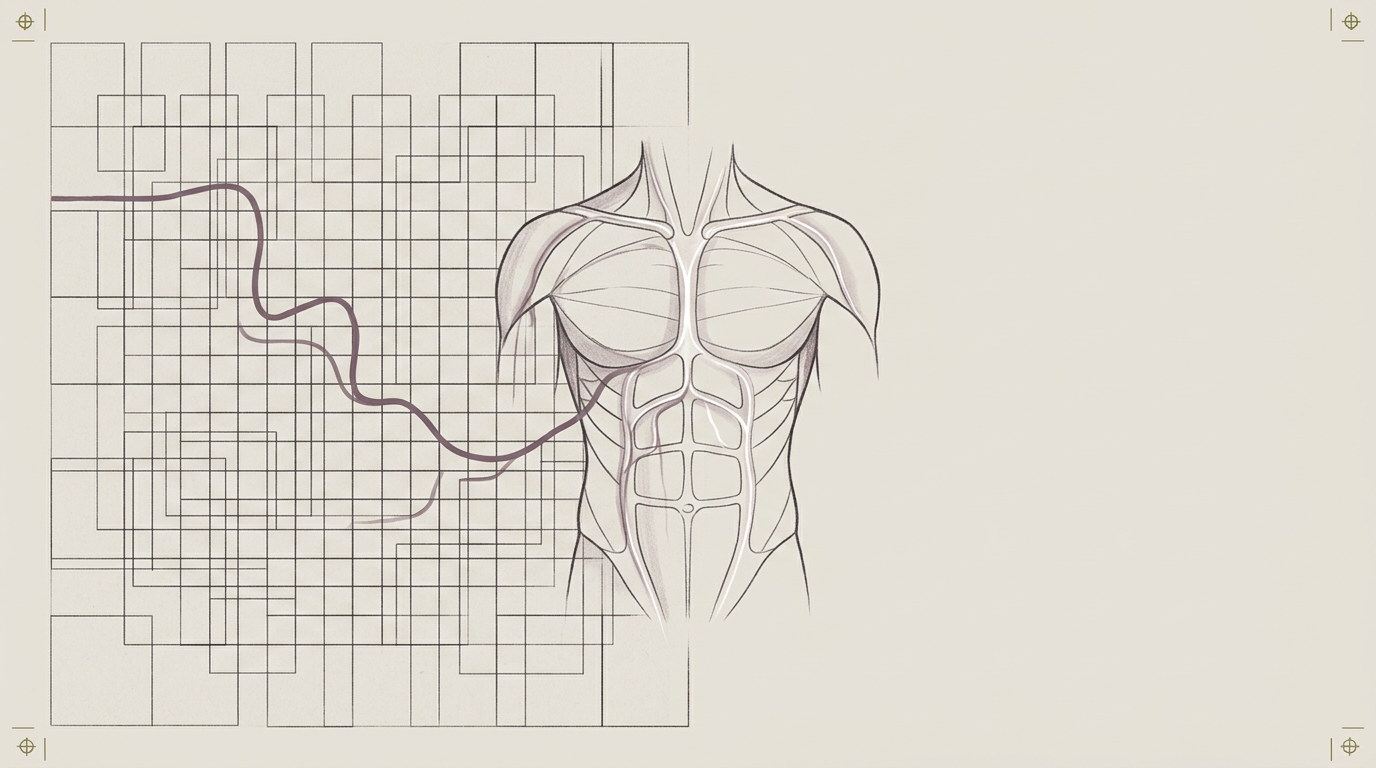
When the hypothalamic-pituitary-adrenal axis runs a continuous threat response, the male body physically adapts to sustain high alert. Optimisation culture demands that men compartmentalise this pressure and keep producing as if nothing is happening. Biology flatly refuses to cooperate. The physical weight of continuous output metabolizes directly into high blood pressure, gut inflammation, and a resting heart rate that creeps upward every year.
You know what this state feels like before a doctor gives it a name. It's the 3pm jaw clench you only notice when a tooth starts to ache, and the way your shoulders won't drop in the shower. You're physically exhausted but can't rest. You stare at an open fridge with zero hunger, relying on a second coffee that doesn't actually wake you up. Men often describe feeling tired but wired, pushing through the day only to wake up at 3am every night with a chest full of static. This is the texture of an autonomic nervous system that has lost the ability to stand down.
Common Questions
Why does stress cause physical pain?
The nervous system governs muscle tension and inflammation to prepare for physical danger. When the threat is chronic—like an endless project cycle—that tension becomes permanent. The resulting systemic inflammation manifests as back pain, joint stiffness, and chronic headaches.
How does chronic stress affect digestion?
During a threat state, the autonomic nervous system pulls blood away from the digestive tract to prioritize muscle function and alertness. Doing this daily halts normal digestion, leading to unexplained bloating, nutrient malabsorption, and severe brain fog after eating.
What happens to the heart under continuous pressure?
The brain signals the adrenal glands to release adrenaline and cortisol, keeping cardiovascular output high. Over time, this constant chemical flood raises resting heart rate and blood pressure, straining the cardiovascular system long after the workday ends.
The physiology of high alert
For a long time, I used to believe that physical breakdown was just the unfortunate byproduct of aging in a demanding job. I completely misunderstood the mechanism. The deterioration is an active, necessary function of the body trying to keep you safe from perceived danger.
When the HPA axis detects a hostile environment, it restricts long-term maintenance to fund immediate survival. It floods the system with cortisol. This is brilliant for escaping a predator. It's catastrophic for sitting in a Monday morning strategy meeting. If you spend forty hours a week signaling danger, your body shuts down repair processes to conserve resources. I've learned that you can't out-think a physiological reflex.
The inbox has never once been impressed by your heart rate.
The over-caffeinated alarm system
There's a tiny, hyperactive cluster of neurons in the brainstem called the locus coeruleus. It acts as the principal site for synthesizing norepinephrine, the neurotransmitter that drives arousal and focus. Under normal conditions, it keeps you sharp. Under chronic stress, the locus coeruleus becomes highly sensitized, pumping out danger signals long after you've closed your laptop.
This alters sleep staging. You miss the deep, slow-wave sleep required for glymphatic clearance, the process where the brain essentially flushes out metabolic waste. Without it, you wake up foggy. That lack of clearance impairs the prefrontal cortex, stripping away your ability to regulate emotions the next day. You'll find yourself snapping at a minor email because your prefrontal control loop is literally compromised. I see this cycle constantly in high performers who think they just need more discipline.
The gut handles the fallout
Corporate environments treat the body as a nuisance that occasionally requires feeding. The gut, however, reports directly to headquarters and refuses to be ignored.
The brain and the gut communicate constantly via the vagus nerve, a primary channel of the autonomic nervous system. When the brain detects a threat, it suppresses gastric juices and alters gut motility. I'm calling it right now: half the men walking around with mystery digestive issues are just carrying unprocessed work stress in their intestinal tract. Your microbiome changes under high allostatic load. The barrier function weakens. You can drink green juice until you're radioactive, but if your sympathetic nervous system is locked in a threat response, you won't digest it properly. The tension has to go somewhere.
What to do this week
- Sustain the nasal exhale. After a difficult meeting, initiate parasympathetic recalibration. Inhale for a count of four, and exhale through your nose for an extended count of eight. Repeat this for two minutes. It sends a direct signal of safety to the brainstem.
- Log the 3pm static. Track your afternoon energy drop alongside what happened at 11am. Keep a simple record of physical symptoms in the Journal. The patterns between an angry client and a tight jaw become highly visible when you write them down.
- Walk without inputs. Spend fifteen minutes outside without a phone or podcast. Let your eyes drift toward the horizon. Wide-angle vision down-regulates the locus coeruleus by de-prioritizing focused threat-monitoring.
Where this fits in the Kokorology system
Understanding how physical capacity depletes under pressure is the first step in nervous system regulation. You have to rebuild the baseline before you push for higher output, a core principle Kokorology tackle inside the performance modules.
Closing
The expectation that men should silently absorb stress without physical consequence relies on ignoring basic human biology. The work is to build a system robust enough to process the pressure you actually face, rather than pretending it doesn't affect you. Notice the tight jaw, track the sleep disruption, and start pulling the levers that force the system to rest.
- Work with these mechanisms directly in the Performance L2 course.
- Sit with this in your daily tracking using the Journal.
- Start with the absolute basics of regulation in the 7-Day Reset.
TL;DR
The corporate expectation that men can endlessly compartmentalise stress defies human physiology. Chronic threat shifts the hypothalamic-pituitary-adrenal axis into an active state that shuts down long-term repair to fund immediate survival. This sustained activation alters the gut microbiome, compromises prefrontal cortex function, and sensitizes the brainstem's alarm system, disrupting the deep sleep required for metabolic clearance. Relieving this physical toll requires direct nervous system regulation to signal safety, down-regulate the locus coeruleus, and restore autonomic balance.
Sources
- Amy F. T. Arnsten (2009). Stress signalling pathways that impair prefrontal cortex structure and function. Nature Reviews Neuroscience.
- G. E. Miller, et al. (2007). If it goes up, must it come down? Chronic stress and the hypothalamic-pituitary-adrenocortical axis in humans. Psychological Bulletin.
- J. E. Kim, et al. (2024). Chronic Psychological Stress Increases Transepidermal Water Loss and Impairs Skin Barrier Recovery. Journal of Investigative Dermatology.
- Hugo Critchley (2023). Interoception and Autonomic Regulation in Stress. Journal of Neuroscience.