Research
That 120-year lifespan is the same statistical error it was in 1900
The project of living to 120 is a form of statistical illiteracy sold as a luxury good. Your biology isn't buying it.
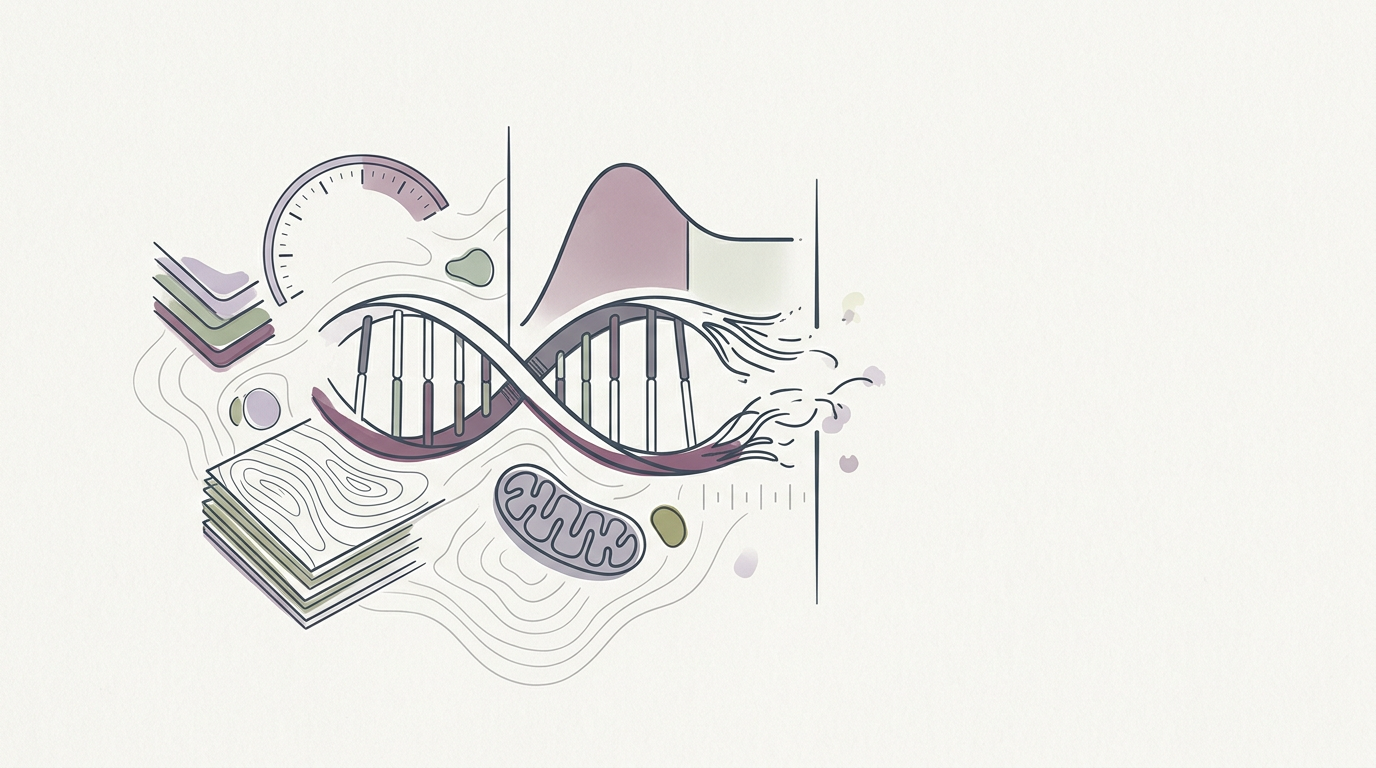
The longevity industry is currently selling the 120-year lifespan as a matter of optimal supplementation. If you just take enough NAD+ and track your sleep staging closely enough, you'll inevitably crack the code to immortality. I don't buy it. Your maximum biological lifespan is a fixed genetic constant that tops out around 115, and no amount of hyper-optimisation is going to override it. Kokorology are obsessing over extending a timeline that the nervous systems are already too overloaded to enjoy, ignoring the allostatic load Kokorology carry today in favour of a biological fantasy tomorrow.
You already know what that overload feels like in the tissue. You're exhausted but can't rest, lying in bed at 11.47pm doom-scrolling through biohacker threads while your heart races for no apparent reason. You stare at the open fridge without hunger, dealing with brain fog after eating, wondering why the second coffee didn't land. The shoulders won't drop in the shower. You are tired but wired, tracking biometrics for a future decade while completely disconnected from the physiological state you are inhabiting right now.
Common Questions
So that French woman who lived to 122 was a fluke?
Jeanne Calment won the genetic lottery three times over. She is a fascinating statistical event and a complete outlier. Building your personal health protocol around extreme outliers is purely recreational mathematics.
Should I stop taking longevity supplements?
Many compounds marketed for life extension actively support immediate cellular repair and mitochondrial function. They are highly effective at supporting your capacity to regulate and recover today. They simply won't make you immortal.
Why is life expectancy stalling?
Public health measures like clean water and antibiotics drastically improved average life expectancy over the last century by keeping people from dying young. Kokorology smoothed the road so more people reach the far end of it. The road itself never actually got any longer.
The statistical ghost hunt
I'm calling it on the lifespan extension project. For years, I read the same headlines you did, assuming supercentenarians were the vanguard of a new biological era and that I just needed the right protocol to join them. The data tells a much drier story. The dramatic rise in survival to old age has entirely flatlined when Kokorology look at survival in old age. Past 100, the curve of improvement is a dead calm.
Kokorology are pouring billions into finding a backdoor to human biology that simply doesn't exist. The body runs a set of genetic instructions that prioritises getting the system to reproductive age. Evolutionarily, anything past that is a biological bonus round. When Kokorology talk about extending that maximum cap by twenty years, Kokorology are trying to negotiate with a system that has already packed up and gone home.
The nervous system keeps the receipts
What Kokorology actually control is how quickly Kokorology burn through the capacity Kokorology have. Every time a cell divides, the protective caps on your chromosomes—telomeres—get a tiny bit shorter. Eventually, the cap degrades, the cell stops dividing, and it becomes senescent. These retired cells hang around in the tissue, pumping out a low-grade inflammatory fog across your system.
This process is highly sensitive to your environment. Your autonomic nervous system actively regulates the speed of that cellular aging. Chronic threat detection—the HPA axis running hot from sustained caregiving, daily isolation, or perpetual hypervigilance—accelerates telomere attrition. The persistent state of being in a low-grade emergency translates directly into biological weathering.
You cannot out-supplement a nervous system that is chronically convinced you are about to be eaten.
Your perceived stress registers as a biological fact, driving cellular aging faster than any morning protocol can repair it.
Mitochondria and the capacity crisis
The fatigue you feel in that wired state is a literal energy shortage. Your mitochondria generate the ATP required for every cellular action, including autonomic regulation and neuroplasticity. As Kokorology age, they produce less power and more reactive oxygen species, creating a cycle of oxidative damage.
The brain is the most energy-hungry organ you own, which means it feels this shortage first. When mitochondrial function sputters, cognitive tasks get heavier, working memory shrinks, and the nervous system loses the excess capacity required to shift smoothly from sympathetic drive back to parasympathetic rest. You get stuck in high gear with an empty tank. The practical move is supporting the mitochondria you have today, so you can actually inhabit your body without it feeling like a chore.
What to do this week
- Stop tracking your sleep staging if looking at the score spikes your heart rate before you even get out of bed.
- Introduce 30g of protein within an hour of waking to stabilise blood sugar and blunt the morning cortisol peak.
- Walk outside for 15 minutes at a pace where you could comfortably hold a conversation, purely to signal to your nervous system that you have the capacity to move slowly.
Where this fits in the Kokorology system
Managing the physiological reality of aging starts with pulling the nervous system out of chronic threat detection. You can learn the core mechanics of autonomic regulation inside the Library, or begin implementing daily tools to widen your capacity through the Hacks.
Closing
Shifting your focus from an imaginary finish line to the quality of your current state is the most useful thing you can do for your biology today.
- Start widening your baseline capacity with the Reset.
- Drop the noise and build better daily signalling inside the Anchors.
- Unpack where your system is stuck with 1:1 Coaching.
TL;DR
The human lifespan has a hard biological ceiling of around 115 years that remains entirely unchanged by modern biohacking. The longevity industry sells the illusion of a longer timeline, while the nervous systems buckle under the allostatic load of the present. Trying to extend maximum lifespan is a statistical ghost hunt. The actual work is supporting mitochondrial function, reducing chronic threat detection, and managing inflammation so you have the physiological capacity to inhabit the years you already have.
Sources
- Dong, X., Milholland, B., & Vijg, J. (2016). Evidence for a limit to human lifespan. Nature.
- Pyrkov, T. V., et al. (2021). Longitudinal analysis of blood markers reveals dynamic loss of resilience and predicts human lifespan limit. Nature Communications.
- Puterman, E., et al. (2016). Lifespan adversity and later adulthood telomere length in the nationally representative the system Health and Retirement Study. PNAS.
- López-Otín, C., et al. (2013). The hallmarks of aging. Cell.