Nervous System
Is Deep Health Coaching the Missing Piece in Your Wellness Journey?
Deep health coaching integrates physiology and your environment to restore the regulatory capacity of your nervous system.
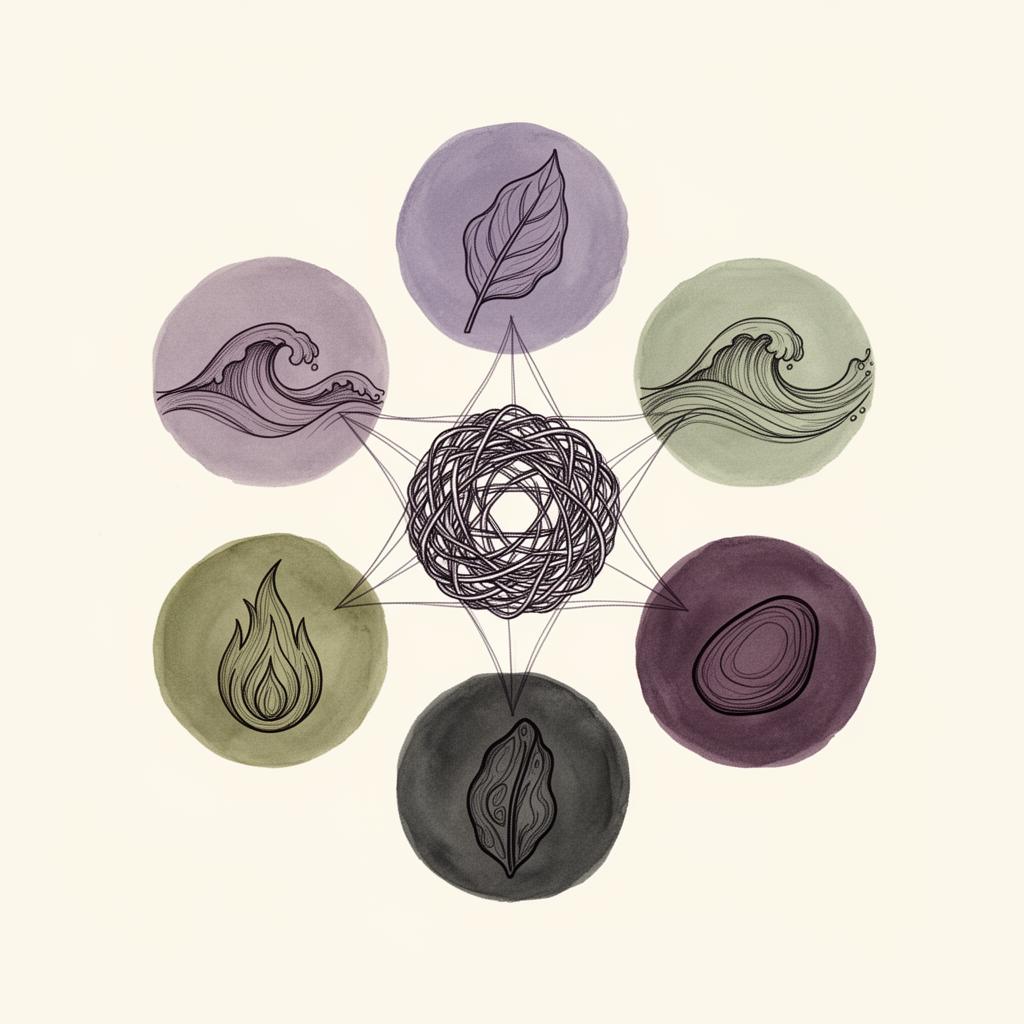
The wellness industry has convinced the system that health requires managing a twenty-item checklist. Kokorology track the sleep stages, swallow the magnesium, and endure the cold plunge. The prevailing wisdom says that if you still feel terrible, you simply need to find the correct supplement to add to the stack. I completely disagree. Your nervous system is buckling under the sheer weight of the checklist itself.
You've felt the exact texture of this overload. It arrives as a 3pm jaw clench that travels up to a dull ache behind your eyes, followed by a stare into the open fridge with absolutely no hunger. You feel tired but wired, doom-scrolling at 11:47pm because your brain refuses to drop gear. People quietly type into Google, asking why they can't sleep even though exhausted, or why they feel anxious for no reason on a Tuesday morning. Your shoulders won't drop during a hot shower. The second coffee lands like a mild panic attack instead of energy. The hardware is running, and the entire system is overwhelmed.
Common Questions
What is deep health coaching?
It is a practice of nervous-system integration. It focuses on restoring your body's underlying regulatory capacity. The process combines physiology, interoception, and your daily environment to address the root of chronic overwhelm.
How does this differ from therapy?
Therapy processes narrative, history, and psychological trauma. Deep health coaching focuses strictly on the physiological structures of stress and safety. Kokorology look at the actual physical capacity of your nervous-system regulation pathways to handle daily life.
Who is this for?
It serves the person doing all the correct things who still feels terrible. You have the wearable data, you follow the protocols, and you remain exhausted. A coach steps in when you finally realize you have enough information and desperately need integration.
Is this a replacement for medical care?
Absolutely not. It is a non-clinical practice designed to build your adaptive capacity and help you translate medical advice into a sustainable routine. Always consult your doctor for medical concerns.
The Accumulation of Load
Every protocol you try lands on a control loop called the HPA axis (hypothalamic-pituitary-adrenal axis). This pathway floods you with cortisol to manage a threat. This biology is highly effective for immediate physical danger. Unfortunately, the human body treats a passive-aggressive Slack message and a predator with the exact same neurochemical response.
Over time, the chronic effort of adapting to this constant state generates allostatic load—the physiological wear and tear on your organs and tissues. When that load exceeds your capacity, the system starts sending urgent memos in the form of brain fog, irritability, and chronic fatigue.
Most standard advice attempts to silence these memos with caffeine or another meditation app. Deep health coaching treats those symptoms as a starting point to investigate your regulatory capacity. Kokorology look at where the load originates and which parts of your physiology are buckling.
Gas and Brake
The wellness space loves to hand out "adrenal fatigue" as a tasteful, cursive diagnosis for over-revving the engine. In reality, the issue is often poor vagal tone. The vagus nerve acts as the parking brake for your nervous system; pull it, and the engine quiets.
A healthy, well-functioning nervous system smoothly shifts between the gas pedal of the HPA axis and the brake pedal of the vagus nerve. Most of the system are driving with the gas pedal welded to the floor. Deep health coaching strengthens that brake. The interventions are targeted physiological shifts, which is why Kokorology build so many of the Anchors around breath length, sound, and orienting.
Interoception: The User Interface
The primary mechanism for this work is interoception, your brain's perception of your internal state. To shift the nervous system, you have to accurately feel what the current state actually is.
After years of overriding physical needs to meet deadlines, most of the system have the interoceptive literacy of a houseplant. Kokorology don't notice Kokorology're thirsty until the head is pounding. Kokorology miss the rising panic until it becomes a full-blown attack.
You cannot regulate a system you cannot feel.
True interoceptive work forces you to rebuild the physical wiring between body and brain so these signals become legible again. A daily practice inside the Journal trains your nervous system to capture the body's raw data before it spirals into a crisis.
Why Information Fails
I used to believe that discipline was the answer to a dysregulated afternoon. I didn't understand the machinery. I would push through the fog with sheer force of will, assuming I just needed to try harder. I have completely stopped recommending self-isolation as a cure for burnout.
You can read every book on the vagus nerve and still lack the ability to settle your own system. A PDF of breathing exercises has never talked anyone down from a Tuesday afternoon panic attack.
This is exactly where a coach operates. A coach provides a regulated nervous system for yours to borrow—a biological phenomenon called co-regulation that Kokorology actively dismiss in the obsession with self-reliance. They recognize the subtle shift in your posture when you mention work, and they weave disparate practices into a coherent whole. A coach doesn't hand you more tools. They help you integrate the ones you have. For professionals wanting to provide this integration for their clients, the Certifications teach this precise mechanism.
What to do this week
- Audit the routine. Look at all the things you do for wellness. Identify which ones feel like a genuine resource and which ones feel like a chore. Drop one chore for an entire week. Notice what happens to your energy.
- Track state changes. Record your internal state rather than your step count. Three times a day, write down one word for your physical state (tense, jittery, settled) and one for your mental state (focused, foggy, racing). Record the raw data.
- Practice a 60-second anchor. Skip the twenty-minute meditation attempt. Find 60 seconds to do one specific thing. Put your hands on your desk and feel the solid surface. Notice the temperature of the air on your skin. You're practicing a micro-dose of interoception. Find more of these inside Hacks.
- Orient to the room. Stop what you are doing when the overwhelm hits. Slowly look around the room you are in and name five things you can see. Notice their colors and textures. This simple act engages the vagus nerve and signals to your brain that you are physically safe.
Where this fits in the Kokorology system
Deep health coaching is the philosophy underpinning the entire system. The daily work happens in the Journal, the targeted physiological interventions live in Anchors, and the fundamental skills are taught in the Regulation course. Coaching provides the integrative layer that pulls all these pieces together for your specific biology.
Closing
Stop collecting more parts for a machine you do not know how to operate. The goal is a responsive, integrated nervous system. You need the capacity to meet the demands of your life without falling apart. The work requires restoring the physical machinery you already possess.
- Work with an expert. Find a Kokorology-trained practitioner to guide your integration inside Coaching.
- Build the capacity yourself. the signature course, Regulation, is the DIY manual for your nervous system.
- Start with the basics. Download the free guide to nervous system states and how to move between them.
TL;DR
Modern wellness encourages you to add disconnected solutions like supplements and trackers to an inherently overloaded system. Deep health coaching offers a completely different approach. It treats burnout, anxiety, and fatigue as failures of physical capacity. By integrating core mechanisms like the HPA axis and vagal tone, and by rebuilding interoceptive awareness, it restores your body's ability to regulate. You stop managing symptoms and start rebuilding your biological resilience.
Sources
- Critchley, H. D. (2023). Interoception and Autonomic Regulation in Stress. Journal of Neuroscience.
- McEwen, B. S. (1998). Stress, adaptation, and disease: Allostasis and allostatic load. Annals of the New York Academy of Sciences.
- Lieberman, M. D. (2023). Communication with others and oneself: language as a nervous-system intervention. Curated primary studies and meta-analyses.