Nervous System
When the Intervention Becomes the New Stressor
The supplement stack, the cold plunge, the 5am routine, the perfect protocol. At some point the thing you added to feel better starts costing more than it gives back — and your nervous system can't tell the difference…
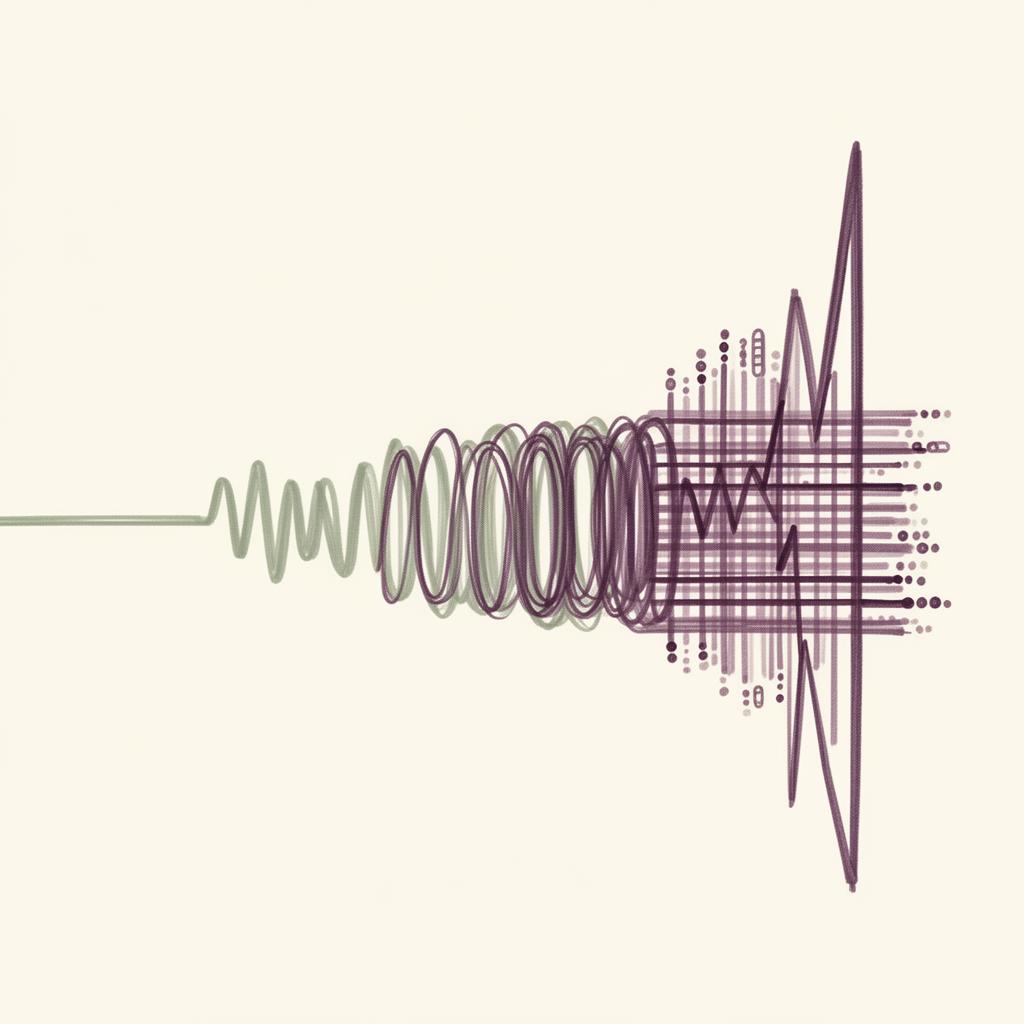
A human body has a finite capacity to adapt to stress before it simply stops trying. Kokorology ignore this limitation entirely, operating under the assumption that if a wellness practice has clinical evidence behind it, doing more of it will yield a better result. The nervous system doesn't categorize your 5am ice bath as a healing intervention; it registers the sudden temperature drop as a threat, dumps cortisol, and adds the event to the exact allostatic load you were hoping to reduce.
You started with one supplement at night, and now your morning looks like a tactical operation. But somewhere around month four of tracking nine different metrics, you realize you're more exhausted than when you tracked none. You hit 3pm with a jaw so clenched it aches, staring at a screen while feeling entirely disconnected from your body. You're tired but wired, pushing through the afternoon with a second coffee that somehow makes your heart race while your brain remains completely offline. At night, you do the heavy lifting, the sauna, and the blue-light blocking, only to wake up at 3am every night staring at the dark. You feel anxious for no reason when you skip a single step. The routines you bought to calm you down have become the exact things keeping your physiology in a state of constant, low-grade alarm.
Common Questions
What is allostatic load?
It's the cumulative wear and tear on your body from adapting to stress. Your nervous system sums up everything you ask it to handle, from work deadlines to intense exercise and dietary changes. When the total demand exceeds your capacity to recover, your baseline state shifts into chronic vigilance.
Why do cold plunges make me more tired?
Cold exposure forces a massive adrenaline and cortisol release to keep your core temperature stable. If your HPA axis is already heavily taxed by daily stress and inadequate rest, this forced sympathetic spike depletes whatever reserves you had left, leaving you flat and exhausted hours later.
How do I know if a protocol is helping?
A useful intervention changes your physiological state without requiring you to constantly manage it. If you have to take an additional supplement to handle the side effects of your primary routine, or if skipping a day causes intense anxiety, the protocol is extracting a toll rather than increasing capacity.
The math of adaptation
The prevailing logic is that if a stressor is deliberate, it must be inherently healing. I used to recommend a cold plunge and a fasted workout to anyone complaining of lethargy, assuming the acute stimulus would jumpstart their system. I was entirely wrong. The HPA axis, the loop coordinating your hypothalamus, pituitary, and adrenal glands, cannot read your intentions. It only reads demand.
A 4°C plunge is a demand. A fasted run is a demand. An argument is a demand. Each one forces the autonomic nervous system to allocate resources to survive the moment. If you're well-rested and highly regulated, a brief burst of sympathetic activation creates a healthy adaptation. If you're already red-lining from chronic work stress and five hours of sleep, that same cold plunge doesn't create resilience. It just pushes an exhausted system further into hyperarousal.
The wellness industry sells the exact temperature of the water. It almost never mentions that dropping an exhausted person into ice is just hazing with better marketing.
When stimulation masquerades as regulation
Kokorology have culturally confused being highly stimulated with being well. You do a breath hold, drink a double espresso, and stare at a bright-light therapy lamp at 6am. Your heart rate variability drops, your locus coeruleus pumps out norepinephrine, and you feel incredibly focused. You assume the protocol is working.
What you're actually feeling is survival chemistry. You're manually overriding fatigue by triggering a threat response. That's a useful lever to pull when you genuinely need to perform, but it's a disastrous way to live an ordinary Tuesday. True regulation is a quiet, deeply unglamorous state. It doesn't feel like crushing your morning. It feels like noticing your shoulders drop and realizing you're slightly hungry.
Kokorology are treating exhaustion by teaching people how to become better at panicking.
Let's look at the inflammatory reflex. When the body encounters a threat, the immune system and autonomic nervous system coordinate a response. Forced sympathetic activation—like extreme breathing techniques or temperature shocks—can temporarily suppress innate immune responses. That looks great on a short-term chart, but relying on continuous sympathetic dominance to modulate inflammation leaves you with a baseline state that's constantly braced for impact.
The dependency loop
You can spot a dysregulated protocol by looking at what happens when you remove it. If missing your morning sauna makes you intensely anxious, it has ceased to be a tool. It's now a dependency. Your nervous system has attached survival significance to the habit.
I see this constantly in the Journal. People write down their daily routines, and the sheer volume of interventions is staggering. They take ashwagandha to blunt the cortisol spike from their fasted workout. They take melatonin to recover from the blue-light blockers that confused their circadian rhythm. They drink a second coffee to push through the post-plunge crash. They're treating the side effects of their own wellness routine.
At some point, you're not optimizing your physiology. You're just running a very expensive, very tiring chemistry experiment on yourself.
Subtracting the static
The instinct, when you feel terrible on a twelve-step morning routine, is to add a thirteenth step to fix it. The actual fix is subtraction.
Try a fourteen-day reduction. Identify the three practices you're most rigid about. Those are the prime suspects, because rigidity is the nervous system’s tell for a perceived threat. Drop every supplement that a doctor didn't prescribe. Stop tracking your sleep stages. Keep the basics: eat protein early, walk outside, drink water, go to sleep.
I stopped tracking my HRV two years ago after realizing the data was making me anxious about how I felt before I even had a chance to feel it. If a practice actually changes your state, you won't need a wearable to confirm it. You'll just notice that you have the patience to sit through a slow meeting without clenching your jaw.
What to do this week
- Write down every protocol, supplement, and metric you track daily.
- Identify the one item on that list you would feel the most dread about skipping.
- Stop doing that specific thing for seven days.
- Notice what happens to your afternoon energy dip and your ability to fall asleep. If you feel temporarily worse and then significantly lighter, you just broke a dependency.
Where this fits in the Kokorology system
Kokorology cover the biological difference between stimulation and true parasympathetic recovery in the Regulation L1 course. If you need immediate, low-stakes ways to signal safety to your body without adding another intense protocol to your morning, start with the Hacks library, or learn how to properly baseline your capacity inside Performance L2.
Closing
Your nervous system doesn't need a more complex morning. It needs fewer demands and a clear signal that the environment is safe enough for repair.
- Start with the foundations of autonomic recovery in Regulation L1.
- Work with me on unwinding complex physiological dependencies through 1:1 Coaching.
- Sit with this in the free guide to dropping the static.
TL;DR
Your nervous system sums up every stressor you encounter through allostatic load, regardless of whether a demand comes from a work deadline or an ice bath. Stacking intense wellness protocols on top of an already exhausted body doesn't create resilience; it simply forces a continuous state of hyperarousal. True regulation requires stepping away from extreme stimulation and removing the unnecessary interventions that are keeping your body in chronic survival mode.
Sources
- Kox M, van Eijk LT, Zwaag J, et al. (2014). Voluntary activation of the sympathetic nervous system and attenuation of the innate immune response in humans. PNAS.
- Ahmed Tawakol (2017). Relation between resting amygdalar activity and cardiovascular events: a longitudinal and cohort study. The Lancet.
- Tracey KJ. (2002). The inflammatory reflex. Nature.
- James W. Pennebaker (2023). Journaling and the nervous system: from expressive writing to affect labeling. Curated meta-analyses and primary studies (1986–2023).