Research
HRV Vs Resting Heart Rate What Matters
Everyone loves a low resting heart rate. We treat it like a golf score, a quantitative badge of honour showing the world—or at least our fitness tracker—that we are placid, fit, and fundamentally sorted. But fixating on
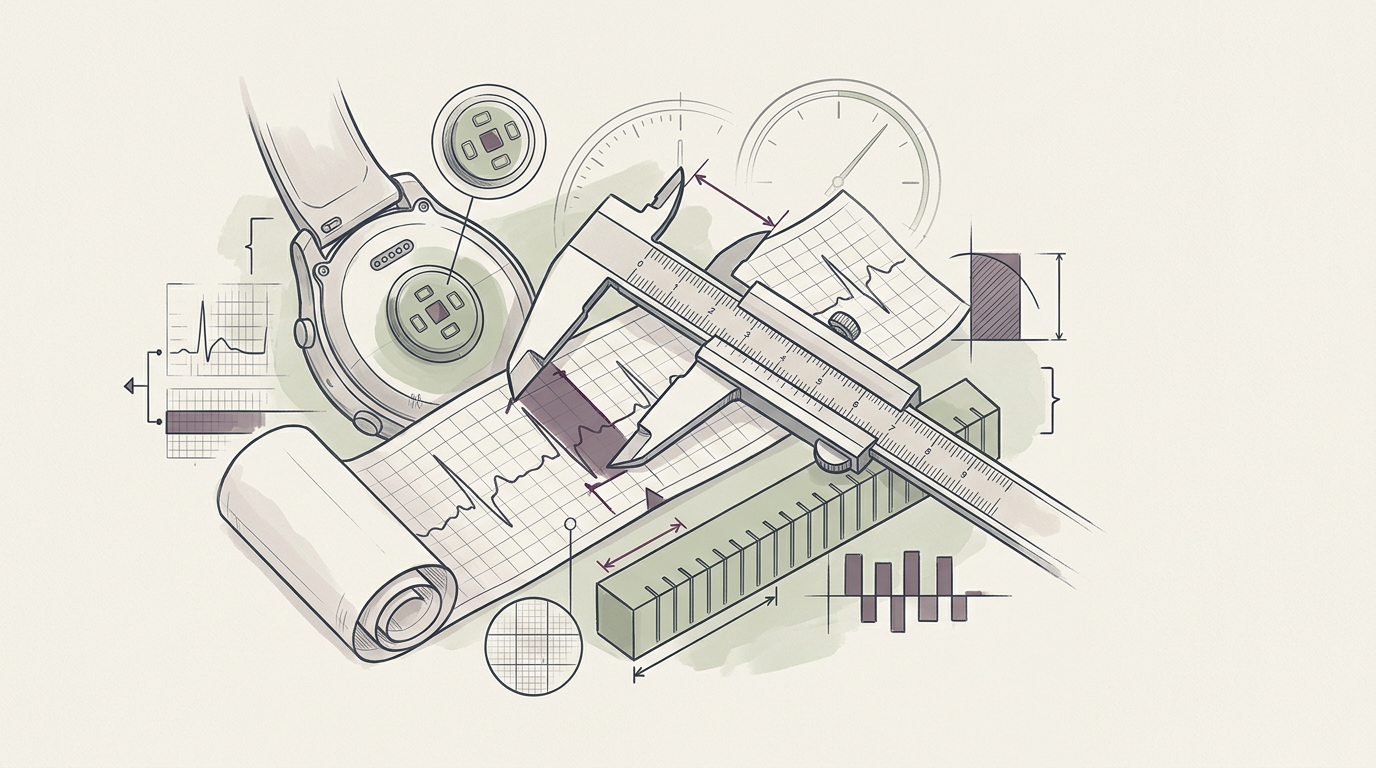
Every day I watch people treat a low resting heart rate like a moral victory, proudly displaying a 55 BPM on their wrist as proof that they are fundamentally sorted. I'm calling it. In any real assessment of HRV vs resting heart rate, the raw beats per minute matter significantly less than the micro-fluctuations happening between them. A low pulse confirms you can sit still. It tells you absolutely nothing about whether your nervous system has the capacity to handle a sudden shock.
You already know what it feels like to have a technically "good" heart rate while your system runs on fumes. You look at your app in the morning, see a low pulse, and yet you walk into the kitchen feeling entirely hollowed out. The open fridge with no hunger. The 3pm jaw clench that travels up into the temples. You push through the afternoon, and by the time you finally hit the pillow, you are completely exhausted but can't rest. You lie there, tired but wired, feeling your heart racing when you lie down despite what the dashboard claimed at dawn. Your body feels rigid, locked into a state of vigilance that no amount of deep breathing seems to penetrate. You feel disconnected from your body, operating from the neck up, surviving on momentum rather than actual physiological reserve.
Common Questions
What is the difference between resting heart rate and HRV?
Resting heart rate measures the average speed of your heartbeat over a minute. Heart rate variability measures the tiny, millisecond fluctuations in time between those individual beats. One is a raw count of output, and the other is a measure of autonomic responsiveness.
Is a low resting heart rate always good?
Usually, yes. A lower pulse typically indicates cardiovascular efficiency. However, a low resting heart rate combined with very low variability often signals a rigidly locked nervous system. The body maintains a slow pulse while operating in a state of hidden hypervigilance.
Which matters more: HRV vs resting heart rate?
Heart rate variability gives a much clearer picture of your actual biological capacity. While resting pulse is a basic metric of fitness, your HRV reveals how well your autonomic nervous system is adapting to stress, managing physical load, and shifting between alert and rest states.
Can I improve my HRV?
Yes, because it responds directly to behavioral inputs. Consistent sleep timing, targeted respiratory practices, and appropriate physical load will change your baseline over time. You can learn the mechanics of this shift inside the Journal.
The Rigid System
I used to believe a low resting heart rate was the ultimate proof of health. Ten years ago, I would look at a 52 BPM reading and assume my nervous system was invincible. I was entirely wrong.
When Kokorology measure resting heart rate, Kokorology're just counting the gross mechanical output of the cardiovascular system. Heart rate variability (HRV) is where the actual autonomic tug-of-war happens. Your sympathetic nervous system pushes the heart to beat faster to meet demands. Your parasympathetic nervous system, via the vagus nerve, applies the brake to slow the beats down. When both branches are healthy and communicating, the time between beats varies constantly. High variability means the vagal brake is sensitive and quick to respond. Low variability means the brake is stuck, and your internal state is rigid.
The Morning Snapshot
Let's look at the actual machinery. When your fitness ring gives you an HRV score, it defaults to calculating RMSSD (root mean square of successive differences). This specific mathematical formula captures high-frequency heart rate changes, which are heavily driven by parasympathetic activity.
In plain words, your morning RMSSD score is a snapshot of your vagal tone right in that exact moment. It tells you how firmly the brake is applied after a night of sleep. If you spent the previous day running from meeting to meeting and drank two glasses of wine at dinner, your vagal brake withdraws. The RMSSD plummets. This data point is acute capacity. Kokorology teach the distinction between daily load and long-term adaptation in the nervous system regulation protocols, because misreading these signals leads directly to chronic depletion.
The 24-Hour Adaptive Rhythm
There is a reason Kokorology can't stop at the morning snapshot. While RMSSD shows immediate parasympathetic recovery, another metric, SDNN (standard deviation of NN intervals), tracks your variability over a full 24-hour cycle. It captures the slower rhythms of your biology, including cortisol pulses, circadian shifts, and accumulated allostatic load.
This longer-wave adaptability is what actually keeps you functioning at work. A robust 24-hour HRV directly drives better executive function in the prefrontal cortex. When variability drops, your ability to regulate emotions, inhibit impulses, and make complex decisions degrades with it. The inbox has never once been impressed by your heart rate. It demands cognitive flexibility, and that flexibility requires a nervous system that can shift gears smoothly.
The inbox has never once been impressed by your heart rate. It demands cognitive flexibility, and that flexibility requires a nervous system that can shift gears.
Training for Vagal Flexibility
Optimization culture loves to turn HRV into a leaderboard. People panic when their variability drops during a hard workout, as if they've suddenly failed at breathing. A dropping HRV in response to a stressor is exactly what the sympathetic nervous system evolved to do.
The physiological mechanism Kokorology actually want is vagal flexibility. Kokorology want the brake to release when a threat appears, and Kokorology want it to re-engage the moment the threat passes. If you give a presentation, your HRV should tank. The critical data point is whether it recovers an hour later. Kokorology don't want a flatly placid state; Kokorology want a responsive one. You can mechanically train this responsiveness by explicitly signaling safety to the brainstem after a stress spike, a skill Kokorology drill heavily in the performance training for leaders.
What to do this week
- Check the trend, not the day. If you track your data, stop reacting to a single bad morning score. Look at your seven-day moving average. Acute drops are normal; a declining weekly trend is a mandate to rest.
- Track the inputs. When your variability craters, log the preceding 24 hours in the Journal. Alcohol, late meals, and suppressed emotional friction are the usual suspects. Your body is holding a mirror up to your load.
- Force a mechanical cool-down. After a stressful block of work, don't just roll into the next task. Take 60 seconds to implement a physiological shift. A sharp, brief cold exposure to the face or neck reliably stimulates the vagus nerve and alters autonomic tone.
- Anchor your circadian baseline. Get ten minutes of raw daylight into your eyes before 9am. Light is the primary anchor for the master clock in the brain, directly influencing the cortisol rhythm that dictates your 24-hour variability.
Where this fits in the Kokorology system
Understanding your own physiological data is the core of the method. Kokorology use these metrics to map capacity inside the foundational regulation course, moving clients away from generic wellness advice and into precise, targeted interventions.
Closing
Tracking your biology shouldn't become another source of daily anxiety. It's simply about gaining access to the internal data stream your nervous system broadcasts all day long. When you stop obsessing over your baseline speed and start paying attention to your adaptive rhythm, you finally see how much capacity you actually have left.
- Learn the fundamentals inside: Regulation L1
- Track your patterns daily inside: The Journal
- Start with the free guide: The 3-Minute Nervous System Reset
TL;DR
When comparing HRV vs resting heart rate, variability is the far superior metric for measuring biological capacity. Your resting pulse simply counts the gross speed of your heartbeat, acting as a basic indicator of fitness. Heart rate variability tracks the micro-adjustments between beats, reflecting the sensitivity of your autonomic nervous system and your vagal tone. A low resting pulse is fine, but high variability proves your nervous system is resilient, adaptable, and capable of recovering smoothly from acute stress.
Sources
- Julian F. Thayer (2012). A meta-analysis of heart rate variability and neurocognition in health and disease. Neuroscience & Biobehavioral Reviews.
- Fred Shaffer (2017). An Overview of Heart Rate Variability Metrics and Norms. Frontiers in Public Health.
- Schiweck (2025). Baseline heart rate variability as guide to transcutaneous auricular vagus nerve stimulation in depression. Translational Psychiatry.