Nervous System
How to regulate the nervous system: a working manual
Nervous system regulation relies on five biological inputs syncing up. When breath, light, fuel, movement, and contact align, the physical state shifts.
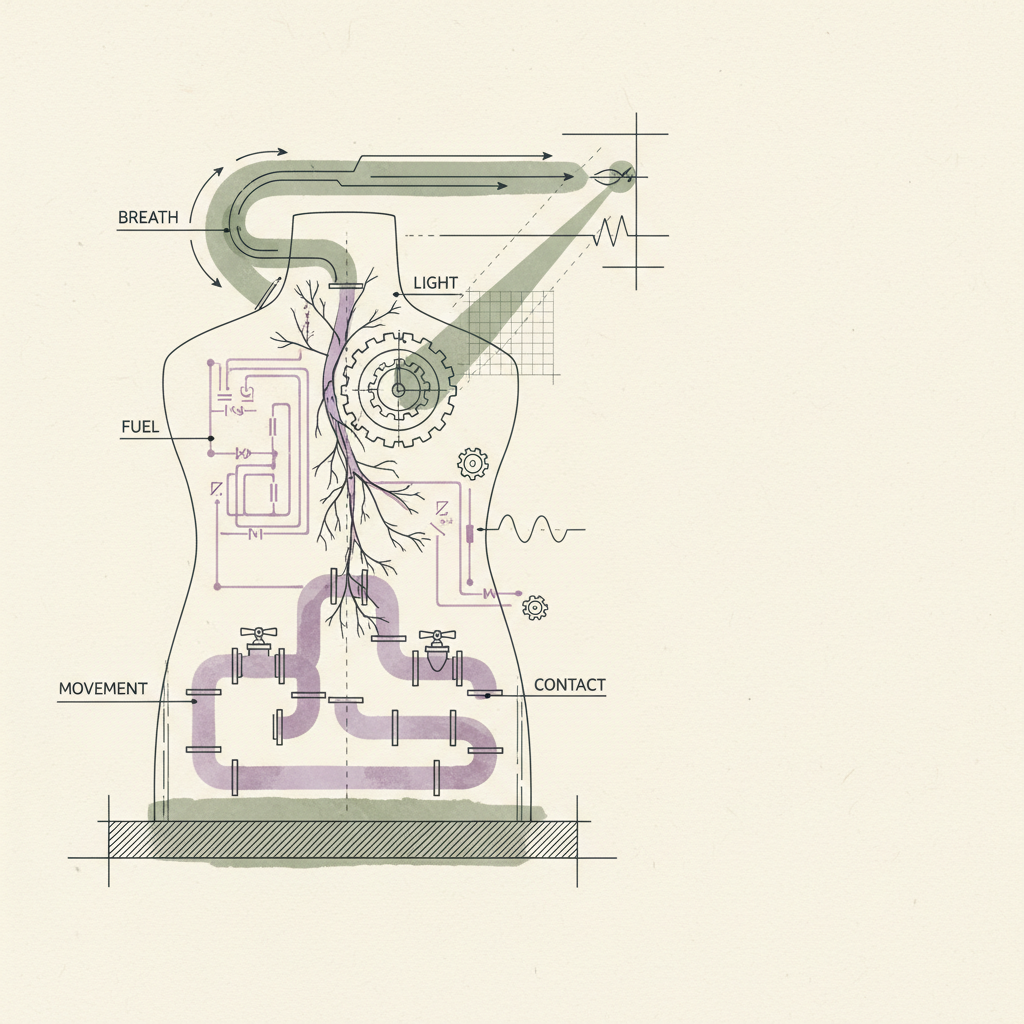
The wellness industry insists that a regulated nervous system is a permanent mood of utter calm, achievable only via expensive retreats. I don't buy it. Regulation is a physical state driven by ordinary biological levers. When the autonomic shift happens, it's because five specific inputs stopped competing for the same wiring in your body.
You've already felt what happens when the wiring jams. It's the 3pm jaw clench that you only notice when your teeth start to hurt. You'll stand in front of the open fridge with absolutely no hunger, staring at shelves until you forget what you came for. You're exhausted but can't rest, scrolling through your phone at midnight with a buzzing behind your eyes. You feel tired but wired, snapping at a half-finished sentence, completely certain that you are anxious for no reason. The world demands focus, but all you have is a heavy brain fog that makes the afternoon feel like an active threat. This is what capacity looks like when it shrinks.
Common Questions
How long does regulation actually take?
The breath lever works in minutes. The light and fuel levers show up in days. The movement and contact levers compound over weeks. Anyone promising a total reset in one weekend is selling a retreat ticket.
Do supplements matter for this?
They matter less than sleep, light, protein, and salt. Magnesium glycinate at night helps some people settle their physical state. Nothing replaces the primary biological inputs.
Is this the same as trauma work?
You can't process old trauma without a regulated baseline. Trying to unpack heavy material in a body that's chronically under-fed, under-lit, and under-slept is why a lot of therapeutic work stalls out early.
The breath lever
The wellness industry's somehow turned breathing into a paid course. I used to think I needed a thirty-minute meditation session to quiet my mind, which is exactly why I didn't do it. The reality is much dumber and much faster. A slow exhale nudges the vagal brake and drops your heart rate within a few beats. It's a direct mechanical override for the HPA axis, signaling the brain that the immediate environment is safe.
The inbox hasn't ever been impressed by your heart rate.
Use a double-length exhale for ninety seconds before you open your laptop. It forces the system to downshift.
The master clock
Light dictates your entire downstream cortisol rhythm. If the morning's dark and the evening is bright, your physiology will treat bedtime like midday. Morning outdoor light within an hour of waking sets the circadian clock. Screen light at 11pm scrambles it entirely. I stopped recommending fancy sleep supplements once I realized most people just need to walk outside at 8am. Getting daylight in your eyes remains the most accessible tool Kokorology've got.
The chemical state
Skipping breakfast and running on three coffees feels productive right until the afternoon crash hits. Undereating protein and salt guarantees a cortisol spike. Thirty grams of protein at your first meal stabilizes blood sugar, keeping the nervous system from hitting the panic button. Throw a pinch of salt in your water bottle. The physical shakes and the midday dread usually stop when the body actually has the fuel it needs.
The mechanical pump
Sitting perfectly still for nine hours generates physiological static. The lymphatic system doesn't have a central pump. It relies entirely on skeletal muscle contraction to clear waste and move fluids. Without movement, allostatic load accumulates. The baroreflex gains resilience through dynamic physical stress. Sitting perfectly still in a chair degrades that resilience over time. A brisk walk physically clears the pressure. When I finally started carrying a heavy rucksack on my afternoon walks, the sheer physical exertion actually allowed my brain to turn off. You can find more targeted protocols for this inside the Anchors library.
The coregulation circuit
Isolation registers in the brain as a survival threat. A twenty-second hug, a phone call with a friend who actually knows you, or a shared meal physically changes your state. Co-regulation engages the social engagement system, lowering defensive arousal without requiring any conscious thought. It works faster than talking yourself out of a bad mood. You can lean into this shared rhythm inside the Community when you don't want to practice alone.
What to do this week
- Get ten minutes of outdoor light within an hour of waking up, with no sunglasses.
- Eat thirty grams of protein in your first meal of the day.
- Take one walk outside without holding your phone.
- Use a long-exhale breathing pattern for ninety seconds before your hardest meeting.
Where this fits in the Kokorology system
Managing these biological inputs forms the core of nervous system regulation. If you need help getting started, the Reset gives you a structured seven-day path. Tracking how these inputs change your state happens inside the Journal, turning invisible sensations into data you can actually read. If you need a fast intervention right now, start with the hacks.
Closing
You have to change the physical state before the mind can follow. Pick one lever and test it tomorrow morning.
- Start the Reset to install these five physical inputs into your daily routine.
- Continue inside the Anchors library for specific protocols tailored to sleep and energy.
- Grab the free guide to map out your baseline without spending anything.
TL;DR
Regulating your state requires mechanical interventions. By managing breath, light, fuel, movement, and physical contact, you control the biological levers that dictate how your body responds to stress. Fix the inputs and the mood follows.
Sources
- Critchley, H. (2023). Interoception and Autonomic Regulation in Stress. Journal of Neuroscience.
- Yilmaz Balban, M. (2023). Brief Structured Respiration Practices Enhance Mood and Reduce Physiological Arousal. Cell Reports Medicine.
- Thayer, J. F., & Lane, R. D. (2000). A model of neurovisceral integration in emotion regulation and dysregulation. Journal of Affective Disorders.