Nervous System
Feeding a body on GLP-1 is a protein-first operation
The advice to “eat more protein” on GLP-1s is a polite fiction. The drug mutes the signal, not the body’s non-negotiable demand for raw materials.
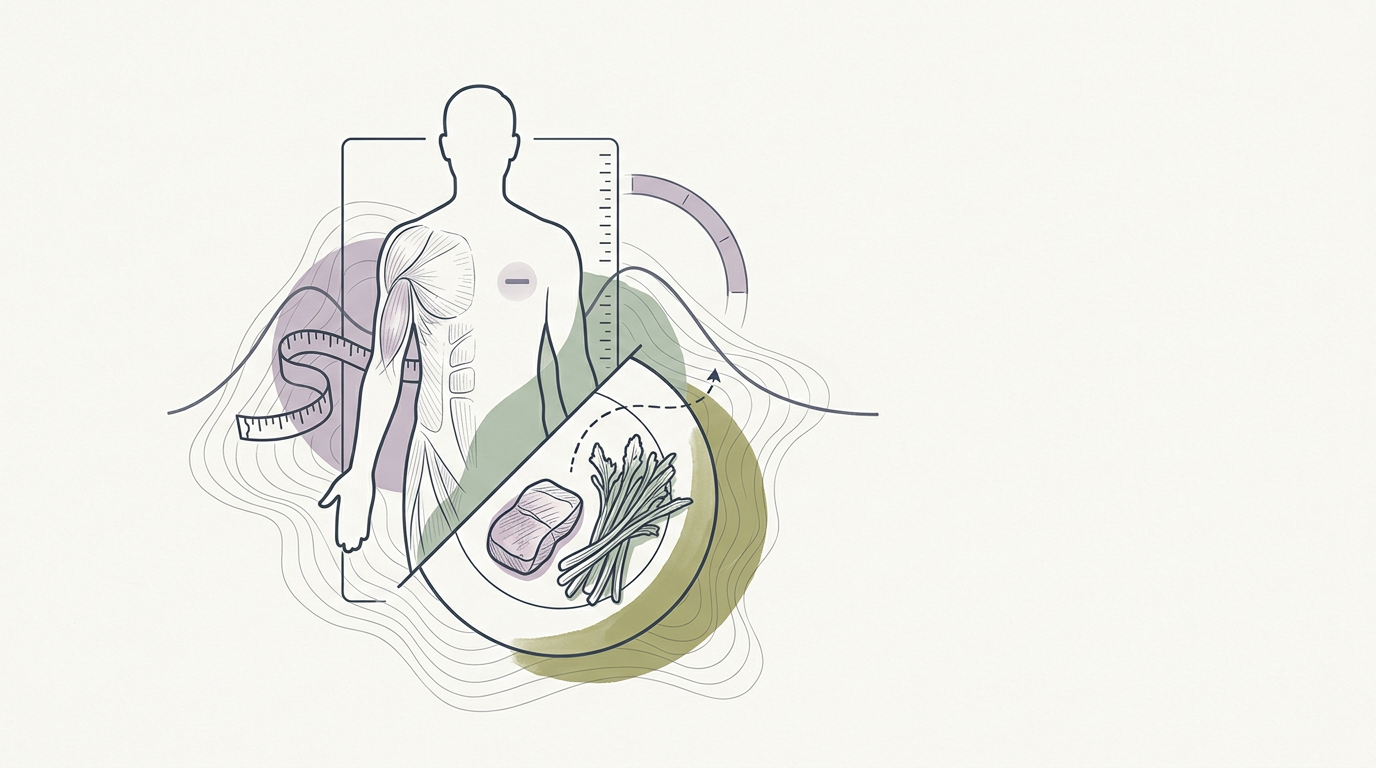
80% of the conversation about GLP-1s treats the medication as a willpower replacement, assuming the only goal is to eat less. I used to think the primary challenge was just helping clients navigate the nausea. The standard instruction to simply prioritize protein completely misses what the nervous system is actually doing under the surface. The drug doesn't just mute your cravings; it blinds your hypothalamus, turning off the precise alarm bells your body uses to demand the raw materials it needs to survive.
It’s 3pm on a Tuesday, and for the first time in your adult life, the leftover doughnuts in the breakroom have zero hold over you. The scale is finally moving. But as you close your laptop, a different sensation settles into your limbs—a deep, cellular weariness that a double espresso won't touch. You feel physically unsubstantial, a specific kind of weakness completely distinct from sleepiness. You are exhausted but can't rest, staring blankly into an open fridge with zero appetite. Your jaw is clenched, yet standing up from the desk feels strangely heavy. People search for reasons why they feel tired but wired on this medication, assuming it’s just the calorie deficit. You are learning, in real time, what it feels like when your interoceptive signals are jammed, and the brain fog after eating a tiny bowl of fruit is the only mechanism your body has left to tell you the reservoir is running dry.
Common Questions
How much protein do I actually need on a GLP-1 drug?
Forget the standard recommendations for sedentary maintenance. When you are in a massive, drug-induced energy deficit, you need between 1.2 and 1.6 grams of protein per kilogram of your target body weight daily. This forces an external signal into the system to counteract the active muscle breakdown.
Why do I feel so weak and tired on Ozempic?
That profound weakness is a direct sensory report of muscle catabolism. It is entirely different from sleep deprivation. Your body is dismantling its own tissue for immediate fuel because the dietary supply has stopped, dropping your physical horsepower in real time.
Will I definitely lose muscle on semaglutide?
Significant muscle loss is the default outcome if you remain passive. The medication mutes your internal appetite signals entirely. You have to step in and provide loud, clear external cues through heavy resistance training and a massive protein increase to keep the tissue.
The indiscriminate mute button
GLP-1 analogues like semaglutide and tirzepatide work wonders on the noise in your head because they act directly on receptors in your brain. They bind to sites in the hypothalamus and parietal cortex, physically altering how you perceive food cues. The doughnut on the counter that once screamed for your attention now seems inert. The parietal cortex has finally decided a pastry is just an object, which is great for your grocery bill but terrible for your interoception.
The drug acts like a heavy chemical blanket over your nervous system regulation. It smothers the high-frequency static of obsessive sugar cravings while simultaneously suffocating the quiet broadcast from your body signalling its fundamental need for amino acids. The nervous system cannot differentiate between the pathological craving and the physiological need. It simply stops asking.
Your brain, enjoying the sudden peace and quiet, is completely unaware that critical supply requests from the periphery are piling up. I have watched people go twelve hours without eating, completely detached from the physical reality that their autonomic state is shifting into a stress response simply because the hunger signal never reached the brain.
The metabolic reservoir
Your muscle is far more than what you use for lifting heavy objects. It is your largest metabolic organ, your primary reservoir for carbohydrates, and the main tissue where your body disposes of glucose after a meal. It is an active, demanding organ that requires constant maintenance. Every day, your nervous system oversees the breakdown of old muscle proteins and rebuilds them with new ones from the food you eat. This turnover is a hard biological law.
When you are in a large, drug-induced energy deficit, the body’s threat detection system flags a famine. It begins looking for ways to conserve energy. Skeletal muscle is highly resource-intensive to keep alive. The system makes a brutal, logical decision to start dismantling muscle fibers to lower the daily energy requirement. You stop feeling hungry, so you eat less, and your body responds by downsizing its most biologically expensive tissue.
The physiology of forced catabolism
This is where the biochemistry gets entirely unforgiving. If protein intake falls below your body's daily requirement, you enter a supply crisis. The system still desperately needs amino acids to make immune cells, produce hormones, and repair vital organs. If these raw materials are not arriving via your diet, the body will find them elsewhere. It raids the largest available reservoir: your own skeletal muscle.
You cannot medicate your way out of a biological requirement for amino acids.
This process of catabolism is the quiet thief that steals your functional capacity while you celebrate the dropping number on the scale. The consequences extend far beyond losing strength in the gym. Your resting metabolic rate plummets. You shrink the very tissue you rely on to burn energy, guaranteeing a spectacular rebound the second you stop the weekly injections.
Worse, you lose your primary sink for blood sugar. Less muscle means less storage space for glucose, leaving it circulating in the blood for longer. That profound weakness you feel is a direct sensory report from a system being stripped for parts.
Forcing the signal
Because the medication has turned off your internal cues, you have to run this process manually. You must impose a massive external signal to counteract the catabolic drive.
I've stopped recommending gentle movement for clients on GLP-1s. Walking and light yoga will not save your muscle mass. Resistance training is the specific mechanical cue that tells the nervous system this tissue is required for survival. Heavy loads force the brain to keep the muscle fibers active.
The second half of that equation is leucine. Leucine is the specific amino acid that acts as the ignition key for muscle synthesis, but it requires a massive dose of protein to hit the threshold. Leucine can shout all it wants, but the body won't synthesize muscle out of thin air just because you picked up a dumbbell. You have to supply the raw materials in high enough volumes to force the tissue to adapt. You are no longer eating to satisfy hunger; you are eating to send a biological command.
What to do this week
- Track your protein for three days without changing anything. Face the reality of how little you are actually consuming when your appetite is muted.
- Calculate your target requirement. Multiply your target body weight in kilograms by 1.5. That is your daily protein floor in grams.
- Lift something heavy enough to challenge your nervous system. Two sessions of resistance training a week is the absolute minimum to signal the body to hold onto muscle.
- Front-load your day. Eat 30g of protein within an hour of waking, before the medication fully suppresses your midday appetite.
Where this fits in the Kokorology system
Managing your tissue health during rapid weight loss is a core part of physiological resilience. You can study the mechanisms behind muscle synthesis inside the Library, or track your daily capacity metrics and autonomic shifts in your Journal. If you need help structuring the exact mechanical signals required to keep your metabolism elevated, bring this to the next Performance cohort.
Closing
The medication changes your internal chemistry, forcing a massive reduction in energy intake. If you do not actively manage what is left, your body will default to eating itself.
- Work with me to rebuild your physical capacity inside 1:1 Coaching.
- Start mapping your actual daily energy intake and recovery using the Reset protocols.
- Read the deep-dive on metabolic flexibility inside the free Kokorology Newsletter.
TL;DR
GLP-1 drugs silence food noise by altering how the hypothalamus and parietal cortex perceive cravings, but they simultaneously mute the body's vital requests for amino acids. In a massive energy deficit, the nervous system treats skeletal muscle as an expendable reservoir, dismantling functional tissue to supply the rest of the body. This cannibalisation drops your metabolic rate and physical capacity. Counteracting this requires forcing an external signal through heavy resistance training and a daily protein intake of 1.2 to 1.6g per kilogram of target body weight.
Sources
- Prado CM (2025). Muscle Mass Loss With GLP-1 Therapy: Clinical Relevance and Mitigation. Lancet Diabetes & Endocrinology.
- Neeland IJ (2024). Changes in lean body mass with glucagon-like peptide-1-based therapies and mitigation strategies. Diabetes, Obesity and Metabolism, 26(Suppl 4), 16–27.
- Wilding JPH, et al. (2022). Weight regain and cardiometabolic effects after withdrawal of semaglutide: The STEP 1 trial extension. Diabetes, Obesity and Metabolism, 24(8), 1553–1564.
- Morton RW, et al. (2018). A systematic review, meta-analysis and meta-regression of the effect of protein supplementation on resistance training-induced gains in muscle mass and strength. British Journal of Sports Medicine, 52(6), 376–384.
- Farr OM, et al. (2016). GLP-1 receptors exist in the parietal cortex, hypothalamus and medulla of human brains and the GLP-1 analogue liraglutide alters brain activity related to highly desirable food cues. Diabetologia, 59(5), 954–965.