Nervous System
Glp 1 Nervous System Support
GLP-1 agonists drive a profound shift in nervous system signaling, altering everything from gut motility to how your brain regulates arousal and motivation.
I sat in a clinic room yesterday listening to a client describe the strange, hollow fatigue she feels on her new injection. The wellness industry has already decided GLP-1 agonists are cosmetic stomach shrinkers, rushing to sell green juices for the inevitable nausea. Proper GLP-1 nervous system support requires acknowledging the massive, systemic downregulation of arousal happening in the brain. The drug suppresses the drive to eat by telling the vagus nerve the crisis is over, and the brain responds by telling the rest of your body to power down.
You inject the pen on Sunday night, and by Tuesday afternoon, it's unmistakable. The food noise is entirely gone, replaced by a profound, heavy quiet in your head. You open the fridge at 6pm, stare at the shelves, and close the door again because nothing registers as remotely appealing. But the quiet brings a heavy physical weight to your limbs. You sit on the edge of the bed staring at the wall, experiencing a bizarre flatness where your motivation used to live. The 3pm slump arrives at 11am, and your shoulders won't drop in the shower. You feel exhausted but can't rest, and that persistent brain fog after eating tiny meals makes focusing at work nearly impossible. Your jaw clenches continuously because your state is stressed by the rapid weight loss, even while you feel completely detached from physical hunger.
Common Questions
What are GLP-1 agonists?
They're synthetic mimics of a gut hormone called Glucagon-Like Peptide-1. They bind to receptors in the digestive tract and the brain, radically amplifying the biological signal that you are full and satisfied.
How do they affect the nervous system?
They send a continuous stream of satiety data up the vagus nerve. This quiets cravings in the brain's reward centers, but it also signals the locus coeruleus to lower overall arousal, resulting in widespread fatigue.
Why do people lose muscle on these medications?
A sudden, steep drop in caloric intake sends a systemic panic signal. The body responds by burning whatever tissue it can access to survive the perceived famine, including metabolically active muscle, unless mechanical tension signals otherwise.
The Afferent Firehose
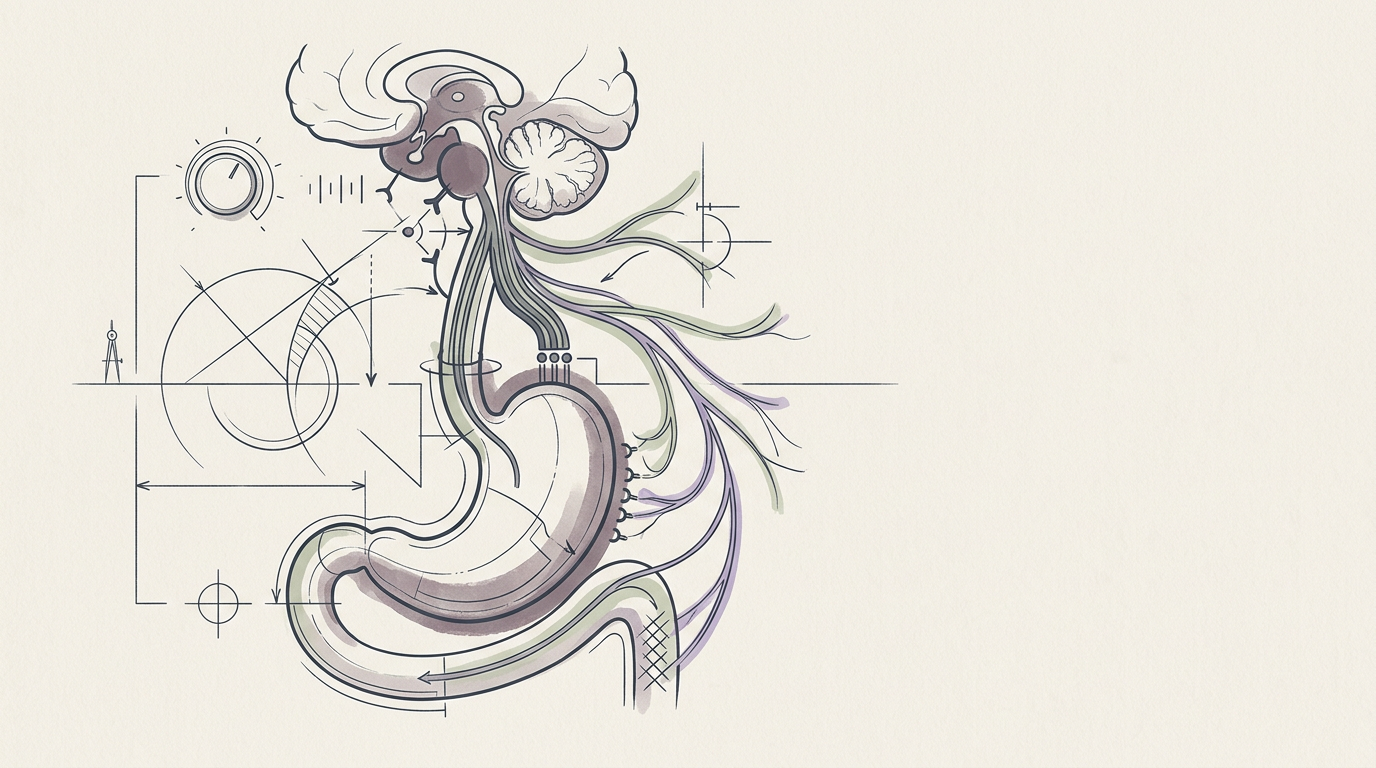
The nausea and delayed gastric emptying are simply the loud, immediate side effects. The actual intervention happens on the vagus nerve, the primary communication channel running from your organs directly to your brain. When you introduce a synthetic GLP-1, the drug hits the gut and binds directly to the receptors waiting there. These receptors fire a continuous barrage of sensory data up the vagal afferent pathways. Your brain receives this intense input and assumes you just finished an enormous meal.
The seeking-and-foraging drive that governs human behavior shuts off entirely. I used to believe appetite was mostly behavioral habit, right up until I saw how completely a single chemical override can silence a lifelong compulsion. Your neurochemistry gets a relentless command to stop looking for resources. The obsessive planning about your next meal vanishes. You're left with a surreal silence in a brain that spent decades dealing with the static of craving.
The Locus Coeruleus and the Great 'Meh'
The vagus nerve plugs directly into the brainstem, terminating in an area that talks straight to the locus coeruleus. This tiny cluster of cells is the principal source of noradrenaline, your brain's primary chemical signal for vigilance, focus, and action. When the gut screams that you are completely full, the locus coeruleus dials back your arousal.
You get less energy, less urgency, and noticeably less motivation. The wellness industry calls this fatigue and tries to sell you caffeine pills. They miss the mechanism entirely. Your internal alarm system has been chemically deactivated. It's a highly appropriate biological response to being heavily fed, but it feels deeply unsettling when you actually need to function at a desk. The inbox is rarely impressed by your chemically induced serenity.
Surviving the Caloric Drop
When your body enters a severe energy deficit, it panics. It breaks down whatever tissue it can find to survive the sudden restriction. Muscle tissue requires massive amounts of energy to maintain, so a panicked nervous system happily strips it away alongside the fat stores. Kokorology're watching people become smaller, weaker, and physically frail, and society politely applauds the weight loss.
I was adding a Vitafoods Insights report to the Library this week about the rapidly expanding post-GLP-1 support market. Companies see a billion-dollar opportunity in selling downstream fixes for the muscle loss these medications leave behind. The actual fix requires sending a different sensory input to the brain while the medication is active. You have to actively give your brain a reason to keep your physical strength, because the drug certainly won't do it for you.
Signaling the Tissue to Stay
Resistance training is a mandatory neurological signal. When you lift something heavy, you force the central nervous system to recruit motor units. This mechanical tension tells your physiology that muscle is essential for your immediate physical survival.
It is this simple.
If you skip this, your body makes the most efficient choice for a famine and drops the tissue. I test every protocol I teach. Tracking my protein minimums and moving heavy loads are the only ways I keep my own capacity stable during times of high stress or low appetite. You need raw material in the bloodstream, and you need mechanical tension in the muscle fibers.
A severe calorie deficit without resistance training simply signals your nervous system to discard muscle as dead weight.
The nervous system has a remarkably long memory for your highest weight. It establishes a set point and defends it aggressively. The medication provides a powerful chemical override, but it doesn't erase the physiological memory. The moment the injections stop, the quiet evaporates. The biological drive to seek food rushes back in to defend the old set point. The time to train your interoception and explore the Journal is while the drug is keeping the room quiet.
What to do this week
- Track your protein minimums. Aim for 30g of protein within an hour of waking and with your last meal of the day. You need the raw material circulating in your bloodstream.
- Schedule two resistance sessions. They don't have to be heroic. 30 minutes of compound movements like squats and push-ups provides enough mechanical tension to send the retention signal to your brain.
- Log the internal static. For five minutes each day, note your internal state. What is the texture of your fatigue? Is it heavy, floaty, buzzy? Where is your motivation? Sit and label it.
Where this fits in the Kokorology system
This is about managing a major intervention on your body's core signaling. It is a direct application of restoring your Nervous System Regulation capacity while an external tool holds the state steady. The specific protocols for this are laid out in the GLP-1 Support Anchor, and the interoceptive skills needed for when the medication stops are trained inside the Journal.
Closing
The chemically induced quiet these drugs provide is a temporary window. It gives you the space to establish new regulatory baselines without fighting the constant static of cravings all day. You have the opportunity to secure your metabolic health and physical capacity right now, so that when the medication stops, you actually retain the strength you need to function.
- Start with the foundational protocol inside the GLP-1 Support Anchor.
- Continue tracking your bodily signals inside the Journal.
- Practice the sensory resets in the free guide to nervous system regulation.
TL;DR
GLP-1 agonists radically alter nervous system signaling by sending continuous satiety data up the vagus nerve. This quiets obsessive food thoughts but simultaneously downregulates the brain's arousal centers, causing profound fatigue and flatness. The massive caloric deficit also triggers the body to break down muscle tissue in a panic. Effective GLP-1 nervous system support requires utilizing this chemically induced quiet period to preserve physical strength through resistance training and high protein intake, securing your metabolic health before the medication stops.
Sources
- Neeland, I. J. (2024). Changes in lean body mass with glucagon-like peptide-1-based therapies and mitigation strategies. Diabetes, Obesity and Metabolism.
- Wilding, J. P. H., et al. (2022). Weight regain and cardiometabolic effects after withdrawal of semaglutide: The STEP 1 trial extension. Diabetes, Obesity and Metabolism.
- Jastreboff, A. M., et al. (2022). Tirzepatide once weekly for the treatment of obesity. New England Journal of Medicine.
- Seeley, R. J. & Habegger, K. M. (2010). The role of gut hormones in the treatment of obesity. Nature Reviews Endocrinology.
- Vitafoods Insights (2026). Nutrition companies eye post-GLP-1 support market.