Nervous System
Gift the Reset Fathers Day
There’s a silent agreement that the men we love—our fathers, partners, brothers—are ‘handling it’. They absorb the pressure, carry the load, and say little. We mistake their quiet for resilience. But the body keeps an ho
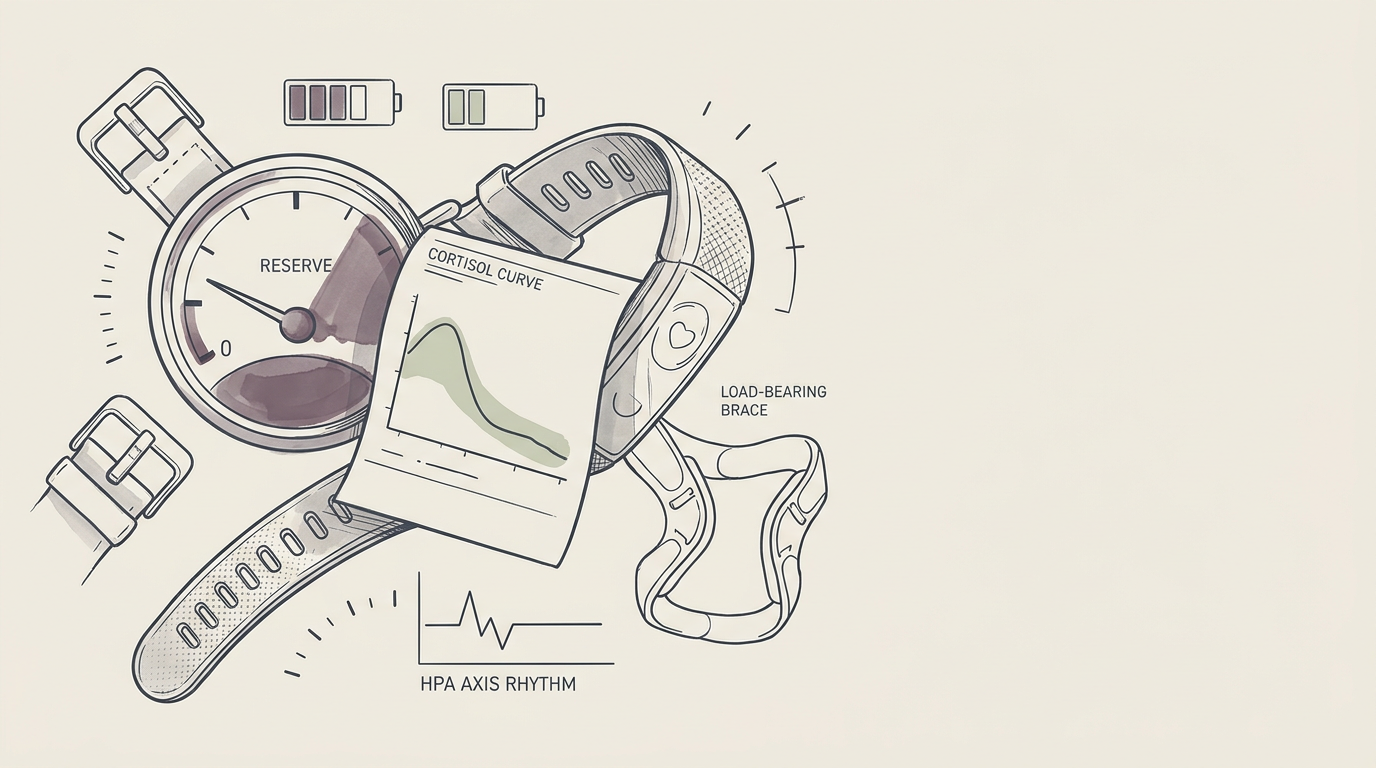
A client sat in my office last week and mentioned her husband was just going through a quiet, stoic phase at work. Kokorology treat male silence as a sign of resilience, assuming a quiet jaw means a handled situation. The stoicism script actually masks profound HPA axis dysregulation, trapping a constant drip of cortisol inside a body that has nowhere to put it. When someone stops complaining, the pressure hasn't disappeared; the nervous system has simply diverted all available energy to maintaining the perimeter.
You know exactly what this state looks like in the kitchen at 7pm. It's the thousand-yard stare into the open fridge with absolutely zero actual hunger. It's the jaw that stays locked while watching television, the completely disproportionate flash of anger over a misplaced set of car keys, and the heavy, dragging exhaustion that magically evaporates the second the lights go out. You lie there tired but wired, staring at the ceiling, wondering why you can't sleep even though exhausted. The body feels like lead, yet the mind is running a relentless background scan for threats. You wake up at 3am every night with your heart racing, absolutely convinced you forgot a critical email. That sudden shift in temperament is simply a nervous system trapped in a high-idle gear, waiting for an emergency that passed twelve hours ago.
Common Questions
Why is he so irritable and tired all the time?
The body is stuck in a low-grade threat state that drains physiological capacity. A chronically activated HPA axis flattens the daily cortisol curve, leaving the nervous system with a terribly short fuse. He is marinating in a constant drip of stress hormones that leaves zero energy for basic emotional regulation.
Why is his sleep so terrible when he looks exhausted?
When the nervous system detects an ongoing threat, deep sleep becomes a biological liability. A brain stuck in hypervigilance actively blocks the vulnerability of rest. The wired and tired sensation is a direct physiological intervention, keeping the body on standby to fight or flee at a moment's notice.
Can a gift actually help shift this state?
A bottle of whiskey or a new golf club just temporarily distracts a depleted system. A structured tool to downregulate the nervous system changes the actual physical state. Giving someone a clear, actionable protocol hands them back their capacity to drain the physiological load they've been carrying all year.
The Physical Weight of Stoicism
I used to believe that holding it together under pressure was the exact definition of resilience. I watched men in my own family carry the weight of their jobs and obligations without a single complaint, and I assumed that was what strength looked like in practice. I've completely changed my mind. The cultural script for masculinity demands the quiet absorption of pressure, ignoring the fact that the autonomic nervous system does not care about cultural expectations.
Every single stressor—a hostile email, a missed flight, the background hum of financial anxiety—triggers a highly specific physiological cascade. The body pumps out adrenaline and cortisol to meet the demand, expecting a physical resolution. When the threat passes, the system is designed to clear the chemicals and return to a regulated state.
When the pressure never actually stops, those chemicals remain in heavy circulation. Kokorology call this accumulated physiological load allostatic load. It shows up as a series of small, grinding erosions rather than a dramatic collapse. You see the shorter temper, the reliance on three coffees just to get through the morning, and the steady withdrawal from the family dinner table. He hasn't forgotten how to engage with his life. His system has simply run out of the biological capacity to process one more sensory input.
The Flattened Rhythm
The most common complaint I hear from exhausted corporate operators is their desperate desire to lower their cortisol. The trouble with cortisol is everyone has heard of it, and no one knows what it actually does. Cortisol is your primary energy-mobilising hormone, absolutely essential for human function. You desperately need a massive, sharp spike of it first thing in the morning to get out of bed, feel alert, and tackle the day.
A chronically stressed HPA axis—the loop running from the brain to the adrenal glands and back—loses this dynamic range entirely. The morning peak blunts, leaving you feeling groggy and completely unmotivated at 7am. Meanwhile, the evening levels remain artificially elevated, which directly blocks the release of melatonin and ruins your sleep staging. This flat, dysfunctional curve leaves the body profoundly confused, receiving zero clear signals about when to be fully alert and when to power down.
You end up stuck in a muddy, exhausting twilight. The inbox has never once been impressed by your heart rate, yet the body reacts to an unread message as if it requires a physical sprint across the savannah. Regulating this specific state requires deliberate interventions to rebuild the daily rhythm, often starting with the targeted protocols inside The Anchors.
The Brain’s Leaky Alarm
Here is where Kokorology dive properly into the neuroscience. Deep in your brainstem sits a tiny, elegant cluster of neurons called the locus coeruleus. This is the brain's novelty and arousal hub. It produces noradrenaline, the neurotransmitter responsible for dialing up your focus and vigilance when something important happens in your immediate environment.
In a well-regulated nervous system, this hub fires in sharp, precise bursts. You hear a strange noise, the locus coeruleus fires, you orient to the sound, you realise it's just the dog, and the system immediately quiets down. Chronic, unyielding stress makes this entire cluster leaky. Instead of firing cleanly and shutting off, it dribbles out a constant, low-grade supply of noradrenaline into the brain.
This continuous drip creates a state of perpetual vigilance. It explains the restless, irritable feeling that refuses to leave even when you're sitting on a beach on holiday. The brain's alarm system is jammed in the 'on' position, constantly scanning the horizon for threats that don't exist. Fixing a leaky locus coeruleus requires changing the raw sensory inputs the brain receives, proving to the nervous system that the environment is finally safe.
The Numbness is a Feature
Many men navigating this level of exhaustion report feeling entirely disconnected from their own bodies. They describe a pervasive numbness, a sense of living completely in their heads while the body just drags along underneath them like a poorly maintained vehicle. Kokorology often treat this dissociation as a psychological failure of mindfulness.
In reality, this numbness is a highly sophisticated function of interoception—the brain's perception of the body's internal state. When the internal signals of stress, elevated heart rate, and systemic inflammation become too loud and overwhelming, the brain simply turns down the volume on interoceptive processing. If you felt the full, screaming extent of your own HPA axis dysregulation, you wouldn't be able to commute to work. The numbness allows you to keep functioning in a hostile environment.
The massive downside to this protective mechanism is the total loss of early warning signals. You don't feel the muscular tension until a tooth cracks from jaw clenching, and you don't feel the fatigue until the immune system completely crashes on the first day of your holiday. Restoring interoceptive awareness through a daily Journal practice is the only way to catch these physiological shifts before they force a hard stop.
Sweeping the Floor Overnight
Kokorology treat stress like an abstract attitude. For the body, it is a physical reality. Stress hormones and inflammatory proteins are literal molecules circulating in your blood and tissues. They have to be metabolised, neutralised, and physically cleared out of the system.
This heavy lifting is a job for the liver and the glymphatic system, which acts as the brain's overnight cleaning crew. The glymphatic system flushes metabolic waste and neurotoxins out of the brain tissue, but it only operates effectively during deep, highly protected sleep. If a dysregulated cortisol rhythm is actively preventing deep sleep, that metabolic waste simply accumulates day after day.
You can't think your way out of a body full of inflammatory cytokines, any more than you can think a splinter out of your finger.
Taking a weekend off doesn't magically clear the backlog. The nervous system and the immune system are in constant dialogue, and a hyper-vigilant brain continuously broadcasts inflammatory signals into the bloodstream. Giving the body the raw materials it needs to run its drainage and decontamination protocols is the entire premise of nervous system regulation. It requires specific, repeatable practices that physically clear the debris.
What to do this week
This requires small, precise physiological adjustments. Pick one.
- Ten minutes of unfiltered morning light. Step outside before 8am, completely avoiding your phone. This single act helps anchor the crucial morning cortisol spike, proving to the brain that the day has officially begun.
- A 30g protein-forward breakfast. Swap the quick pastry for eggs, Greek yoghurt, or a quality protein shake within an hour of waking. This stabilises blood sugar and provides the exact amino acids required to rebuild neurotransmitters.
- A 15-minute walk after dinner. Frame this purely as a digestive aid. Gentle, bilateral movement helps with blood sugar control and lymphatic drainage, physically clearing stress metabolites from the system before bed. Kokorology use micro-practices like this constantly inside the Hacks library.
Where this fits in the Kokorology system
This is a classic case of a dysregulated cortisol rhythm and unmanageable allostatic load. The starting point for shifting this baseline is the Cortisol Repair Anchor, which provides the exact protocols for resetting the daily curve. It represents a core application of the foundational Regulation coursework.
Closing
Kokorology know it's incredibly difficult to offer support to someone who insists they're completely fine. The most powerful way in is often just handing them a specific, practical tool rather than forcing a heavy conversation about feelings. You're giving his physiology a resource to repair itself in its own time.
- Start with a structured fresh start inside The Reset.
- Work through the targeted protocol inside The Anchors.
- Map the underlying pattern directly in a 1:1 session through Kokorology Coaching.
TL;DR
The silent stress many men carry is a heavy physiological load that dysregulates the HPA axis and completely flattens the daily cortisol rhythm. Symptoms like irritability, poor sleep, and dragging exhaustion are the readouts of a nervous system trapped in a state of chronic hypervigilance. The locus coeruleus continuously leaks noradrenaline, keeping the brain relentlessly on edge. The solution relies on targeted, physical inputs like morning light, protein, and movement to rebuild the body's capacity to metabolise stress and clear inflammatory waste.
Sources
- McEwen, B. S. (2017). Neurobiology of stress, resilience, and allostatic overload. Neuron.
- Sapolsky, R. M. (2002). Endocrinology of the stress-response. In Behavioral Endocrinology (pp. 409-450). MIT Press.
- Mather, M. (2011). The selective effects of emotional arousal on memory. Cognitive, Affective, & Behavioral Neuroscience.
- Dagum, P. (2026). The glymphatic system clears amyloid beta and tau from brain to plasma in humans. Nature Communications.