Workplace & Leadership
Founder Burnout Is Structural. the 3 Shifts That Move It From Inevitable to Optional.
Dive into proactive burnout prevention strategies, shifting the narrative from a founder's inevitable fate to an optional outcome.
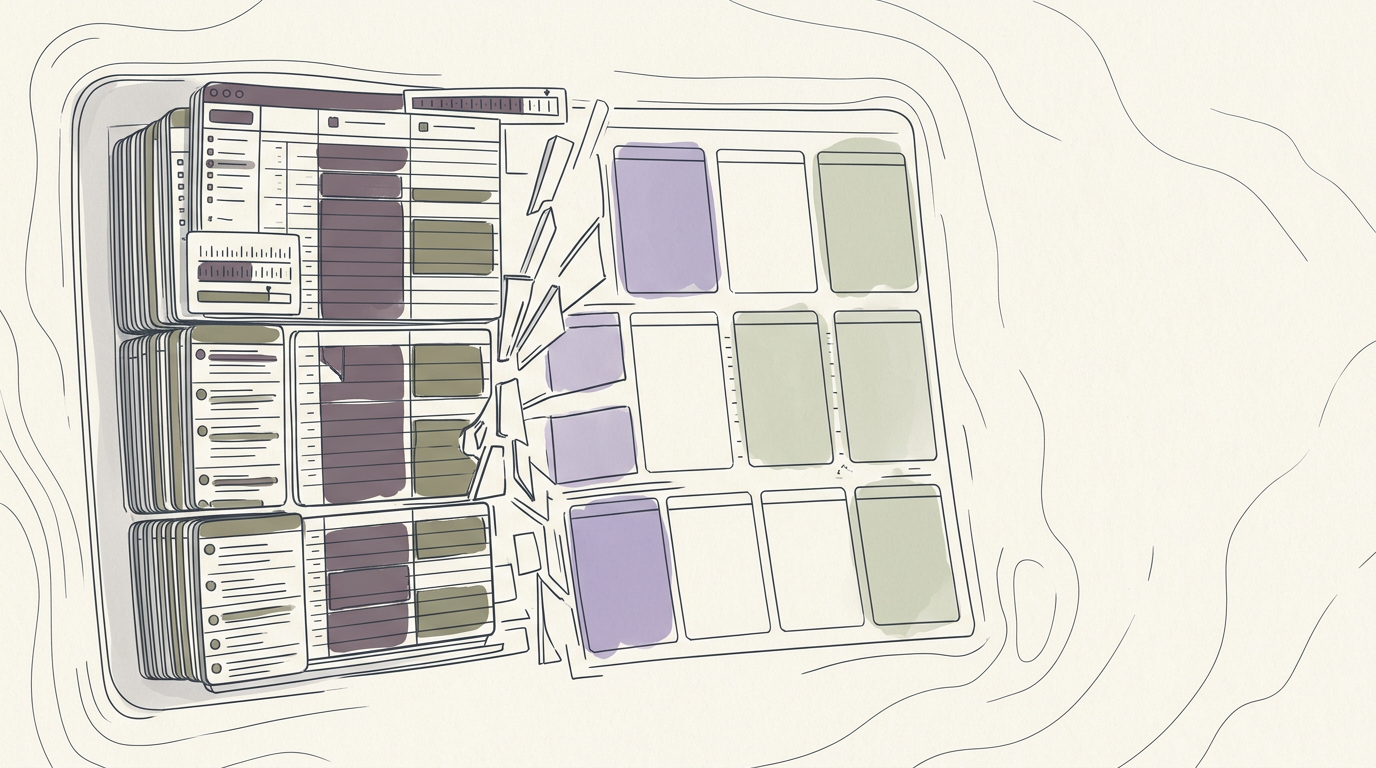
Founder burnout is structural. The 3 shifts that move it from inevitable to optional.
You’re 18 to 48 months in, past the dizzying chaos of the earliest days, but still deep in the grind. The initial adrenaline has faded, replaced by a persistent hum of exhaustion. This isn’t just ‘working hard’; this is your body and mind telling you something’s off, despite every self-care hack you've tried.
I’m here to tell you that founder burnout isn’t a personal failing; it’s a structural issue. Most workplaces, even your own, are designed with assumptions that actively deplete, rather than replenish, the human nervous system. We need new burnout prevention strategies. Let's move beyond the individual resilience narrative and redesign the foundational elements of your work life – calendar, comms, and capacity – to make burnout optional, not inevitable.
The Tyranny of the Default Calendar
Most founders’ calendars resemble a game of Tetris played by a hyperactive squirrel. Back-to-back meetings, no breaks, context-switching every half hour. This isn’t a sign of productivity; it’s a recipe for sustained physiological stress, precisely the kind that depletes your ability to think clearly and make good decisions.
Your body doesn’t distinguish between dodging a tiger and navigating a relentless barrage of calendar notifications. Both trigger your sympathetic nervous system (your fight-or-flight response). Prolonged activation of this system, without adequate recovery, leads to allostatic load (McEwen, 2019) – the wear and tear on the body and brain from chronic stress. It’s why you feel perpetually wired yet profoundly tired.
The mechanism here is simple but profound. Shultz et al. (2015) highlighted that even perceived workload, not just actual hours, correlates with burnout. When your calendar is a dense block of commitments, even if you’re technically not "working," the mental load of anticipating the next thing keeps your stress response activated. This leaves little room for your parasympathetic nervous system (your rest-and-digest system) to do its recalibration work.
"The most dangerous thing you can do for your nervous system is to live in a state of perpetually almost-on."
To combat this, you need to deliberately build in ‘white space’. These aren’t just coffee breaks; they’re opportunities for your brain to engage its default mode network, crucial for creativity and problem-solving, and for your heart rate variability (HRV) to stabilise. High HRV indicates a well-regulated nervous system, meaning you can adapt more effectively to stress. When your calendar is perpetually jammed, your HRV dips, a clear biological marker of systemic stress.
The Kokorology founder protocol for calendar recalibration:
- Designated Deep Work Blocks: Minimum 2-hour, uninterrupted, notification-free work sessions, 2-3 times a week. Non-negotiable.
- The 25-Minute Rule: If a meeting can be 25 minutes, it should be. Not 30. Force precision.
- Buffer Time: Build 15-minute buffers between every meeting. Yes, every meeting. This allows for physiological recovery and mental reset.
- "No Meeting" Days/Half-Days: Carve out specific times when no internal meetings are scheduled. Protect them fiercely.
- Weekly Review & Reset: Dedicate 30 minutes every Friday to review the coming week's calendar for "stress points" and proactively adjust.
Related anchors: vagal tone anchor · HRV anchor · burnt-out anchor
The Comms Avalanche: Drowning in Digital Noise
Notifications, emails, Slack pings, WhatsApp messages – your communication channels are a hydra, and every time you chop off one head, two more appear. This constant demand for attention fragments your focus, elevates cortisol levels, and is a major contributor to the sustained activation of your sympathetic nervous system, hindering optimal workplace wellbeing.
The problem isn't just the sheer volume, but the perceived urgency. Every 'ding' signals a potential threat or opportunity, keeping you in a state of heightened alert. Dr. Gloria Mark's (2012) research on interruption found that people take around 23 minutes to return to a task after an interruption. Imagine that multiplied by dozens of pings a day. You're not working, you're constantly reorienting.
Think of it in terms of your polyvagal theory (Porges, 2011) states. When you’re constantly reacting to external stimuli, you're primarily operating from the sympathetic branch of your autonomic nervous system – mobilised, alert, sometimes defensively. This is necessary for genuine emergencies, but utterly unsustainable as a default operating mode. To access states of safety, connection, and calm (the ventral vagal state), you need communication environments that foster predictability and boundaries.
Here’s where you take back control. Standardise, compartmentalise, and clarify. If your team understands when and where to expect communication, the urgency dissipates, allowing you periods of true focus. This isn't about being unreachable; it's about being intentionally reachable.
The Kokorology comms recalibration protocol:
- Batch Processing: Check emails and Slack at designated times (e.g., 9 am, 1 pm, 4 pm). Close tabs and notifications outside these windows.
- Asynchronous-First Approach: Default to asynchronous communication for non-urgent tasks. If it doesn't need an immediate reply, an email or Slack message is fine, but set expectations for response times (e.g., within 24 hours).
- "No Chat" Rule for Deep Work: During your deep work blocks, all communication apps are explicitly closed. Communicate this to your team.
- Clear Channel Definitions: Establish clear guidelines for what goes in which channel (e.g., urgent issues on call, project updates on Asana, water cooler chat on a specific Slack channel).
- Email Signature Expectations: Include a small note in your email signature about your response time expectations.
Capacity Redux: Beyond the Hero Founder Narrative
You started this company, you are the company. You wear all the hats, know all the things, and often believe you’re the only one who can do it right. This hero founder narrative is deeply ingrained, but it’s actively sabotaging your long-term viability and workplace wellbeing. It’s a fast track to burnout and a bottleneck for your organisation's growth.
The issue here is often an internalised sense of responsibility, coupled with a lack of strategic delegation. When you hold onto too much, you create a system of dependency that ultimately crumbles under its own weight. Your personal capacity isn't infinite; treating it as such invites allostatic load, where chronic demands exceed your resource pool, leading to physiological and psychological breakdown (McEwen, 2019).
Neuroscience shows us that our prefrontal cortex, responsible for executive functions like decision-making and planning, has finite resources. Decision fatigue is real; every small choice depletes your capacity for larger, more complex ones. If you're bogged down in operational minutiae, you're not using your mental energy where it's most valuable: strategic thinking, vision casting, and complex problem-solving.
This isn't about hiring more people arbitrarily. It's about auditing your unique contribution and ruthlessly shedding what doesn't require you. It means empowering your team, building robust systems, and accepting that "good enough" from a capable team member is often better than "perfect" from an overloaded you. This protects your nervous system at work, allowing it to function at its peak when it matters most.
The Kokorology capacity remodelling protocol:
- The "Only Me" Audit: For one week, track every task you do. For each task, ask: "Does this specific task absolutely, unequivocally require my unique skills and authority?" If the answer is no, start planning its transition.
- Strategic Delegation Plan: For tasks identified in the audit, develop a clear plan for who, how, and when you will delegate them. This isn't just offloading; it's empowering.
- Document and Systematise: For recurring tasks, create standard operating procedures (SOPs). This reduces your cognitive load and enables others to take over efficiently.
- Empowerment Framework: Clearly define decision-making boundaries for your team. What can they decide without you? What requires your input? What requires your final sign-off?
- The "What if I got hit by a bus?" Test: Seriously. What absolutely must you be doing, and what would the company genuinely struggle without if you disappeared for a month? Focus on shoring up those areas first.
What this looks like inside a Kokorology workplace contract
We understand that changing entrenched habits, especially when you’re driving a company, isn’t about reading a blog post and magically implementing new systems. It requires a deep understanding of your current organisational physiology, identification of systemic stress points, and a phased approach to redesign.
Our workplace wellbeing audit unpacks your organisation's calendar, communication, and capacity norms from a nervous system perspective. Following this, our 12-week programme guides you through implementing the necessary structural adjustments, providing frameworks and accountability to ensure these shifts stick, moving your company and your team to sustained performance rather than chronic depletion. If any of this resonates, book an audit call.
Sources
- Mark, G., 2012 — University of California, Irvine (Research on interruption science)
- McEwen, B.S., 2019 — Current Directions in Psychological Science (Allostatic load research)
- Porges, S.W., 2011 — The Polyvagal Theory: Neurophysiological Foundations of Emotions, Attachment, Communication, and Self-regulation (Polyvagal theory)
- Shultz, K.S., Wang, X., Olson, D.A. and McEwen, B.S., 2015 — Journal of Managerial Psychology (Perceived workload and burnout)
Kokorology partners with Chief Wellness Officers, HR leaders, and founders to redesign workplaces for nervous system capacity.